Monthly Archives: August 2013

the downside of being colorblind

Standard
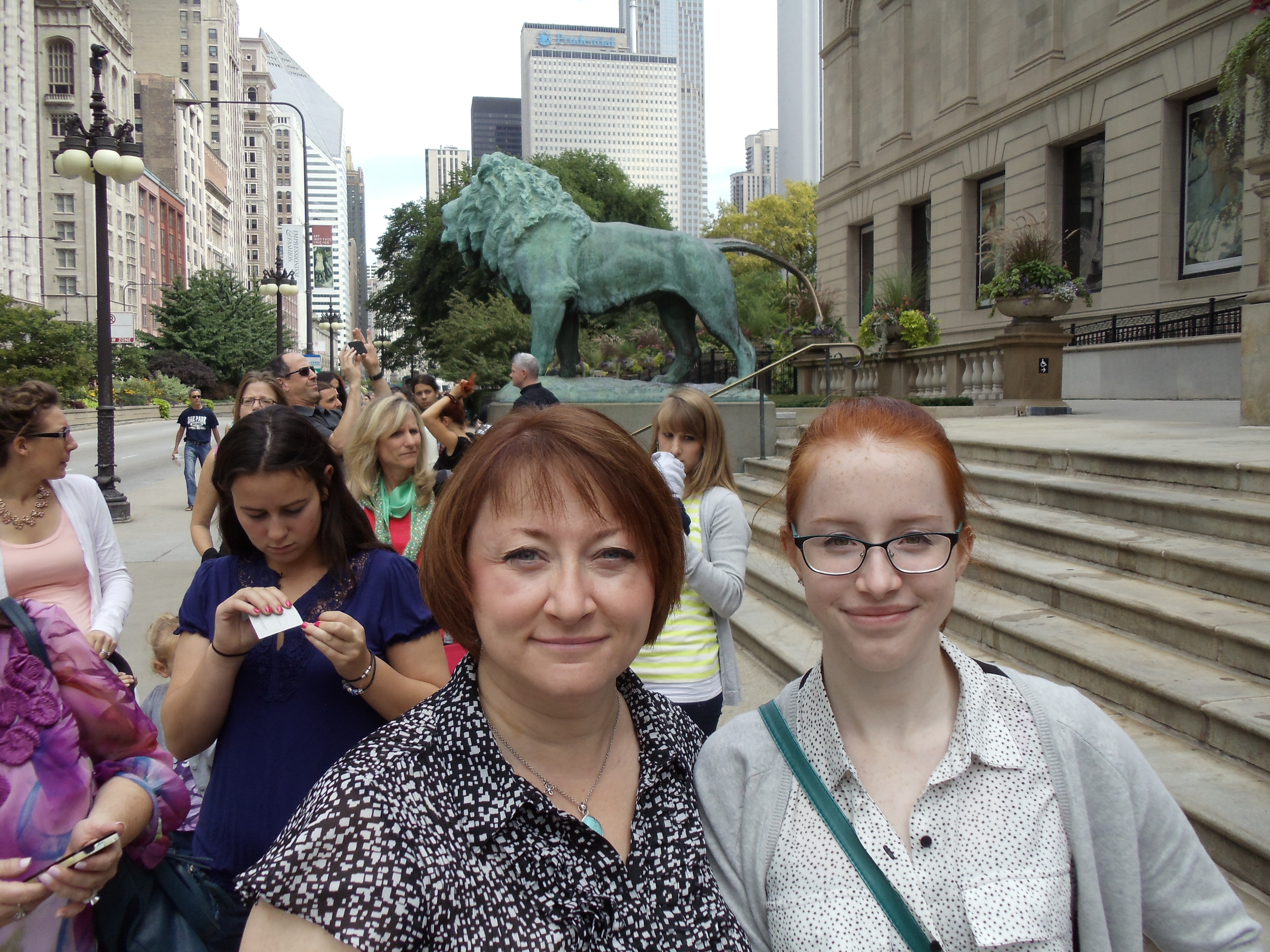
My daughter and me in Chicago

My daughter and me in Chicago

During a recent trip to Chicago, my daughter and I were walking outside the Art Institute of Chicago when she observed, “English is the language I’m hearing the least here. It’s refreshing.”

Now hold that thought, and please indulge me for a minute as I hop down a rabbit trail. (I promise it’ll make sense, eventually. Well, maybe promise is too strong a word. Let’s just say I hope it will make sense.)

When I was a kid growing up in the 1960s, I was fortunate enough to attend an interracial school. Perhaps because of the heightened racial tensions we were experiencing in American culture at the time, our teachers made a point of helping us little white kids to appreciate “colored people” and even taught us Negro spirituals like “Rock My Soul in the Bosom of Abraham.” (At the time I assumed the song referred to Abraham Lincoln!)

I recall being encouraged to understand that we are all equal and all alike inside. In my childish mind, I took that to mean, people may come in different colors, but inside we’re all the same–a white person like me. I also took it to mean that a person’s color was something I was to pretend I did not see.

Now, I’m guessing you learned better than that long before I did.

But as an adult, thankfully, I do see things–particularly people–differently. I still believe we are all equal and that as humans we share many common aspirations, insecurities and needs. But it took me longer than I’d like to admit to come around to the dangers of ignoring a person’s race, or more importantly the culture associated with it. White people like me seem particularly good at making this mistake. We act like we don’t see a person’s color or race, when of course, we do. Just like people of all races “see” others who are different from themselves. For whatever reason, we see this “not seeing” as a good thing, as if being Asian or white or hispanic or black is an unspeakable impediment to be tolerated or ignored. But a person’s racial heritage and color is not something to overlook like it’s a flaw; it’s something to be esteemed and celebrated.

And so, that brings me back to my daughter’s comment about finding it refreshing to be surrounded by different languages. (We live in a very homogeneous part of the Midwest, so while I was pleased about her observation, I wasn’t exactly surprised!) It made me think about the stories I’m creating for young readers her age and a bit younger. How often do I include a character who’s outside my white, middle class world? How can I help kids understand the importance of appreciating people inside and out?

How about you? Do you lean toward the familiar or do you intentionally branch out to create characters that reflect a broader worldview or culture or color? Let me encourage you to think of ways you can enrich a young reader’s world–or make it refreshing, as my daughter would say–by incorporating more diverse characters in your story.

Please don’t misunderstand me, I’m not asking you to change a main character’s name from Pete to Pedro, and call that “diversity.” You know better than that. I’m simply suggesting that when it makes sense, or maybe even when it doesn’t initially, consider how you can build richer worlds for your readers by word-painting with all the colors.

I promise I’ll do the same.

Thinking is the hardest work there is, which is probably the reason why so few engage in it. ~ Henry Ford
are you grandmothering your manuscript?

Standard
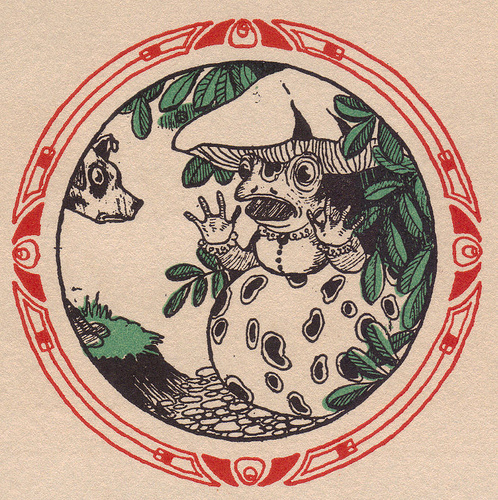
Grandma Frog by E.R. Crowell

Grandma Frog by E.R. Crowell

I was once a manuscript’s grandmother. When I drafted my first novel, I was like a grandmother to my characters–heck to the whole story itself–I thought everything my characters did was adorable. If they wanted to toddle down a rabbit trail, I tagged along, allowing the little darlings do or say pretty much anything their hearts desired. It was fun!

As a doting grandparent, I said, “Well, the kids are only here for such a short time. Let them twist the plot to smithereens. Who cares if this dialogue doesn’t contribute to the story. We’ll clean up the mess later.” Oy. And such a mess they (we) made. Like cleaning up the PB&J on the walls after the grandkids go home, the revision process that followed was messy and painful.

I will confess that I chose the “grandparenting approach” intentionally (and in my defense as a once novice writer, unwittingly) because I thought writing that first draft was all about discovery. Who could work from an outline, I thought. How boring to know how the story will end ahead of time. It’s the not knowing that pushes you to keep writing. Isn’t that the way it’s supposed to be?

I’ve since learned (through much wailing and gnashing of teeth) that parenting a manuscript is the way to go. Motivated by love for my characters, I have disciplined myself to tell them no. I must also allow my sweeties to make bad choices and to get themselves cowlick-deep in doo-doo (something a rescuing grandma could never do). And I have come to appreciate pre-writing and planning because, not unlike a parent who is looking out for a child’s future, it propels me to be more productive and create a stronger product sooner than I might otherwise.

Parenting and novel writing have another thing in common–the goal is to work yourself out of a job. A parent wants to raise a happy, independent, responsible adult, not a kid who stays a kid forever. A novelist wants to create a fully-formed (and finished!) story, not a germ of an idea that never develops or sits half-finished in a file forever. Planning and preparation aren’t guarantees, but they do increase your chances of finishing what you started and being pleased with the result.

Consider these jump starters to help you parent your manuscript to maturity:

* Snowflakes Try Randy Ingermanson’s amazing Snowflake Method
* Notebook Paper Create a traditional outline (you know, Roman numerals, et al.)
* Index Cards Draft the novel scene by scene on index cards (pretty ones)
* Paper and Markers Use mind mapping (great for very visual writers, plus, you get to color)

(Now, do any of these sound that scary?) 

If you’ve always taken the grandparenting approach, let me challenge you to give one of the jump start methods an honest try. It will feel confining and foreign at first. But I think you’ll be delighted to discover, as I did, that these methods still allow you lots of wiggle room to be surprised by your characters as you get to know them, to “see” something new you hadn’t anticipated in the planning phase, and just like a proud parent, you may see your work grow to become something even better than you first imagined.

If you’re going to write a novel, you have two choices: Jump in or wade in. Either way you’re gonna get wet. So, why not give manuscript parenting a try?

To Grandma, For being my first editor and giving me the best writing advice I’ve ever received: ‘Christopher, I think you should wait until you’re done with elementary school before worrying about being a failed writer.’ ― Chris Colfer, The Wishing Spell