Category Archives: Writing career

how to accept a compliment 101

Standard
Photo by Vicky Lorencen

Photo by Vicky Lorencen

It happened like this: while at a bookstore’s open mic night, I heard an author read from her work-in-progress. I was awestruck. That voice. The lush language. The evocative tone. The no-other-word-could-have-been-more-perfect detail. Compelled to tell the author, I approached her to offer my compliments. “It’s horrible,” she said. I protested thinking she was feigning modesty. But this time she was more insistent, “No. It’s horrible” and the grimace on her face let me know she meant it. I walked away feeling chastised and even judged–apparently I cannot recognize good writing from bad and my opinion is worthless. Ouch.

Did the author intend to make me feel that way? I think not. She was probably swaddled in her own writerly insecurities (like most of us) and it came out looking like anger. But it made me wonder if I’ve ever done something similar. Do I handle compliments or encouraging words with grace or do I grimace and make the giver feel like a fool? (Trust me. It was a lot more fun when I was thinking about the other author’s reaction instead of my own. Ouch again.)

While I was mulling over the topic of accepting compliments, I ran across what I think is a spot-on article I want to share: “How to Accept a Compliment with Class.” I appreciate the way the author breaks down our compliment-related communication breakdowns and offers practical, appropriate responses. If anyone ever compliments me again, I will be ready!

Please enjoy the article–with my compliments, of course.

I have been complimented many times and they always embarrass me; I always feel they have not said enough. ~ Mark Twain

blog hop tour hops to frog on dime

Standard
Photo by Vicky Lorencen

Photo by Vicky Lorencen

Blog Hop is a blog tour showcasing authors and their writing process. I was honored to be tagged by Kristin Lenz, writer of YA and New Adult novels, and all around super fly, groovy chick. (Thank you, Kristin for inviting me!) I tagged another YA writer extraordinaire, Ann Finkelstein, for the next leg of the Blog Hop. You can learn more about Ann at the close of this post.

So, here we go with the Q & A portion of our program.
I hope you are grading on a curve. (And remember, I was promised there would be NO math problems.)

What am I working on now?
I just finished my second contemporary middle grade novel, SHORT CHANGED, at the end of May. Thankfully, as I was wrapping up novel two, ideas for middle grade number three began to percolate. Did I mention Ray, the main character of this novel, is forcing me to learn to knit because he likes to knit? He takes his protagonist role very seriously. I don’t want to disappoint him.

How does my work differ from others in its genre?
It has my voice. What would be the point of imitating anyone else? We already have a Jerry Spinelli and Sharon Creech. I like to blend humor with tenderness (tempered with enough references to boogers or puke to make it believable and boy-friendly).

Why do I write what I do?
Writing middle grade is a sweet spot for me–readers are still young enough to appreciate my dorky sense of humor, but sophisticated enough to handle more complex plot lines, language and themes. But I don’t have to write any “content.” (blushing) I know. I know. I’m such a ninny.

How does my writing process work?
First off, you should know, I never ever intended to write a novel, much less two, going on three. I remember showing my grandpa one of my published magazine stories. He said, “That’s good, Vick. Now, where’s your novel?” I told him flat-out, “I’m not a novelist. There’s no novel in me.” (See? Such a ninny I am.) It wasn’t until a friend asked me to collaborate on a novel with him that I ever thought to attempt such a crazy thing. I mean, novel writing was for, sheesh, I don’t know–novelists. But I reasoned that before I co-wrote a novel, maybe I’d better see if I’m capable of creating a one on my own. And so it began.

My first middle grade novel, SHRINK, germinated from a short scene based on a childhood memory. The story took on a life of its own as I began to ask why–why did the main character say that? Why does he feel this way? Why did he make that decision? To whom is he telling his story? And why? Because I was neon green at novel hatching, I pretty much let the characters run the show, which meant I had a lot of clean up to do on the back side. (Kids are not known for their logic or consistency you know.) I still love the characters in that first novel and even miss them when I see a real-world kid who looks like one of them. I must have done something right.

My second novel was inspired by a stupid idea. I thought it would be clever and ironic to write a novel with the title SHORT STORY. But that, I was wisely advised, would get way too confusing. So, I changed the title to SHORT CHANGED, but kept the basic story. I tried writing this novel on my own, like the first one, while trying to avoid the rookie pitfalls. But eventually, I opted to enroll in a novel-writing course through the Institute of Children’s Literature. The individualized instruction and the built-in deadlines helped me progress. I’d recommend taking an ICL class. If you want to know more, just let me know via my contact page and I’ll get right back to you.

My third novel is unfolding very differently. I want to plot and plan and outline before fully immersing myself in this novel. I am gathering articles and ideas too. And, as I mentioned earlier, I’ve got to take those knitting lessons. I’m also going to “interview” each of my characters in order to create character sketches. I treat characters like they are already fully-formed people. It’s my job to get to know them and create a world for them to live in and circumstances to respond to. (And how “simple” is that?)

Based on what I’ve experienced so far, I love the entire novel-writing process–the first niggling from a new idea, meeting my characters, creating that first draft, revising (ad nauseam), receiving critiques, revising again . . . I love it all. Except when I don’t.

(I hope I got the answers right.)

The next stop on the Blog Hop tour will be hosted by my talented friend and Sock Sister Ann Finkelstein. Ann writes young adult novels in Michigan. She enjoys biking, hiking, cross-country skiing and photographing the great outdoors. Read more about her. You can read Ann’s brilliant answers about her writing process on Friday, June 20. Don’t miss it!

Writing in English is the most ingenious torture ever devised for sins committed in previous lives. ~ James Joyce

take the “am I ready for an agent?” quiz

Standard

Photo by Vicky Lorencen

Photo by Vicky Lorencen


You’ve seen those wedding dress shows, right? A bride-to-be goes on a chiffon frenzied quest for the perfect gown while a group of her BFFs sit semi-circled in the salon, waiting to boo-hoo or just boo over her selection. Once in a while, though, the hunter is simply a bride-wanna-be who is willing to throw gobs of moola at a dress, despite her groomlessness. To me, that seems sad, desperate, and at the very least, poorly timed.

When it comes to writers in search of an agent, sometimes it’s really not that different. There’s a time to focus solely on craft, to learning about the industry, reading and networking. But, if this has not yet resulted in a solid, polished product to sell, why would you spend time looking for an agent to represent you?

Let’s say, however, maybe you’re like me, and you’ve been polishing, learning and preparing for quite a spell and you’re wondering if seeking an agent would be a wise next step.Take this quiz to help you decide if you’re agent-ready:

True or False?

____I have at least two thoroughly polished, market-ready manuscripts and more in progress.

____I am an active member of a professional organization for writers, such as SCBWI, and follow industry-related blogs, tweets and newsletters to stay current.

____I have a good understanding of the inner-workings of the children’s publishing industry (e.g., the role of publishers, editors, agents, reviewers and authors, the editorial and submission process, how a manuscript becomes a published book, etc.).

____I have sold articles or stories to respected children’s magazines, such as Highlights for Children, and/or perhaps even come close to selling a book to a traditional publisher on my own.

____I am actively building a platform via my own web site or blog, as well as social media.

____I am a member of a critique group and/or have a critique partner and/or have received professional critiques from agents or editors.

____I have gone from receiving unsigned form rejection letters to more of the “champagne” variety (personalized notes or letters offering a specific explanation as to why the editor chose to pass on my submission or perhaps offering constructive feedback or an invitation to submit more in the future).

____I understand the role and benefits of an agent, as well as my role as a client.

____I have compiled a list of the qualities and qualifications I am seeking in an agent.

____I have done marketing research to determine where my book fits in the current market and what makes it stand out from similar works. I can explain this in my “elevator pitch” (and I know what an elevator pitch is!)

____I am prepared and enthusiastic to shift from solo writer mode into the role of a professional with a business partner (an agent) so that I can pursue all aspects of a writing career.

____I understand agents, while amazing, do not possess supernatural powers and cannot be expected to read minds, make me stinking rich or fulfill every literary success fantasy I can conjure.

How’d you do?

If you answered with 10 or more “True” responses, consider seeking a literary agent to represent you.

If you answered with 6 to 9 “True” responses, you’re getting closer!

If you answered with 5 or fewer “True” responses, that’s okay. Keep writing, seeking feedback, and using this list as a guide to help prepare yourself to become agent material.

Photo by Vicky Lorencen

Photo by Vicky Lorencen

All things are ready, if our mind be so. ~ William Shakespeare, Henry V

top 10 questions to ask an agent

Standard
Photo by Vicky Lorencen

Photo by Vicky Lorencen

You’re right. I sound presumptuous. But I want to be ready when I get “the call” from a literary agent.

Right again. The call could be a long way off. But being prepared is smart. And besides, I love list-making.

Here’s why I think this preparation is important: it’s easy to focus on what an agent may expect and need from you. But an agent/client relationship, at its best, is designed to be a true business partnership. As an equal partner, you need to think about what you want and need from an agent too. (I shall not digress into tales of wah from eager author wannabes who closed their eyes, asked no questions and became human ankle bracelets for the first agent who expressed interest. You are far too dear and sensitive for such horror stories.)

And so, here’s a list of questions for you to consider as you do your agent homework.

Disclaimer: Please think of this list as a guideline. You’ll want to customize it to suit your style and situation. That’s what I did. Some of these questions are my own, but I also adapted questions from a list used by my generous friend Kelly Barson (who found a wonderful agent!). Also, keep in mind, you may find the answers to some of these questions online (like the answer to question 6). This will give you room to ask other questions instead.

Get your question list ready. Then you’ll be ready when the agent pops the question: do you have any questions for me? (Whoa. I feel dizzy. I wrote myself into a circle there.)

1. If you work within a house, would I be considered your client or a client of the house? (In other words, if the agent moves on, are you connected to that house or will you move with him/her?)

2. Do you offer a representation contract or a verbal agreement? (Some writers might be uncomfortable with formal contracts, while others would feel too vulnerable with a verbal agreement. You need to ask for what’s best for you.)

3. You’re basing a decision to represent me on one work. What if you don’t love the next project? Do you refuse to send it out? Do you try to find it a home anyway? Do I have the latitude to branch into another genre (e.g., from MG novels to picture books)?

4. What will my working relationship with you look like?

5. How far do you typically go editorially? Do you request in-depth rewrites? A little tweaking? None at all?

6. Are you a member of AAR? (The Association of Author Representatives member agencies agree to abide by a code of ethics.)

7. How much communication do you provide? And how will you typically provide it–email, phone, telepathy? (Some agents only talk to you when there’s a deal to discuss or if there’s a problem brewing. They leave you alone to write. Others are more hands-on determining the next project, checking in during the writing process, giving feedback, updating on submissions, etc. You need to decide how much autonomy you want or if hand holding through the initial stages is exactly what you need.)

8. Will I be dropped if my work doesn’t sell right away or are you committed, no matter how long it takes? Is there a time limit? At what point would you ask me to move on to something else (or to someone else)?

9. What are your greatest strengths as an agent? (If you’re feeling brave–ask about weaknesses too, but be prepared to answer the same question about yourself!)

10. Could you describe your ideal client?

BONUS NEWS . . .

Not quite ready to begin your agent search? Here’s a fabulous opportunity to learn the fine art of revision. You’ll know how to make your work as polished as possible before you start your hunt.

Revision Retreat 2014 with Harold Underdown and Eileen Robinson

In this working retreat, Harold Underdown and editor Eileen Robinson will teach proven techniques for self-editing and revising and work with writers on their manuscripts. Mornings will be dedicated to revision techniques and afternoons to model critique groups, individual meetings, and writing time.

Hurry! Spaces are limited to allow for individualized attention.

I would advise anyone who aspires to a writing career that before developing his talent he would be wise to develop a thick hide. ~ Harper Lee

leaving the land of liminality

Standard

Photo by Vicky Lorencen

Photo by Vicky Lorencen

Liminality, as I understand it, is that betwixty/betweenish space in life. A waiting room. Life’s belly button. An incubator. But it’s more than that. I see liminality as a place of active, intent anticipation intended to transform and prepare us for what’s to come. Wow. Pretty deep, huh?

Soon I will be leaving my preparing place to bounce into a new phase in my publishing pursuits– querying agents and editors. Up to this point, I’ve been writing/revising/researching/daydreaming in a liminal space that exists between the time I decided to become serious about writing and the stage to come when others will see my work and choose to love it or leave it. This long season of liminality has been challenging (to put it politely), but I believe say I am a better person for it (and sheesh, let’s hope a better writer!)

Photo by Vicky Lorencen

Photo by Vicky Lorencen

Thanks to my stint in the Land of Liminality, these words mean much more than mere words to me:
Patience
Encouragement
Empathy
Resourcefulness
Bravery
Boldness
Kinship
Stubbornness
Optimism
Humor
Priorities
Focus
Generosity
Humility
Sacrifice
Persistence
Opportunity
Chocolate

Oh, sure. I know the minute I hit “send” on the first query I submit, I will slip into a new level of liminality, but now I feel more prepared for the transition. And between you and me, I believe the outcome will be worth the wait.

The mind can go in a thousand directions, but on this beautiful path, I walk in peace. With each step, the wind blows. With each step, a flower blooms. ~ Thích Nhất Hạnh

are you mything something?

Standard

DSC03221
Writers, the real ones I mean, are magnets for neuroses, paranoia, depression, fits of rage, and yes, occasional bouts of constipation. (I tried, but there was no way to pretty that up.) It’s a wonder we have enough strength to smother our sorrows in Haagan Dazs.

And as if this crazy cocktail wasn’t enough, many of us succumb to Seasonal Myth Disorder. Not familiar with SMD? Perhaps you are. You just didn’t know it has a name. Let me explain. Assuming we agree life comes in seasons (and not just the April showers variety), it’s important to recognize that with these life seasons come some myth-perceptions, otherwise known as Seasonal Myth Disorder. (Don’t bother looking for it in the DSM V classifications. If you must know, I made it up.)

In any given season of life, especially the ones that ram us down a rabbit hole, it is easy to mistake these three myths for fact:

1. I am alone in this season.
2. No one understands what it’s like to be in this season.
3. This season will last forever.

Let’s myth bust these one at a time, ever so gently, shall we?

1. I am alone in this season. Are you struggling to find time to write, much less produce anything worth reading? Trolling around Facebook will lead you to believe you are the only one who isn’t there yet. Everyone is landing agents, agents are landing contracts, books are launching, movies based on the books are debuting, writers are churning out novellas before tea time . . . and then there’s you. Everyone is wildly successful and you’re nothing but a schlep with digestive issues. NO YOU’RE NOT! (And lay off the Facebook for a while.)

2. No one understands what it’s like to be in this season. HIGH SODIUM LUNCHEON MEAT! (aka BOLOGNA!)

3. This season will last forever. IMPOSSIBLE!

Okay, okay, so maybe that wasn’t so gentle. The point is, these are all myths. You’re a smart, literary person. You know what a myth is. It ain’t true.

You are not alone. In fact, you’re in good company.

Every single writer you can name or will ever know struggles with seasons of despair from time to time (even the super cute ones). Lots of people understand what you’re going through. If you don’t know any, join SCBWI, start a critique group or do something to connect with at least one other writer. You’re sure to find some sympathetic souls.

And no, this season–even though it feels like a six-month-Michigan-winter–will not last forever. You’ll get your groove back. You’ll have some small successes. Heck, maybe even big ones. So, please stop mything all over yourself. You’re too fine a person for that. And you know what that does to your gut. Let this be the start of Be Kind to Me season, okay?

Now, my little creme brulee, put down the spoon and go write something.

If we had no winter, the spring would not be so pleasant: if we did not sometimes taste of adversity, prosperity would not be so welcome. ~ Anne Bradstreet

how to “get lucky” in five easy steps

Standard

DSC03024
If all it takes to sell a book is talent, work hard and perseverance, more of us would be published. Like it or not, luck is a piece of the process. But can you make your own luck? I think so. You just have to be willing to ask for it, compete, put out, flaunt a little and sell yourself.

1. Ask for it. Whenever I receive a manuscript critique from an editor or agent, I always end the conversation by asking if I can send him or her my manuscript. Pride is too pricey. Go ahead and pop the question the editor or agent is expecting you to ask. (And then make sure you follow through. Send that manuscript and mention the invitation in your cover letter.)

2. Put out. Sweetie, shyness is simply out of your price range. You really must interact with other writers and members of the publishing community via social media. Send cards. Build and cultivate a blog or web site. Comment on other’s blog posts. Be generous and offer your help to others in the form of critiques or feedback. Aside from surrounding yourself with a supportive community of talented people, you never know where those connections may lead.

3. Flaunt a little. Humility is pricey too. You’re going to have to loosen up and show off a little. An author/illustrator friend of mine, Ruth McNally Barshaw, was contacted by an agent after a friend encouraged her to share her sketches online. Ruth wasn’t looking to lure an agent, but posting her work resulted in the start of a fabulous partnership and the launch of her graphic novel series–Ellie McDoodle.

4. Be willing to compete. When was the last time you entered a writing contest? In 2012, I entered a contest sponsored by the National Association of Elementary School Principals. Did I win? Uh, noop. But my picture book manuscript placed in the top 5 out of more than 750 entries. Did that boost my confidence. Yes, indeedy. Children’s Writer and Highlights run themed contests regularly.

But don’t limit yourself to writing contests. If there’s a pricey conference you want to attend, chances are there’s a scholarship contest to go with it. I have had the privilege of receiving funds for both a regional and a national SCBWI conference, as well as for a Highlights Foundation Writers Workshop. And don’t assume you have to be penniless to apply. Check out the requirements to see if you qualify and go for it. Even if you don’t win, oftentimes filling out the application gives you great practice for a query letter or synopsis. So, it’s time well spent even if it doesn’t result in cash.

5. Sell yourself. Have that elevator pitch memorized. Be ready to talk intelligently about whatever you’re working on right now. Know how to introduce yourself as a professional–including a beautiful business card. Work it, Baby.

Make yourself some good luck this week!

Luck is what happens when preparation meets opportunity. ~ Seneca

You know, Hobbes, some days even my lucky rocket ship underpants don’t help. ~ Bill Watterson, Calvin & Hobbes

but I don’t even like kids

Standard
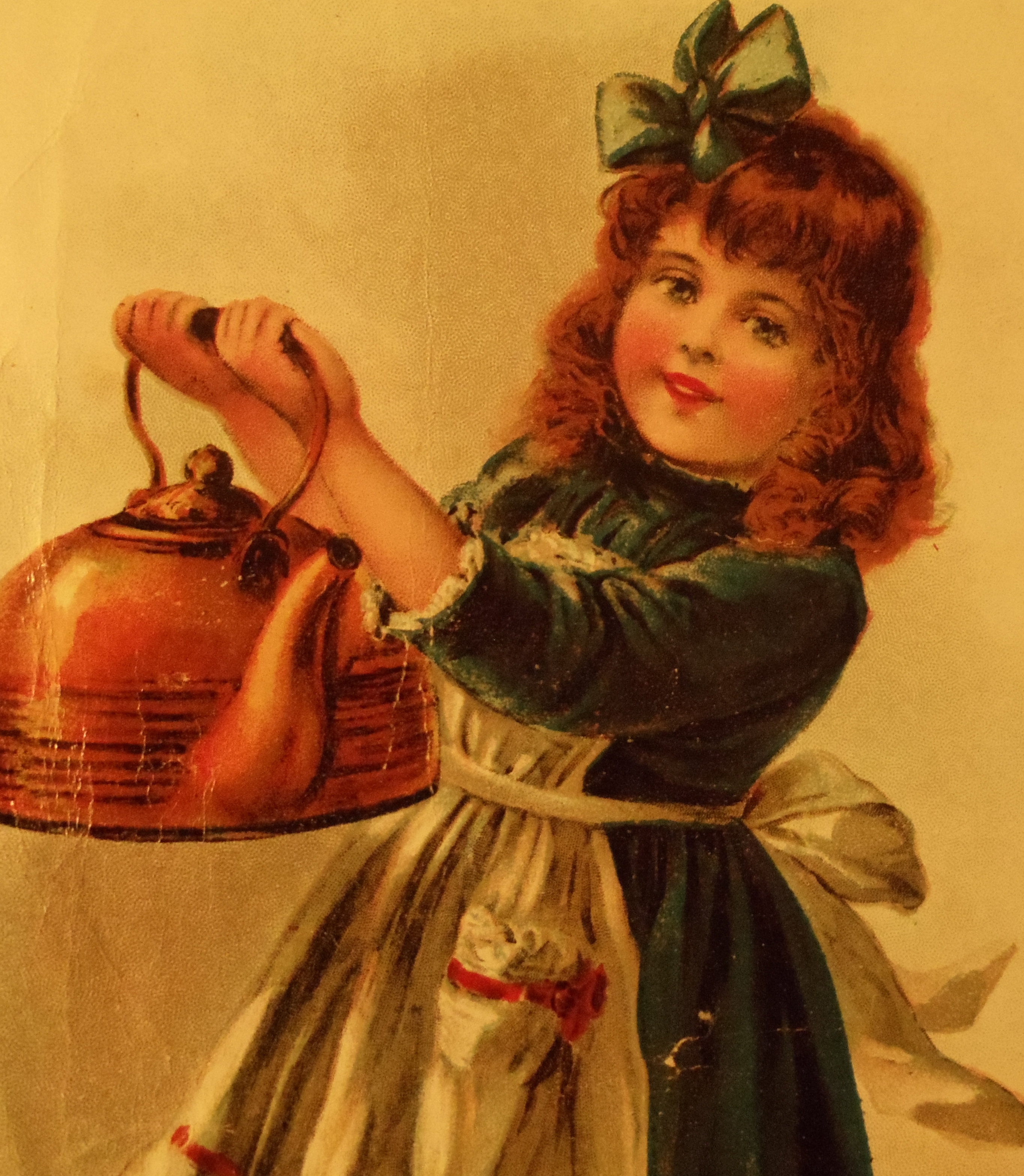
"Look. I'm carrying a kettle of scalding water."

“Look! I’m carrying a kettle of scalding water.”

What’s with the face? You don’t like honesty? It’s not completely accurate to say I don’t like kids, because I do–on a child-by-child basis. But the species in general? Not so much.

And in case you’re wondering, yes I have two children of my own. Do I love them? With all my heart. Do I want to be surrounded by a battery of wee nose miners on a daily basis? Oh, my. NO.

I knew it. “The face” is back. You’re wondering why I want to write children’s books when I’m not a super fan of kids. Let me explain how I reconcile the apparent disconnect–at least as I understand so far.

Not too long ago I met Andrew Karre, the editorial director for Carolrhoda Books, at a retreat for children’s writers. He told us he believes children’s literature is about children, and not written for children. What’s the distinction? Motivation. Rather than being audience-centric and focusing on pleasing the reader, Karre suggests the drive to create children’s literature needs to focus inward. Intriguing perspective, isn’t it? I had to noodle over it for quite a while, but I think he’s right.

From the time I recognized myself as a writer an ice age ago, I knew I wanted to write children’s books. Isn’t that odd? So specific. So narrow. Children’s literature has an innate openness, optimism, humor, bravery and tenderness that makes it irresistible to me, as a reader and a writer. Those are the qualities I want funneling through my brain, my heart and my imagination. Writing about children allows me to experience that. I am so lucky. Knowing a child may enjoy what I love to write is a spectacular bonus.

What about you? Why does children’s literature call to you?

(And by the way, if you like kids, it’s okay. I still accept you.)

A children’s story that can only be enjoyed by children is not a good children’s story in the slightest.
~ C.S. Lewis

how to “rung” in the new year

Standard

From "Frog and Toad"  by Arnold Lobel

From “Frog and Toad”
by Arnold Lobel

.

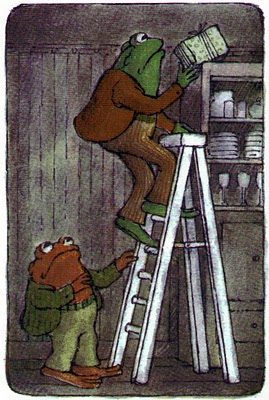
When you’re up high, let’s say on a ladder, people always tell you, don’t look down. But do me a favor, will you? Take a minute to glance over your shoulder. That’s right, look down the ladder the today. Here’s why . . .

When your sole focus is looking up the publishing ladder as you struggle to climb rung by rung, it’s easy to feel like you’ll never reach the top. But let me encourage you to hold the rung a second. Pause. Even for a moment. Stop craning your neck upward and turn. Look back down that ladder. You started at the bottom, maybe this year or maybe years ago. Now, see how far you’ve come!

Today, before you uncork some bubbly or sing that silly “Auld Lang Syne,” make a list–not a mental list, a REAL list on paper or screen–of all you’ve accomplished this year toward your writing goals. You have so much to be proud of. (I know, I should have said, You have so much of which to be proud, but that sounds kind of snooty for my purposes, and using proper grammar wasn’t one of my goals for 2013!)

Sure, there’s a lot more you want to do (same here), but treat yourself to a moment to appreciate how high you’ve already climbed. Take a deep breath. Enjoy the view!

My “rungs” for 2013 include:

January – Attending the annual SCBWI winter conference in New York City. Amazing!
February – Seeing my non-fiction article “Sculpting Lincoln” in Highlights for Children magazine.
March – Participating in a writers workshop at Vermont College of Fine Arts and receiving encouragement from incredible YA authors Cynthia Leitich Smith, Lauren Myracle and Candlewick editor Andrea Tompa.
July – Celebrating with my dear friend Kelly Barson on her debut novel “45 Pounds More or Less”–and being honored to be included in her acknowledgements page–a first for me!
November – Being selected to be part of the SCBWI – Eastern New York Falling Leaves master class workshop in Silver Bay, New York, and meeting five amazing edtiors, along with more than 30 encouraging writers.
December
– Enjoying another year of mutual support and feedback from my wonderful critique group (aka, Church of the Word!).
– Toasting the first anniversary of “Frog on a Dime.” I started with zero followers and now have 1,043. (Not record shattering, but hey, it’s progress.)
– Finishing through Lesson 8 of 9 in my Institute of Children’s Literature writing class. My second middle grade novel is almost done.
– Gathering ideas and details for my third middle grade novel that’s bubbling to the surface (Finally! Phew.) Exciting!

I’m wishing I could say my second novel is completely done. I’d like to say I have an agent and a two-book deal a publishing house. But those rungs are just ahead of me (fingers and toes crossed). I’ll be delighted to put those on my 2014 rung list.

What’s that? You say you submitted your work this year, but only have a stack of rejection letters to show for it? Well, that’s VERY rung-list worthy. (Honest. I’m not just saying that to give you something to put on your list.) You submitted your work (it’s virtually impossible to receive a letter of rejection otherwise!) You wrote, revised, researched publishers and took the leap to share your work for consideration. Okay, so you didn’t get the desired response, but you’re now ready to narrow your search and target new houses for submission in the new year. That’s great. Rung it up!

Happy New Year! Let’s “rung” it in together. Umquam porro. Ever forward, my friends. Ever forward. Rung by rung.

A poet is a man who puts up a ladder to a star and climbs it while playing a violin. ~ Edmond de Goncourt

my first (and probably only) controversial post

Standard

Photo by Vicky Lorencen

Photo by Vicky Lorencen

When I started pursuing publication a decade ago, I was strongly advised against self-publishing. I was told editors liked to find debut authors. Self-publishing would mean I wasn’t a book virgin any more. Times and opinions have changed. But mine hasn’t. I may eat my word some day, but I never intend to do a “selfie” when it comes to publishing.

Now, I’m well aware that like most things associated with publishing, there are always, always exceptions. You and I can both name novels like Christoper Paolini’s Eragon that were self-published, that were later acquired by what I’ll call a traditional publishing house, resulting in financial gain and critical acclaim. But those books are rare. We can agree on that, can’t we? (And I think it’s worth mentioning, it’s very likely that Eragon and others like it were “re-edited and polished” after the publisher bought the self-published version.)

If you’ve self-published, I’m not here to make you feel bad. I’m sure you put a lot of thought into your decision, did your homework and understood up front how much work it was going to be to wear a stack of hats as author, publisher, sales agent and promoter. I genuinely hope you’re glad about your decision and that it’s bringing you the satisfaction and success you were seeking. I really mean that.

But let’s say you’re not published yet, and you just want to exhale. You’re fed up with submitting and putting yourself out there, only to feel like you can’t get traction. Self-publishing sounds like an attractive option. Maybe. And it’s true the quality of self-published books has been elevated substantially over the last decade. But I’m sad to say I can still spot a self-published picture book long before I’ve reached the bookstore shelf. Maybe the author is proud of her work or maybe she is simply relieved to have a book out (such as it is). Is that what you want–relief?

Let me encourage you to read wise author Darcy Pattison’s insightful blog post Out There: The Wrong Goal of Self-Publishing. Think of Darcy like a master chef. Please gobble up her food for thought and digest her message.

See, I don’t think self-publishing is inherently evil (not even close!) or that it’s necessarily a cop-out or a short cut. But I think it can be if you’re doing it for the wrong reasons. Your work deserves the best you can give it. By that I mean, it deserves the benefit of a professional editor and the perks of a publishing house. Most of all, children deserve only the very best. Does that mean that traditional publishers only produce stellar works? Hardly. But aren’t the chances for success exponentially better? I think so.

Let me encourage you to write your best and to do the best by your work, whatever you decide that to be. I’ll do the same. Cross my heart and pinky swear.

Phew. Now let’s go eat some chocolate.

You should always be well and bright, for so you do your best work; and you have so much beautiful work to do. The world needs it, and you must give it! ~ Marie Corelli