Author Archives: Vicky L. Lorencen

recognizing the detail smorgasbord (plus spring giveaway winners!)

Standard


Photo by Vicky Lorencen

Photo by Vicky Lorencen

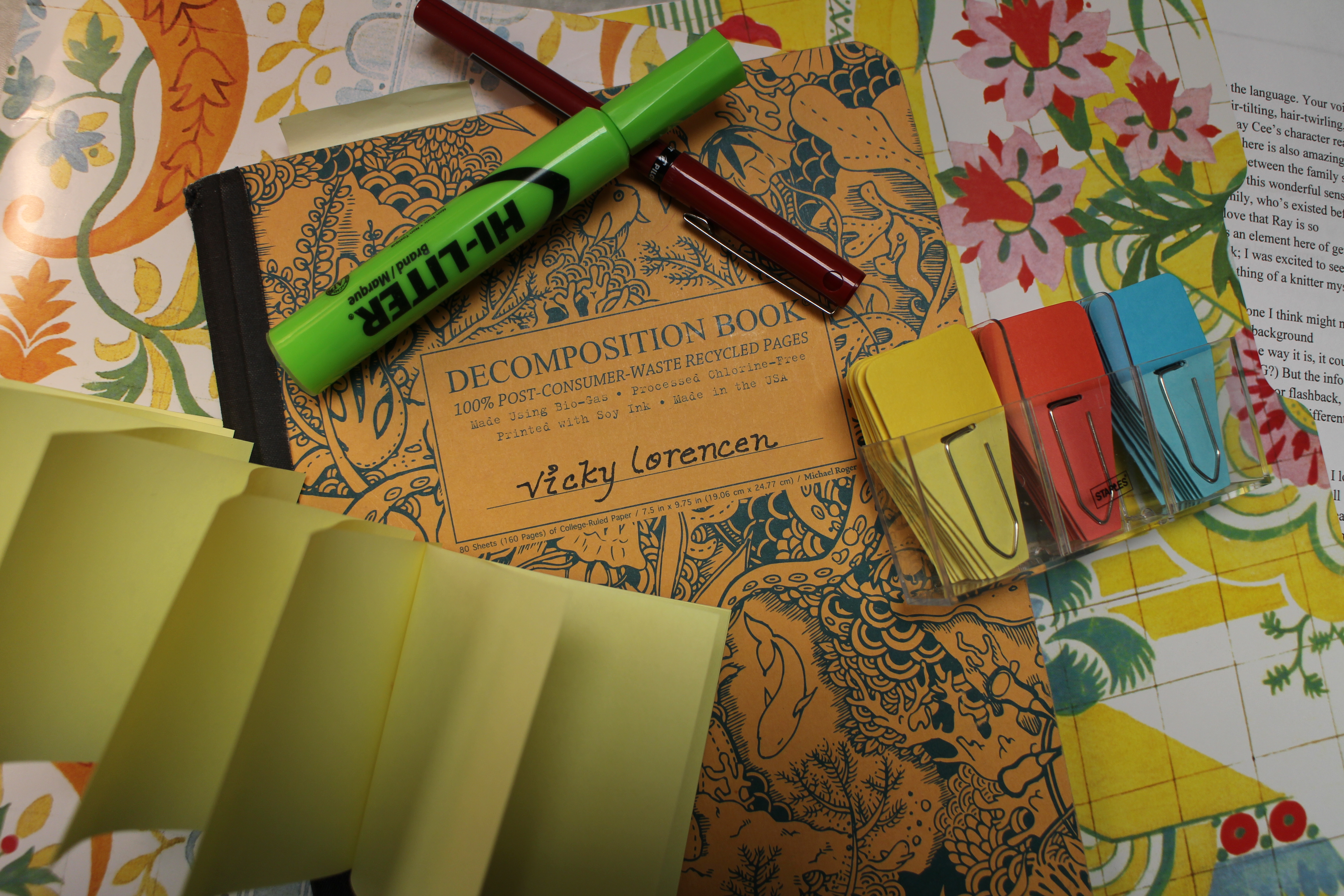
This time of year is an absolute boon for children’s writers. If you have children or grandkids, you’ll soon be attending award ceremonies, field days, banquets, carnivals, graduations, end-of-year parties or picnics. Well, when you do, be sure to take notes. These occasions are an All-You-Can-Record Detail Smorgasbord!

Oh, I know you think you’ll remember. You are wrong. Even if you take photos, many details will be spirited away. I am the mother of a high school senior. Benefit from my experience.

Write.

It.

Down.

Jot down the names of the various awards and how students react to them, the food and amusements offered at the carnival, how the banquet was decorated and what was served, choice sound bites you overhear, and what teachers say to regain crowd control. Take note of the popular (and the not-so-popular) kids are wearing and how they talk, the words to songs that are sung, the music being played at a ceremony, the names of the games being played (and so on and so forth and what have you).

These notes will become precious to you when you sit down to write. You’ll have a stockpile of details to bring your work to life and ground it in a reality that is so familiar to your readers. (Oh,  and yes, you’ll have recorded dear details from your child’s school year, so there’s that too.)

The truth of the story lies in the details. ~ Paul Auster

Congratulations to the winners of the Frog on a Dime Spring Cleaning Giveaway . . .

Photo by Vicky Lorencen

Photo by Vicky Lorencen

Lindsay Fouts–winner of Writer’s First Aid: Getting Organized, Getting Inspired and Sticking to It by Kristi Holl

Danielle Hammelef–winner of Writing with Pictures: How to Write and Illustrate Children’s Books by Uri Shulevitz

Please contact me with your address and I’ll be delighted to send you your book!


time for the spring cleaning giveaway!

Standard
Take your pick!

Take your pick!

It’s time. As much as it pains me, I must purge my bookshelves a bit. Because I’m your fan, I want to share my purgings with you. Huh. That didn’t come out right, did it.

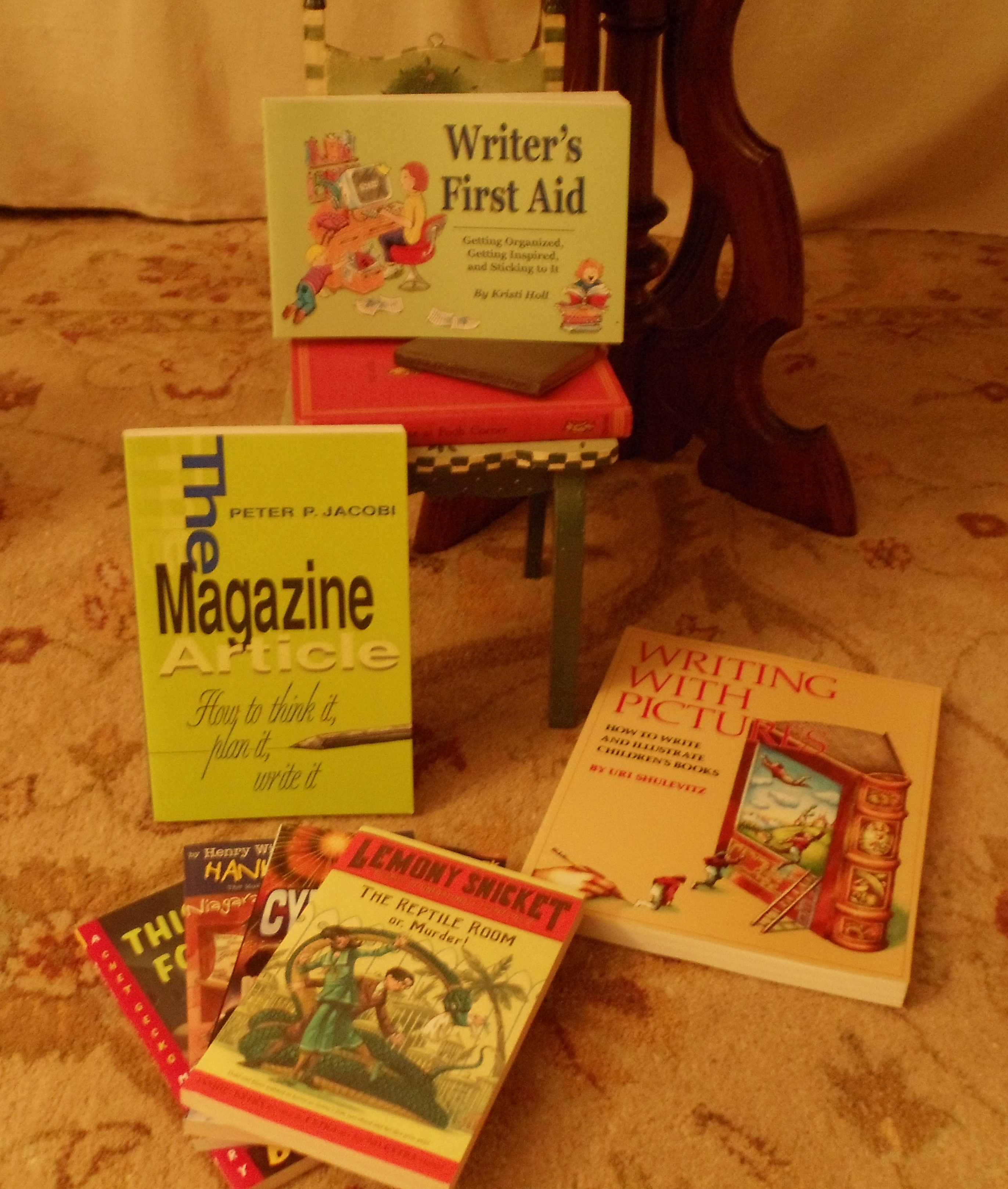
Moving on–we have a resource for non-fiction writers, one for picture book attempters,  a practical book for any writer and (yes, there’s more) a set of brilliant middle grade novels by masters of the genre. And you thought this was going to be an ordinary day. Silly you!

Lean in and I’ll tell you how you can be a winner of the Spring Cleaning Giveaway: simply comment on this post and let me know which book (or books), you’d like to win. Then, I’ll draw names on Friday, April 17 at Noon. Easy sneezy.

Here’s what’s on the menu (and good luck deciding!) . . .

The Magazine Article: How to Think It, Plan It Write It by Peter Jacobi

This book was published in the late 1900s (makes it sounds really outdated, doesn’t it). What it lacks in advice about online research, it more than makes up for in how to add substance, depth and honesty to your work as a non-fiction writer. Plus, it’s Peter Jacobi. He’s amazing. If you ever get the chance to hear him speak, do. He’s a true orator. And can that guy write. Oh, my. Did I mention this book is signed? I almost hate to part with it.

Writing with Pictures: How to Write and Illustrate Children’s Books by Uri Shulevitz

This is a classic. If you write (or aim to write) picture books, you simply must have this book. It’s a treasure. And yes, I am willing to share it with you. Is that love or what?

Writer’s First Aid: Getting Organized, Getting Inspired and Sticking to It by Kristi Holl

I met Kristi ages ago at a Highlights Foundation workshop. This lady knows her stuff. While this little volume looks demure, it can be a real kick in the pants.

These fine middle grade novels, I’m offering as set. You can study them for craft, enjoy each as a fun, quick read and then share them with a child you love.

  • A Series of Unfortunate Events, No. 2: The Reptile Room by Lemony Snicket
  • Lost in Cyberspace by Richard Peck
  • Hank Zipzer, The World’s Underachiever: Niagara Falls, or Does It? by Henry Winkler and Lin Oliver
  • This Gum for Hire by Bruce Hale

Have you made up your mind? Don’t wait too long. Leave a comment by Noon on Friday and hopefully you’ll be a winner. Regardless, you are a fine person and there are plenty of kids who would be happy to sit by you at lunch. Remember, don’t slouch.

With freedom, books, flowers and the moon, who could not be happy? ~ Oscar Wilde

top 4 post-workshop mistakes to avoid

Standard
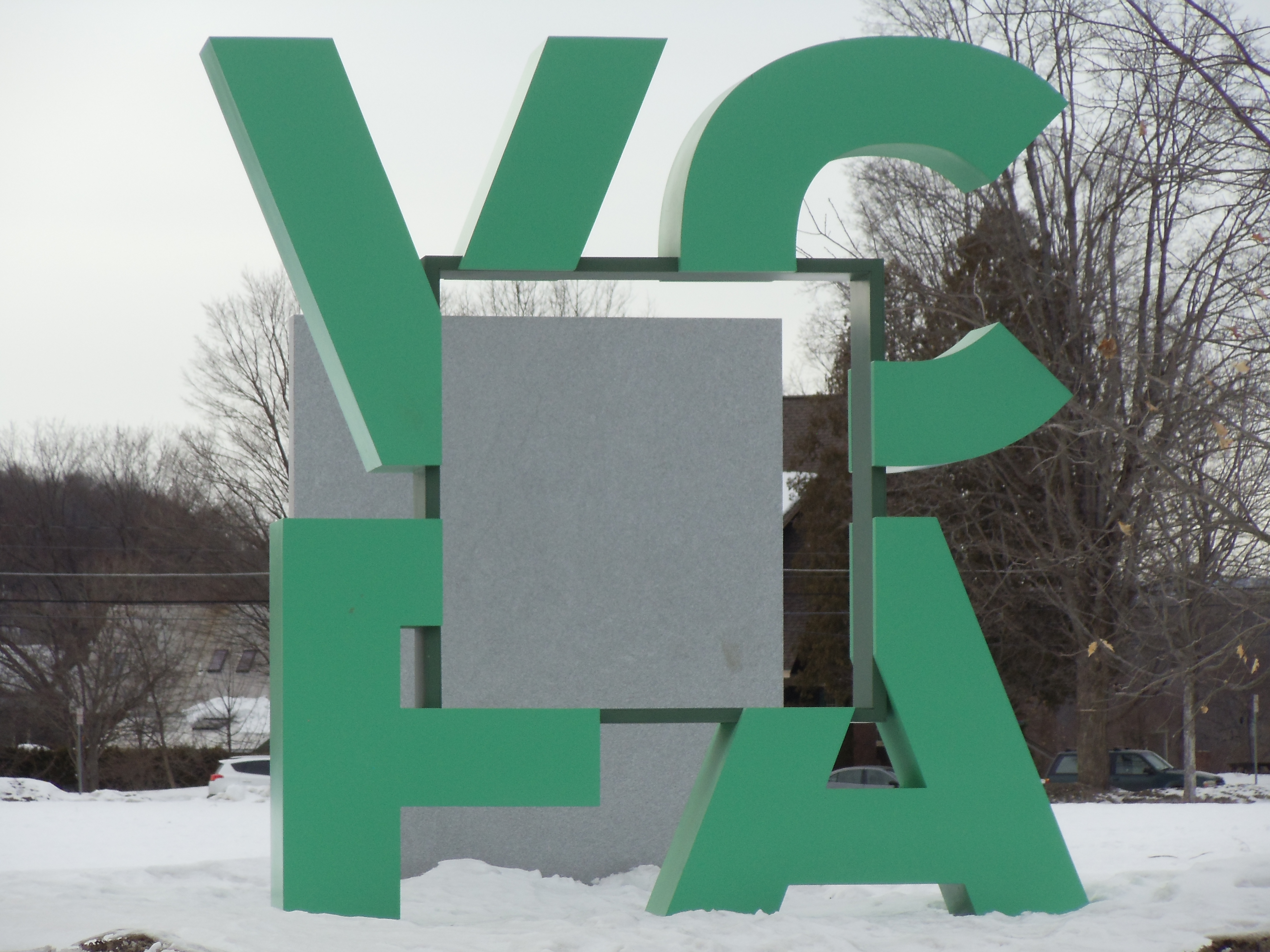
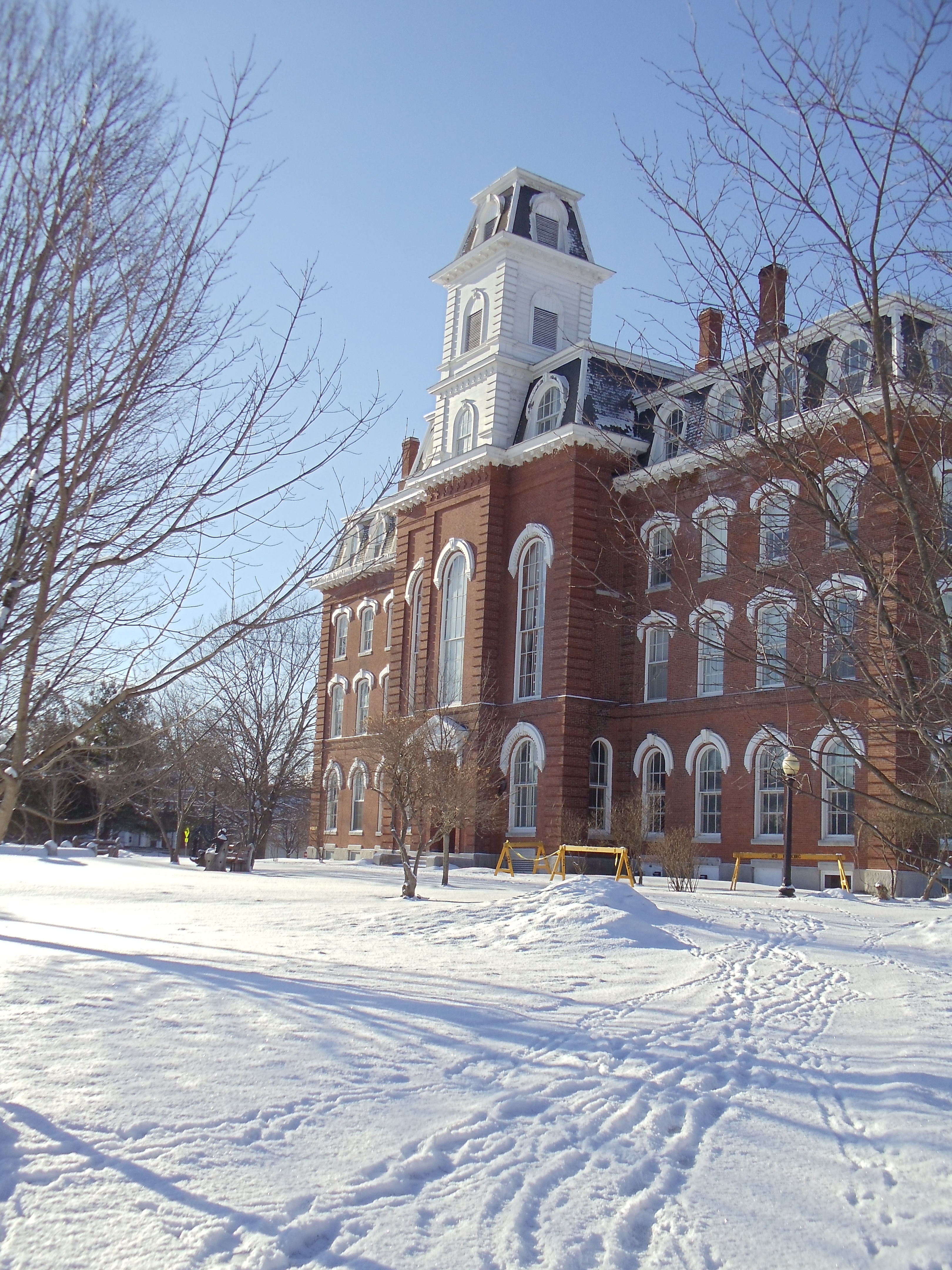
Vermont College of Fine Arts Photo by Vicky Lorencen

Vermont College of Fine Arts
Photo by Vicky Lorencen

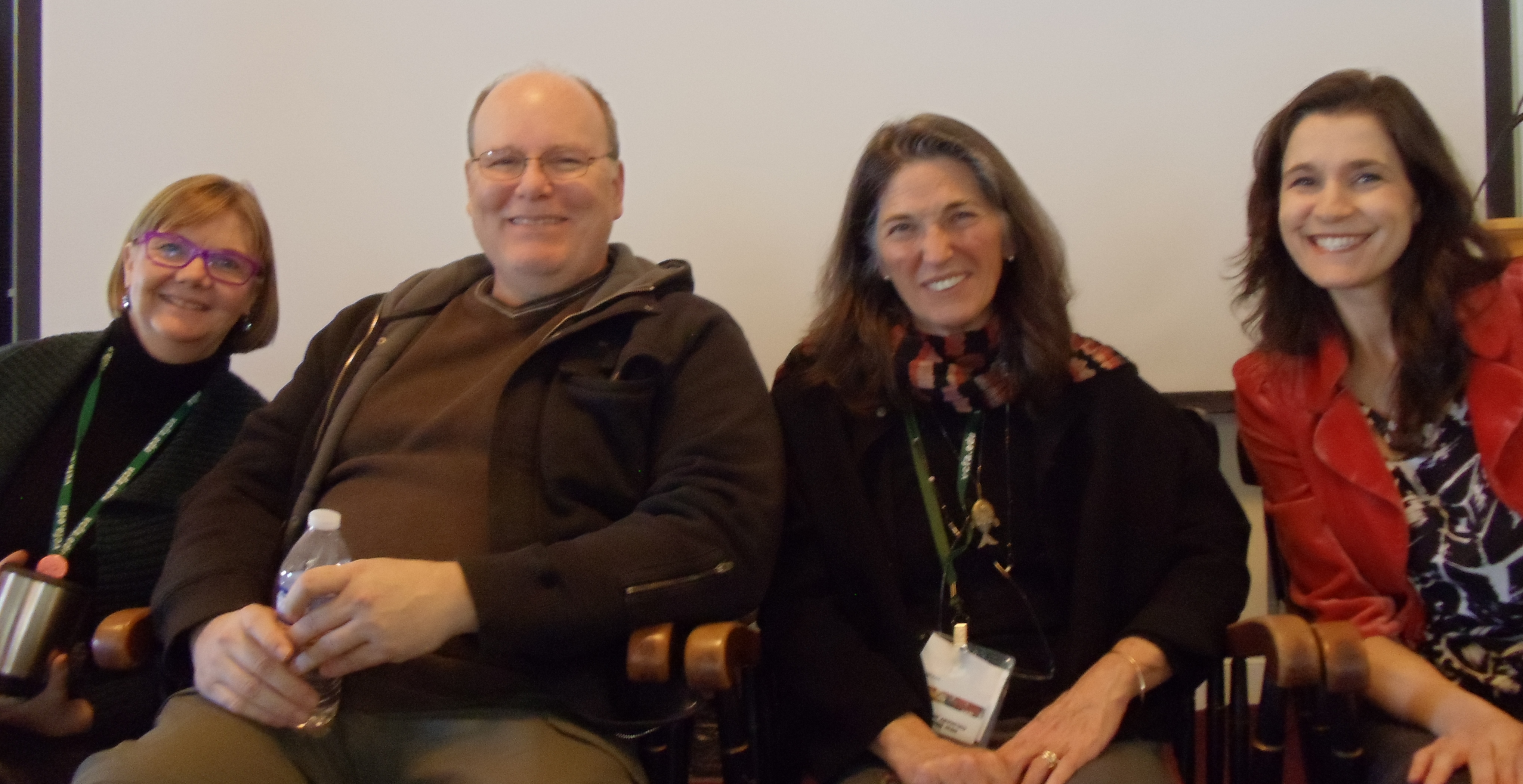
Kathi Appelt, David Macinnis Gill, Dana Walrath, Joy Peskin Photo by Vicky Lorencen

Kathi Appelt, David Macinnis Gill, Dana Walrath, Joy Peskin
Photo by Vicky Lorencen

You roll your quarters, register, and highlight the dates on the calendar. You pre-pick your plane seat and pack your bags. You’re going to a workshop! You look forward to it for months, fret about how many pairs of shoes to take, and finally, it’s time to blast off. I got to do just that earlier this month when I attended the amazing 12th Annual Novel Writing Retreat at Vermont College of Fine Arts. (If you’d like a great recap of the experience itself, I highly recommend visiting Debbi Michiko Florence’s site.)

I don’t know about you, but time passes at a sloth’s pace leading up to an event, but then the workshop itself whisks by at road runner speed. If you’re not careful (and by you’re, of course, I mean, I’m), it’s easy as gliding up an escalator to let the whole experience slip away once you’re back home.

Watch out for these post-workshop mistakes . . . 

1. Rushing to query or submit your manuscript. Some writers think, if I don’t send that editor or agent my manuscript as soon as I get home, they’ll forget all about me. Not true, especially when you wisely offer a little reminder in the first sentence of your cover letter about how you met. Even if a presenter gives you a teensy window–like six weeks–to submit, take your time. Better to email a glistening, well-groomed manuscript, than to rush yourself and offer a schloppy copy. Your work is a reflection of you. Go for shiny, not speedy.

2. Neglecting your notes–if your notes are handwritten (mine always are), type them up. Seriously. It won’t take long, and while you’re typing, you’ll be reviewing the gems the presenters shared with you. It’ll be easy to highlight the parts that resonate with you too. [Next, pop some brackets around a hint or suggestion that perfectly applies to your WIP and cut/paste it into your ms. to serve as a reminder when you return to that section.] Don’t want to type? Use an old school highlighter or sticky notes to spotlight the bits you most want to recall. Put those pages (or copies of them) in the folder of goodies (research, hard copies, feedback) you’re compiling for this new novel. The idea is to incorporate every epiphany, aha and eureka into what you’re working on now, plus you’ll make them easier to find for future follies, that is to say, novels.

Photo by Vicky Lorencen

Photo by Vicky Lorencen

3. Disconnecting with the people who “clicked” with you. Friend them on Facebook, send a follow-up email or connect with them on LinkedIn. Send a text, a tweet or smoke signal, whatever works for you. These are your new peeps who share your passion. Passing on this chance to expand your circle is criminal, okay, well, at the very least, a pity.

4. Cooling off—you arrived home pooped, but positively giddy about a new idea for your WIP, but then your fervor fizzled. Family, your tyrannical to do list and Facebook eclipsed your euphoria. Don’t let them! If you have a critique group (or a beloved writing buddy), share what you learned with them. Talking about the lectures will help to solidify concepts in your mind. Your group/buddy may also be able to help decide out how to best use what you learned (and of course, you can return the favor). Ask someone to hold you accountable and offer to do likewise.

How about you? How do you keep the momentum moving after a workshop or retreat?

It is our choices, that show what we truly are, far more than our abilities. ~ J.K. Rowling

if it sounds like i’m begging, it’s only because i am

Standard
Photo by Vicky Lorencen

Photo by Vicky Lorencen

Let’s say a real estate agent sends you one of those slick postcards, inviting you to an open house on Sunday. You’re not really in the market for a house, but the agent’s photo is so endearing, and well, there might be cookies, so you and your beloved make plans to go. You show up between the hours of 2 and 4, and there stands the darling real estate agent—on an empty plot of land.

You and your sweetie make simultaneous brow furrows and head scratches. Wrong address? Then one of you suggests, perhaps she’s going to walk us over to that quaint house next door. Maybe she was so excited to usher us into our new dream home, she waited outside. You both exit the car and approach the agent. She nods and laughs at your quizzical faces. “Yes, yes, this is the right address,” she assures you. “But there’s no house here. Not yet.” You two do a simultaneous brow lift. “Heavens,” she says, “It’s still in the design phase.”

What? Doesn’t that sound loony–to seek buyers for a house that only exists in the mind of the architect? Why, yes, indeed it does. But you know what? (Uh oh, here she goes . . . )

It snaps my heart in two when I see people who are new to children’s writing splintering their time in unproductive ways. (Probably because I hate seeing them repeat some of my own dundering blunders.) And while I hate calling a story a product, if you plan to sell it, it is. It would stand to reason then that one must have a product to sell before one goes to market. Yes?

So, please, please . . . you’ve got me down on my old knees here . . . if you are new to writing for children, pretty please with Nutella on top, place your focus on crafting not publishing.

Here’s where your focus needs to be (according to yours ever-truly):

  • Craft–first-drafting, revising, sharing with your critique group, revisiting and polishing
  • Establishing good writing habits and routines
  • Asking questions
  • Attending conferences and workshops centered on writing (not publishing)
  • Networking–yes, online, but also at retreats and what-have-yous
  • Joining or establishing a critique group
  • Reading books, blogs and articles on craft
  • Reading books in your genre of choice
  • Reading books outside your GOC
  • Cultivating interests and experiences away of writing–dance, gardening, making pickles–anything that widens your world a bit
  • Maintaining a positive online presence

Please don’t divert your precious writing hours by: 

  • Spending time and money learning how to give a stellar school visit
  • Searching for an agent (they need a polished product to take to market first!)
  • Submitting manuscripts (do not rush the process, let your manuscripts cool and mature)
  • Hunting for an illustrator (that’s the art director’s job)
  • Practicing your autograph (okay, well, it is fun, I’ll grant you that)
  • Drafting your Newbery acceptance speech (but I do admire your radiant self-confidence)
  • Investing metric tons of energy into building a fancy web site and online platform*

*Okay, you got me there. You may have noticed, since you are reading this after all, that I myself have a blog. Am I published? Well, no. Not yet.  But I do see value in having a site for several reasons–it gives me a way to share ideas, offer encouragement and connect with other writers, it makes me feel more like a professional writer, and yes, it is a means to building a wee online presence for myself (even if it is the size of a frog on a dime). So, go ahead and create a blog or web site, but only if you really want. Don’t feel pressured to do it and certainly do not let it gobble up your writing time.

Focus on craft when you’re starting out, and then, once you’re more established, you can focus on craft (some more).

Time flies like an arrow; fruit flies like a banana. ~ Anthony G. Oettinger

right on cue . . . the pre-event meltdown

Standard

Next weekend I’ll be cramming a carry-on and heading to fabulous Vermont College of Fine Arts and sure enough . . .

Vicky L. Lorencen's avatarWelcome to Frog on a Dime

Finn the Kitten relates Photo by Vicky Lorencen Finn the Kitten relates
Photo by Vicky Lorencen .
Freak out. Meltdown. Keyed up. Pick a label. Doesn’t matter. It’s here–the pre-event emotional mixing bowl of jitters, doubt and insecurity, with just a pinch of dread. Holy synopsis, it’s the night before school starts all over again.

Seems any time I’m heading for a writing event—a conference, retreat, class, workshop or seminar, all of my irrational thoughts tap into their stash of steroids and pump themselves up to Library of Congress sized proportions. They tell me lie after lie about myself and my abilities (or lack thereof) until I am left feeling unworthy, talentless and ill-equipped. Maybe even a little gassy.

Why am I telling you all of this? You never feel this way. You approach every new opportunity with the confidence of a peacock.

Um, don’t you?

If there is a sliver of a chance you can relate, allow…

View original post 390 more words

would you like to see a menu? my 4 recommendations

Standard


Photo by Vicky Lorencen Silver Bay, Adirondak Mountains in Lake George, NY

Photo by Vicky Lorencen
Silver Bay, Adirondak Mountains in Lake George, NY

Studying the menu at a new restaurant can be tantalizing. You scan the appetizers:  olive tapenade, baked brie and calamari, then peruse the main course options: lamb chops, tilapia, steak medallions, and finally the scrumptious desserts: peach pie, crème brulee or chocolate lava cake. So many choices. Sometimes it helps to ask your server for a recommendation.

Well, my charming writerly friends, I have a different menu of options to tempt you. I can personally attest to the high quality and value of each. You simply cannot make a bad choice (unlike that unfortunate experience with the ahi tuna sushi special. Sorry to bring that up again. Ew.). Any one of these will nourish your writing skills and expand your network (without expanding your waistband!) Because you can click the links to get all of the particulars, I’ll focus on my personal experience with each.

Highlights Foundation

Whether you write picture books, novels or non-fiction, you will find an outstanding collection of workshops with top-notch faculty hosted in the gorgeous natural surroundings of Pennsylvania. The Highlights team will treat you like gold and feed you like royalty. Presenters take a personal interest in your work and the small workshop sizes allow you to get to know the other participants and learn from them as well. Workshops are pricey, especially if you need to fly, but Highlights does offer scholarships, free shuttle service and makes the experience all-inclusive, so there are no extras to worry about beyond getting there. I loved it!

Vermont College of Fine Arts

Photo by Vicky Lorencen Vermont College of Fine Arts, Montpelier, Vermont

Photo by Vicky Lorencen
Vermont College of Fine Arts, Montpelier, Vermont

You probably already know about VCFA’s two-year low residency MFA program. But do you know there are also weekend workshops? What made this workshop a standout for me was the exuberantly positive atmosphere. The faculty–simply fabulous too. Truly. I came away feeling pretty darn giddy. I’m going again later this month and I can’t wait!

Falling Leaves/Green Leaves Master Class Retreats 

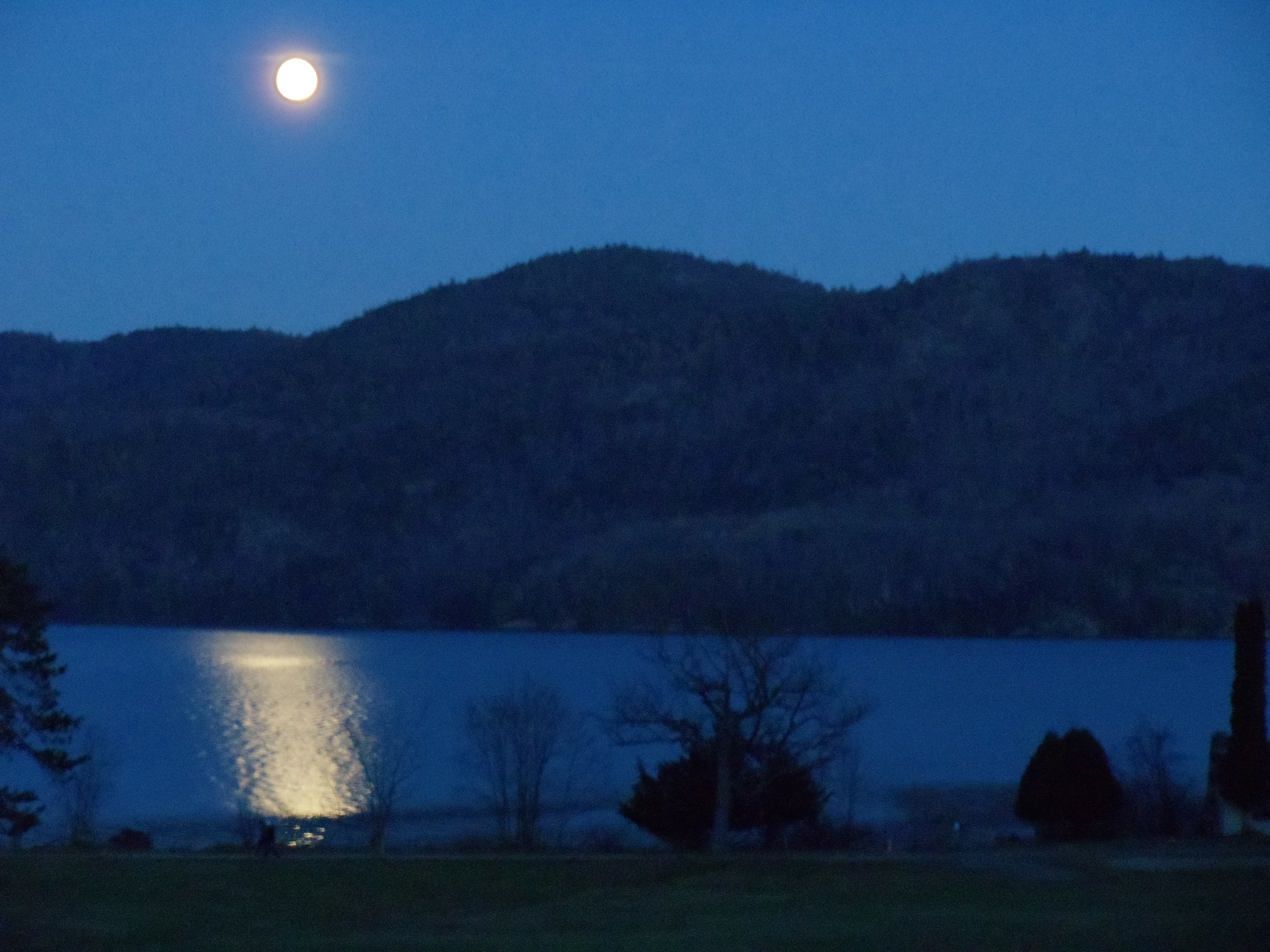
Moon over Lake George

Moon over Lake George

Hosted by the Eastern New York Chapter of the Society of Children’s Book Authors and Illustrators, these fall and spring weekends take place on magical Silver Bay in Lake George, New York. This retreat has an amazing participant:presenter ratio–35:5. It’s no surprise, spots fill quickly. This workshop will stretch you and give you a boost.

UCLA Extension Writers’ Program

This online program pairs you with an instructor and a small group of students. I took a course called “Creating Memorable Characters,” which included textbooks and novels to read, as well as the expected homework. Interacting with the instructor and with the other students who were from all over the planet made this course especially fun.

I’ll give you a moment to look over the menu. If you have any questions, please let me know. I’m happy to serve you. Bon appetit!

Hors d’oeuvres have always had a pathetic interest for me. They remind me of one’s childhood that one goes through wondering what the next course will be like–and during the rest of the menu one wishes one had eaten more of the hors d’oeuvres. ~ H.H. Munro


let’s talk about “the J word”

Standard

A perennial topic, worth revisiting . . .

Vicky L. Lorencen's avatarWelcome to Frog on a Dime

green with jealousy green with jealousy Up until recently I believed I had green eyes. (Even my driver’s license says so.) But then, my redheaded, hazel-eyed daughter insisted my eyes are blue. So, at my last optometrist appointment, I asked my doctor to confirm once and for all that my eyes are indeed green. (You know, just to set the matter to rest with an expert opinion.) Turns out, my eyes are . . . blue. Truly green eyes, according to my doctor, are rare.

Of course, there’s another kind of green eyes that isn’t so rare–the green eyes of that monster called jealousy. Now, I know I’m poking around in a touchy topic. Jealousy is, well, it’s embarrassing. It makes us feel small, immature and vulnerable. Nothing pretty about that.

Jealousy is an especially sensitive issue among children’s writers. It’s been my experience that we are an exceptionally supportive bunch. We’re not…

View original post 441 more words

take the spot your super power quiz

Standard
Photo by Vicky Lorencen

Photo by Vicky Lorencen

In 2013, I was fortunate to receive a critique from the lovely and ever-encouraging YA author Cynthia Leitich Smith. After reviewing the opening chapter of my second middle grade novel, Cyn told me humor was my super power. Me? I have a SUPER power? Well, if I have one, I know for certain you do too.

Maybe your super power is . . .

  • Writing realistic dialogue
  • Riding that fine line between sweet and sentimental
  • Creating rich, other-worldly settings
  • Weaving intricate, suspenseful plots
  • Concocting quirky, but believable characters
  • Being just plain funny
  • None of the above–it’s your own proprietary blend

It’s always easier to pinpoint someone else’s super power, isn’t it. My friend Lisa Wheeler is a whiz with rhyme. Catherine Bieberich and Kelly Barson are able to strike a perfect balance between heart and humor. Jennifer Whistler crafts novels with a highly visual, cinematic quality. Others, like Monica Harris, are grand researchers who cull little-known tidbits from old texts to make even snoresville non-fiction topics intriguing.

What’s the point in knowing your super power? Well, as with a lot of things, it’s empowering to have a “go to”—like that perfected dish you can always whip without worry or that compliment-winning outfit in your closet. You can’t make lemon chicken piccata or wear that same suede jacket every day, but when the time is right, it’s confidence-building to know it’s there when you need it.

You can’t lean on your superpower for everything. (Even Superman had his day job as Clark Kent.) That’s why it’s important to read widely, request critiques, participate in workshops and stretch yourself by writing outside your comfort genre. Because my super power is humor, it’s easy for me to write in silly sound bites and let my characters make clever asides. While being funny can be engaging and amusing, overuse of humor can lapse into what I call “snarkasm.” Chronic quipping distances readers and makes otherwise 3-D characters seem shallow. A clever boy can become what political consultant David Alexrod described as a “congenital smart aleck.” There’s nothing super about that.

So, how about you? What’s your super power? (You may even have more than one!)

Spot Your Super Power Quiz

  1. When someone critique’s my work, the first positive thing I most often hear is:
    1. You’re so ___________________________.
    2. Your writing is ________________________.
  2. I feel most at ease writing ____________________.
  3. If I had to compare my work to someone else’s, it’d have to be:_____________________ and his/her work is known for ____________________________.
  4. Three words I’d use to describe my work:
    1. ___________________________
    2. ___________________________
    3. ___________________________
  5.  Text/call a fellow writer and ask for three words to describe your work:
    1. ___________________________
    2. ___________________________
    3. ___________________________
  6. Is there an overlap between the answers to questions 4 and 5? If so:_______________________.

My super power is:__________________________.

Super! Please use your super powers for good. And remember to pick up your cape from the dry cleaners.

We must be careful with our words – we’re like superheroes and words are like our super powers. Super powers should always be used to help others. ~ Dianna Hardy


100 things I wouldn’t know

Standard

In honor of my 100th blog post, I want to share 100 things I wouldn’t know if I’d never become a children’s writer.

Collage by Vicky Lorencen

Collage by Vicky Lorencen

  1. Follow submission guidelines like you are assembling a nuclear warhead. No fudging.
  2. Trends are to be watched, not followed.
  3. Focus on what you’re doing well. Do more of that.
  4. A synopsis is as much for your benefit as it is the editor’s.
  5. Writing is reductive. Writing should be like a sale at the GAP–it should always be 20% off. (Mo Willems)
  6. Waiting for opportunities is fiddle faddle. Create them.
  7. Don’t ask too much of a first chapter. It’s an invitation to the reader and an opportunity to assure her you can be trusted. (Andrew Karre)
  8. Query letters are the most important and least read letter you’ll ever write.
  9. Show a character’s feelings through reactions.
  10. Just about everybody struggles with jealousy. I am jealous of those who don’t.
  11. Picture books are an art form unto themselves.
  12. Query letters need to sound like your real voice, not a superficial marketing pitch.
  13. Joining a critique group can be a game changer.
  14. Having a social media presence is important, but don’t let it infringe on your writing time.
  15. Always send thank you notes.
  16. Scene = Time + Place + One Change (Candace Fleming)
  17. Having beautiful file folders makes revision more funner. More fun, that is.
  18. Do not bother with Goodreads.
  19. Use index cards to map out scenes in a novel.
  20. For novels, ask–what is the job of this chapter?
  21. Facebook can really mess with your head.
  22. Follow-up with queries and submissions. You did the sending after all.
  23. Keep in touch with the editors, agents and participants you meet at conferences.
  24. Small workshops are often more worthwhile than big conferences.
  25. Back up your files and back up your back up files.
  26. Write what you know.
  27. Write what you wish you knew.
  28. Look for the seeds to resolving your story’s conflict within the story itself.
  29. Characters have been alive a long time before they introduced themselves to you.
  30. Writing costs money, time and energy. It’s worth it.
  31. If you feel stuck in your genre of choice, shake things up by writing in a different one.
  32. Everybody wants to quit at some point.
  33. Giving back doubles the investment you’ve made in your own writing.
  34. The journey to publication is not a race.
  35. Take thank you notes with you to conferences so you can thank people right away.
  36. Identifying (and eradicating) your crutch words can help to tighten your writing. Find/replace is your friend.
  37. Print out your entire novel in 8 pt. font, highlight the “solid” parts, then spread it out to see where the plot sags. (Thanks, Darcy Pattison)
  38. One carry-on bag is really all you need.
  39. Characters must undergo an inner and outer journey.
  40. Resist the urge to hide during conferences.
  41. Talk about your dreams and ambitions.
  42. Having a blog is fun work.
  43. You don’t have to start a novel with a big bang. Let the reader get to know the character before the inciting incident.
  44. Flying solo isn’t heroic. It’s nonsense.
  45. In a query letter, use quotes from the book to show character. (Christy Ottaviano)
  46. Your first idea is not unique. Twist it.
  47. Accept critiques with grace.
  48. Give critiques with humility.
  49. An editor’s job is to help clarify what your book is about.
  50. When you read, read like a writer.
  51. Give the same amount of care to world building/setting as you do to creating characters.
  52. A good cup of tea can fix a lot of things.
  53. Progress is the difference between finding time to write and making time to write.
  54. We write to re-write. And then to re-write what we re-wrote.
  55. Editors and agents are people too.
  56. Writing is an act of revelation. (Cynthia Leitich Smith)
  57. Use Find & Replace to weed out those just so very, very, very useless words.
  58. Your family may never grasp that staring off in space in part of the writing process.
  59. Writing will drive you to do otherwise loathsome tasks like cleaning the refrigerator (at your neighbor’s house because you’ve already cleaned yours. Oh, and organized your sock drawer. Twice.)
  60. Writing makes every life experience—from fixing a flat to flying in a helicopter–fodder for future writing.
  61. Disappointment is standard issue.
  62. You can always quit. No one is forcing you to write.
  63. Reading at open mic is a hoot. (I mean this.)
  64. Figure out a way to remember names (for when you go to conferences). You’re a word person. You can do this.
  65. There are two kinds of non-writing people—those who are in awe of you and those who think anyone can be a writer, especially for children. Don’t worry about either kind.
  66. Pretend to be confident. You may be a shy person, but that’s no one’s business but your own.
  67. Rejection sucks.
  68. There are three effective ways to make rejection suck less. I don’t know what those ways are.
  69. Readers bond with characters when we ask them to stretch. (Cynthia Leitich Smith)
  70. When you get stuck, stop. Move on to something new or take a nap. Let your mind wrestle with the knots a while before you go back.
  71. Writing is like wood carving. You go from larger to smaller, so don’t focus on details first.
  72. Most parents only get to name two, three, maybe four or so people. Writers get to name lots of people. Cool.
  73. Characters may push you. Let them.
  74. Grammar matters. At least know the rules before you snap them.
  75. Be respectful to everyone, even (and especially) on social media.
  76. Stories must balance between the specific and the universal.
  77. It’s important not to have a sense of preciousness with your work. (Shaun Tan)
  78. In writing, the author is the third wheel. You’re in the way. No one wants you there. You need to be invisible. (Mo Willems)
  79. Laughing at your own writing is a great feeling, so long as you were intending to be funny.
  80. Writers cannot emotionally protect themselves. (Coe Booth)
  81. It’s important to love my secondary characters as much as my main characters.
  82. Reinvention is the dark chocolate in the writer’s life. (Jane Yolen)
  83. Secondary characters can’t simply exist to serve the main character’s story.
  84. Don’t let details overwhelm or derail a story.
  85. Before you begin drafting a novel, create character sketches by interviewing each character.
  86. Stay out of a character’s head as long as possible. (Andrew Karre)
  87. Invest in your friendships with other writers. It will always, always be worth it.
  88. Pay attention to what kids do, enjoy and worry about now. Some things never change, but not everything.
  89. No one wears a T-shirt with their favorite plot on it. Readers fall in love with characters.
  90. A writer’s validation has to come from what her work means to a reader and not from reviews or awards. (Ed Spicer)
  91. Reliable WiFi and a laptop with a light up keyboard are splendid things.
  92. Create a room in your home (or at least a zone) that’s for writing only.
  93. The feel of book pitch needs to match the tone of the story.
  94. Something as ordinary as weather can be used to impact the mood of a story. [Cue the thunder-clap.]
  95. To learn about my characters, I need to ask where am “I” in my writing. (Coe Booth)
  96. You can write an entire novel without once using a semi-colon.
  97. Ultimately, the purpose of storytelling is to remind us of something ordinary or familiar. (Shaun Tan)
  98. Generally speaking, chocolate will not fill plot holes. But it can’t hurt to try.
  99. Brilliance strikes two seconds after you hit send on a submission.
  100. Everything takes longer than you think it will. Even reading lists.

The list could surely go on, and there is nothing more wonderful than a list, instrument of wondrous hypotyposis. ~ Umberto Eco

nine picture book topics to avoid

Standard
By Leslie Helakoski Boyds Mills Press

By Leslie Helakoski
Boyds Mills Press

While we’re still knee-deep in winter, it helps to have something GREAT to look forward to. Here’s what I high-as-a-snowbank highly recommend . . .

Children’s book author Darcy Pattison and children’s book author/illustrator Leslie Helakoski will co-lead a unique workshop, PB&J: Picture Books and All That Jazz at Highlight’s Foundation in Honesdale, PA on April 23-26, 2015. Join them and learn how to make your story rise above the fierce competition.

For a taste of what’s to come at the PB&J workshop, here’s a wisdom-filled article written by Darcy and Leslie . . . 

When people think about writing a children’s picture book, clichéd topics pop up. These classic themes are based on universal childhood experiences. It’s not that these topics are taboo. Instead, they are so common that competition is fierce. As they say, children’s publishing is a bunny-eat-bunny world.

Here are the top 9 topics to avoid. Also listed is a children’s book, published within the last 5 years, that is a fresh take on the topic. If you are considering writing a picture book about one of these topics, it will be a harder sale unless you can find an original way to approach it.

1. First Day of School. Everyone wants to get kids ready for the first day of school, and it’s hard to find a fresh approach.

Updated title that works:

Dad’s First Day (July, 2015), written and illustrated by Mike Wohnoutka.

2. Tooth fairy. People have 32 teeth, and losing baby teeth in early elementary school is a universal experience. The tooth fairy often has a place in a family story, which makes it a perennial topic for a children’s book.

Updated title that works:

The Dinosaur Tooth Fairy (2013) by Martha Brockenbrough, illustrated by Israel Sanchez.

3. Christmas/Halloween. Major holidays are often the focus on children’s books.

Updated Titles that Work:

Christmas Parade (2012) written and illustrated by Sandra Boynton.

Smudge and the Book of Mistakes: A Christmas Story (2013), by Gloria Whelan, illustrated by Stephen Costanza.

 4. Wanting a pet. From gerbils to dogs, cats to chinchillas—humans love their pets. It’s a natural topic for a children’s book.

Updated titles that work:

I Want a Dog: My Opinion Essay (2015) by Darcy Pattison, illustrated by Ewa O’Neill.

I Want a Cat: My Opinion Essay (2015) by Darcy Pattison, illustrated by Ewa O’Neill.

5. Dealing with a disability. With today’s cultural emphasis on diversity (#WeNeedDiversity), libraries are looking for stories with disabled characters.

Updated title that works:

My Three Best Friends and Me, Zulay (2015) by Cari Best, illustrated by Vanessa Brantley-Newton.

6. Visiting Grandma and Grandpa. Who buys books for children? Grandparents! And of course, grandparents want to encourage a close relationship with their grandchildren. Do this topic with humor and honest emotion and you’ll have a winner.

Updated titles that work:

How to Babysit a Grandpa (2012) by Jean Reagan, illustrated by Lee Wildish.

How to Babysit a Grandma (2014) by Jean Reagan, illustrated by Lee Wildish.

 7. New baby in the family. Young children often have to move over and make room for a new sibling. Books helps them work through the complicated emotions when a new baby arrives

Updated title that works:

You Were the First (2013) by Patricia MacLachlan, illustrated by Stephanie Graegin.

8. Barnyard stories/rural nostalgia. The rural roots of America are ever-present in children’s books. One of the first things kids learn is the sounds made by farm animals. From there, chickens and pigs rule!

Updated title that works:

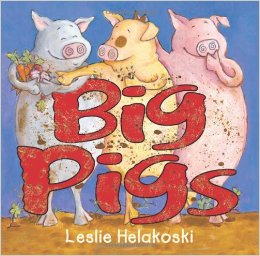
Big Pigs (2014), written and illustrated by Leslie Helakoski.

9. Bedtime stories. Kids who are read to become better readers. What better time to read than bedtime? And if the story ends on a quiet note that encourages the kids to go to sleep faster, parents will love you.

Updated title that works:

Goodnight, Goodnight Construction Site (2012) by Sherry Duskey Rinker, illustrated by Tom Lictenheld.

Not convinced that you should avoid these topics? Then put on your A-Game! Because the competition for children’s picture books about these topics is fierce. Yet, if you write a fantastic story about one of these topics, it might just become a classic.