Category Archives: Encouragement

are you out of your mind yet?

Standard

frog on a pencilIt’s no secret that we writers spend a lot of time living inside our heads. We write at stop lights and on park benches, in waiting rooms and sometimes at the movies. We may not be putting pen to paper or fingers to keyboard every moment, but on that little “screen” tucked neatly between our ears, we’re crafting dialogue, untangling knotty plot twists and musing about our main characters. It’s part of the process for most of us. I know that’s true for me.

Maybe that’s why most writers are often introverts. It’s not that we’re shy necessarily. Perhaps it’s simply that we’re content with our own company. And, at least it seems, we’re happy to sit back and observe. But I’d like to gently suggest that we may not be the great observers we think we are. With all of this writing going on inside our heads throughout the day, it’s easy to miss living in the present. How often do we fail to see or truly hear what’s happening in the here and now, while we’re imagining what our heroine will do next on a far-flung planet or trying to come up with a catchy title for that magazine article?

Mindfulness is a practice I was introduced to through a physician at the health system where I work. In its simplest form, for me, mindfulness means taking time to slow down, to breathe and to “be” in the moment. It’s like snapping out of a daydream, wide-eyed and aware of what’s happening in the here and now.

How does cultivating mindfulness benefit me as a writer? It’s no surprise that living in the moment makes me a better observer. I can soak up details–the smell of garlic and onions sweating in the pan, the peculiar way a receptionist wears her eyeliner, the sound of scrapping chickadees, the rhythm of two teen girls jabbering in the backseat or the sharp tang of Greek yogurt with pomegranate. I’ve come to understand that being present for these little details helps me become a stronger writer, and more importantly, a more avid fan of life.

How about you? Would you mind giving it a try?

Mindfulness is simply being aware of what is happening right now without wishing it were different; enjoying the pleasant without holding on when it changes (which it will); being with the unpleasant without fearing it will always be this way (which it won’t). ~ James Baraz

and the steamy winner is . . .

Standard

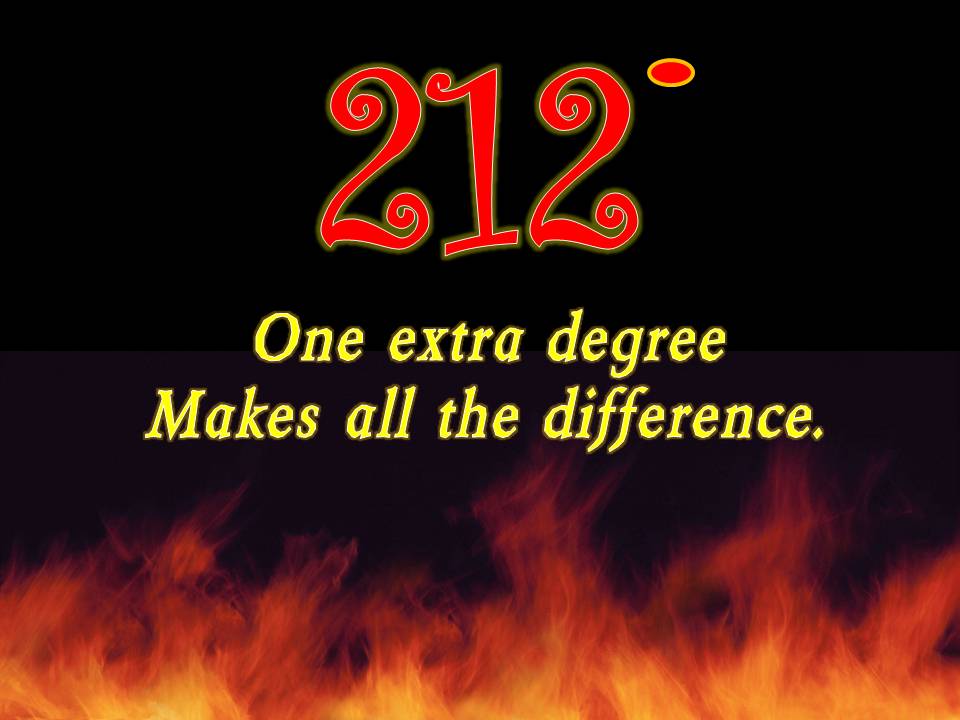
top hat frog212_degrees in red

This week on Frog on a Dime, I posed the question: “Ready to get steamy?” Based on your responses, a lot of you are!

I’m thrilled you were inspired to turn up the heat on your writing. Now you can move full steam ahead. Sometimes that’s all it takes to find your momentum–just one extra degree of effort!

Congratulations to Jennifer Rumberger–winner of a complimentary copy of 212, the Extra Degree. I hope you’ll find it to be as encouraging as I do.

And . . . as a BONUS . . . congratulations to Randy Bulla–winner of a framed “212” inspirational quote plaque. Display it on your desk to help you keep the fire under your novel writing.

Jennifer and Randy, please contact me with your addresses. I’ll be glad to send your gifts to you this week.

Like to order your own copy of 212, the Extra Degree? Let me encourage you to visit Simple Truths. (BTW, I’m not affiliated with this site. I just want to let you know how to order this cool book, if you want.)

Stay steamy!

At 211 degrees, water is hot. At 212 degrees, it boils. And with boiling water, comes steam. And steam can power a locomotive. ~ Mac Anderson and Sam Parker

ready to get steamy?

Standard

Frog in the fog

In the inspirational little book 212 Degrees, The Extra Degree, bestselling authors Sam Parker and Mac Anderson explain: “At 211 degrees, water is hot. At 212 degrees, it boils. And with boiling water, comes steam. And steam can power a locomotive.”

I love this simple metaphor because it reminds me of what’s possible, if I’m willing to consistently apply just one extra degree of effort beyond my normal routine.

It’s related to what Carl Holmes calls the “And-then-some-syndrome.” It’s all about doing what’s expected, and then some.

I’ll be honest. I don’t always want to do what’s expected (or at least what I expect of myself writing-wise), let alone “and-then-some.” Some days I’m lucky to put finger to keyboard. Funny thing is, I’ll go out of my way for my family and friends or my boss and coworkers, but I’ll feel guilty carving writing time for myself. I truly believe we need to put others first, but does that mean I have to put my dreams second–or 999th? Shucks. Course not.

This week I’m challenging myself to pour on the steam with my writing time–by one sensible, do-able degree–guilt-free. I’m going to write four pages–and then some–this weekend (and the next, etc.). What can you do to turn the knob one degree to the right to crank up some heat?

Not sure?

Let me entice you.

If you go to my contact page by Friday, April 19, and tell me how you’re going to turn up the heat on your writing life by one degree this week, you’ll be entered to win a FREE copy of “212 Degrees.” I’ll be delighted to send it to you with my compliments. It’s a quick read that could have a lasting impact on your attitude toward your writing pursuits.

Ready to get steamy?

Many of life’s failures are [people] who did not realize how close they were to success when they gave up. ~ Thomas Edison

top 3 reasons why critique groups rock

Standard

writing frogs
Why oh why did I wait so long? I wish I’d jumped into a critique group ages ago. But I’m so glad I took the leap!

My top three reasons why critique groups rock . . .

1. Critique group members hold you accountable.
I won’t lie. As much as I love writing, I truly need deadlines to keep me moving at a steady pace. I’m too good at “writing” excuses for myself. Those excuses greedily gobble up my writing opportunities, in favor of oftentimes less honorable enterprises (like watching TV. Ugh!) Knowing my critique group is ready to give me feedback, in exchange for merely meeting my deadline, motivates me to better align my priorities and quit twiddling around already.

2. Critique groups encourage you.
Writing is tough enough. When you add the pursuit of publication to equation, with its inevitable rejections, the process can be pretty painful. Being part of a gang of empathetic travelers who are uniquely equipped to offer roadside assistance when your tires are punctured or shredded is such a perk. More like a perk on steroids. It’s amazing.

3. Critique group keep you honest.
When you go solo, it’s easy to get a tad delusional. Speaking for myself, it’s easy to fall in love with the rhythm of my own words. My critique group helps me to “de-precious” my work. With their help, I can face it in a cool, objective light. Just like all green things, including my budding manuscript, light is essential for growth. If I leave my manuscript buried under a rock, it’ll be safe alright, but there’s no room for growth in a dark place. I say arm your critique group with lanterns, flashlights filled with lithium batteries and torches. You may need to wear shades to your next meeting, but it’s worth it.

Are you still group-less? Let Frog on a Dime encourage you to hop in! What are you “wading” for? (Oh, great. I know my critique group is going to bust me for the bad puns!) Let this article from Harold Underdown’s “The Purple Crayon” site help you get a jump on it.

One last thing . . . my warmest thanks to Monica, Jennifer, Cathy, Kris, David and Mindy. You’re the reasons why our group rocks!

Criticism is the windows and chandeliers of art: it illuminates the enveloping darkness in which art might otherwise rest only vaguely discernible, and perhaps altogether unseen. ~ American drama critic and editor George Jean Nathan

meet debut PB star kris remenar

Standard

Kris Remenar with illustrator Matt Faulkner
Kris Remenar with illustrator Matt Faulkner

KristenwithkidsFrog on a Dime is all about encouraging writers. Today I’m delighted to introduce my very first guest . . . the incomparable Kris Remenar, debut author, children’s librarian and one of my personal cheerleaders.

Welcome to Frog on a Dime, Kris.

Thanks for inviting me over, Vicky!

So, when did you know you wanted to become a writer?

I knew I wanted to be a writer when I was eight. I won my first writing contest in second grade. I wrote about stranger danger (even as a child, I went for the controversial topics.) I gave my stories as gifts when I was in middle school and took independent creative writing classes in high school. Then, I entered a writing contest my senior year of high school and didn’t even earn an honorable mention. I thought I’d “outgrown” my talent. So, I stopped writing for years until I became an elementary teacher. As a teacher, I modeled writing for my students and I felt like a long-lost friend had returned. I joined SCBWI in 2000 and I’ve been working on my writing ever since.

What is it about writing for children, specifically, that appeals to you?

I like the freedom of it. Groundhogs can talk, hippos can fly. And almost always, there’s some sort of happy ending. Kids’ books are hopeful.

I tend to write (and think in) picture books. I’ve begun writing my first YA novel, and it’s a little overwhelming to grapple with hundreds of pages instead of 32, but I’m digging watching the characters unfold at deeper levels.

You’re had an exciting development in your writing career recently, can you tell us about the day you got “the call” from Charlesbridge—and don’t skimp on the details!

February 2, Groundhog’s Day, is my birthday. I was at the library at my job as a children’s librarian. My editor, Yolanda Scott, and I had been through two rounds of revisions on a manuscript, but I hadn’t heard back from her in over a month and I figured she was trying to find a way to gently break bad news. The smallest, bravest part of me dared to wonder if I’d get “the call” about my manuscript that day because the story is about Groundhog’s Day and I liked the synchronicity of it all. The superstitious part of me didn’t want to jinx it by thinking about it, and the hugely self-doubtful part of me said “prepare yourself for another rejection.”

Yolanda was away from her office speaking at a conference, it was a Saturday, I had no right to hope she’d call that day. But she did call, around 4 p.m., and I grabbed my phone to run to the back offices. When Yolanda told me that Charlesbridge wanted to acquire my book, this amazing, breathless, telescopic feeling came over me. The eight-year-old me, the twelve-year-old me, the twenty-nine-year-old me, all the me’s who had waited for this day felt elated and justified in putting forth the effort over all the years. And it felt like “of course the call came at this time from this supportive, generous editor.” I couldn’t have plotted it better if I’d tried.

That’s amazing, Kris! Congratulations! I was actually listening to Yolanda present at the SCBWI conference the day you got the call. I enjoyed hearing Yolanda, have I to admit I was distracted because I kept thinking—stop presenting, Yolanda, and call Kris already!

I predict your story is going to give encouragement to a lot of writers, especially since you were able to land your first contract without an agent. What advise would you give to someone who has been pursuing publication for a long time, with close calls, but no contracts?

Keep going! It took me 12 years from the time I sent out my first manuscript to the time I finally sold a book. If I had called it quits after 5 years, or after 10, I never would’ve received “the call.”

I have to ask . . . how did you keep going for 12 years?

Have you heard that quote “writing makes me crazy, not writing makes me crazier?” I kept writing because characters talked in my head, or I’d have a flash of a scene in a dream that I just had to put on paper. Being a member of SCBWI and having the camaraderie of those who get that, and who never said that writing for children is “sweet,” made the years of rejection bearable.

Thank you so much for sharing your story, Kris. You are a true encourager!

Be sure to watch for the debut of Kris’ picture book in fall of 2015–illustrated by wonderful illustrator Matt Faulkner (who is also Kris’ husband!). You can count on Frog on a Dime to celebrate that exciting event.

And to wrap things up, Kris’ favorite quote . . . If there’s a book you want to read, but it hasn’t been written yet, then you must write it. – Toni Morrison

Bonus Information! Kris blogs about picture books and ways to use them in the classroom to teach the Common Core State Standards. You can check out her recommendations.
I was born in the year of magic

Standard

I was born in the year of magic. Not many people can say that, but I can. 

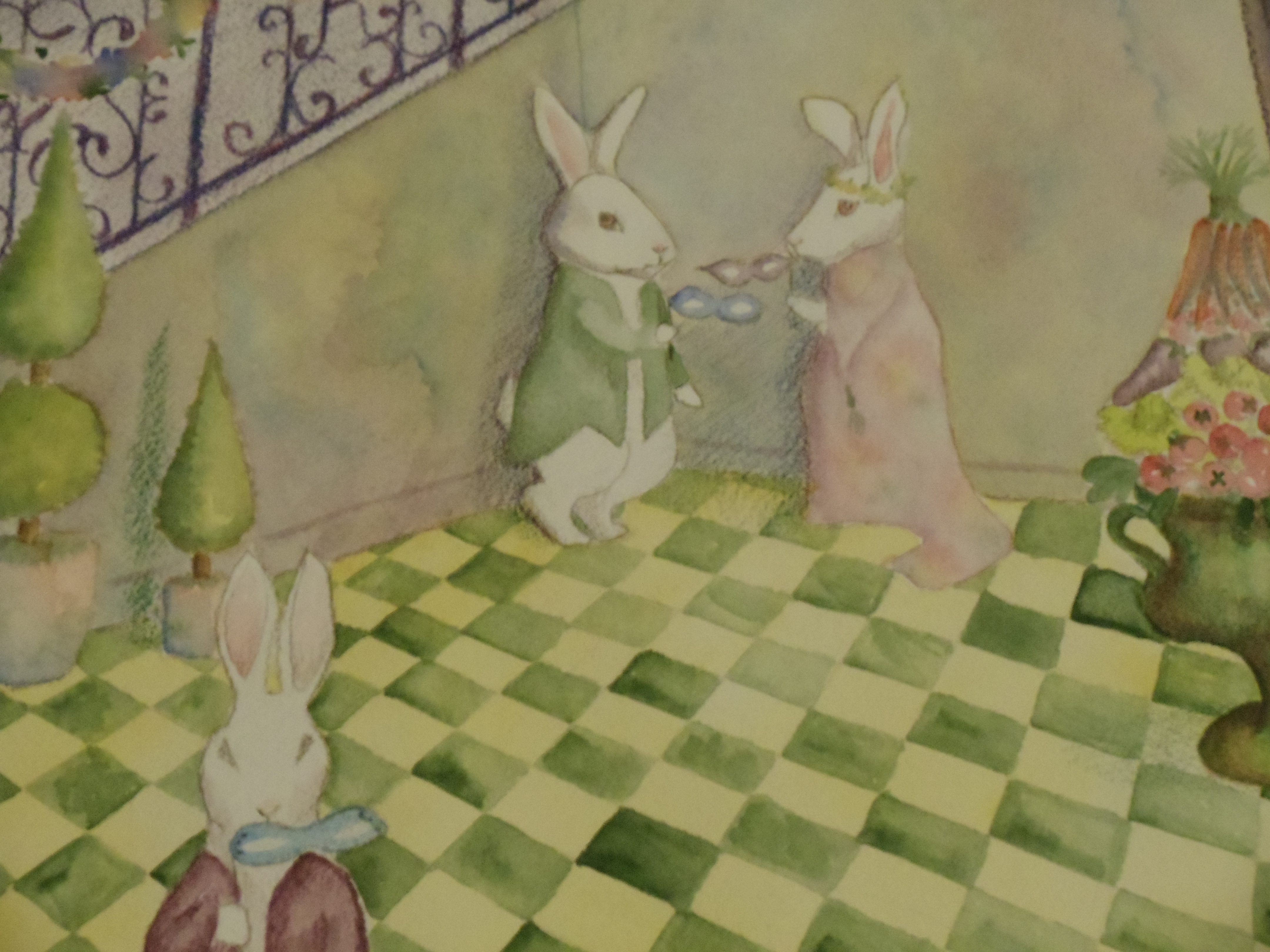
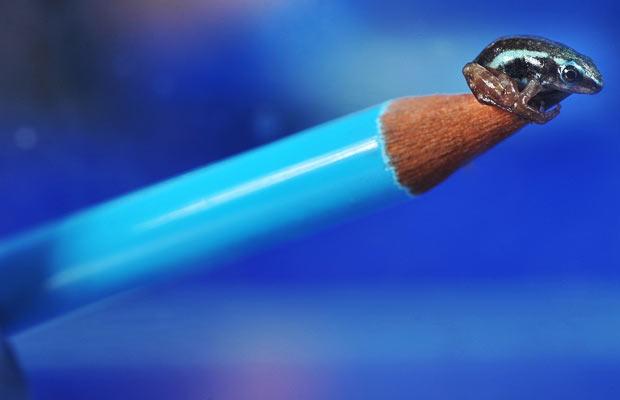
Watercolor by Vicky L. Lorencen

When I was born on March 4, 1963, amazing things were bubbling up in the realm of children’s literature. Beloved books like Where the Wild Things Are by Maurice Sendak were published in 1963. While I have no concrete evidence to connect my devotion to children’s books to the time I was born, who’s to say otherwise? (And just so you know, Theodor Geisel (aka Dr. Seuss) was born in March too–if that helps to convince you.)

The 1960s were what I consider the golden age of children’s literature. Picture books we now consider classics like The Very Hungry Caterpillar by Eric Carle, The Snowy Day by Ezra Jack Keats, Go Dog Go by PD Eastman, Amelia Bedelia by Peggy Parish, and Norman Bridwell’s Clifford the Big Red Dog and Bedtime for Frances by Russell Hoban were enjoyed by parents and children for the very first time. Junior high students feasted on freshly published novels we now cherish like Island of Blue Dolphins by Scott O’Dell, Charlie and the Chocolate Factory by Roald Dahl and A Wrinkle in Time by Madeleine L’Engle.

Regardless of the era in which we are born or the format in which books are produced, I hope (and believe) children’s literature will always have an honored place in childhood. At an SCBWI National conference, I heard children’s novelist Margaret Peterson Haddix talk about the difference between the books we read as children and those we read as adults. She observed that as children we devoured our books. If we loved a book, we read it over and over and over again. We memorized it, pondered on it and carried it with us, in our small hands and in our hearts.

And Ms. Haddix is right. As children we build a cozy fort in our hearts for the books we love. Maybe it’s because as adults, fiction is a mirror of our experiences, but for children, books are our streak-free windows. They help us see and experience things for the very first time. And to a child, that feels like magic.

I was born in the year of magic. By re-reading the stories of my younger years and creating new ones, I plan to keep my inner child happy for many year to come.

I grabbed a pile of dust, and holding it up, foolishly asked for as many birthdays as the grains of dust, I forgot to ask that they be years of youth. ― Ovid, Metamorphoses

How to Struggle Successfully

Standard

Somewhere along the way, at least in Western culture, struggle’s gotten a bum rap. If you’re smart, we say, then mastering something new will be easy. That is, after all, what being smart means,. Smart is who you are. You achieve things because of who you are. If you don’t catch on to something quickly or achieve a dream with ease, then obviously you’re not “good” at it. You’re not smart. You should hang it up. Move on to something else. To heck with struggling.

But maybe it’s not all that simple, my little Prickly Pears.

Recently, I’ve become aware that in Eastern culture it’s understood that learning a new skill will involve struggle before it’s mastered. Struggle is seen as an opportunity. Working hard to learn something is how you achieve it. It’s not about who you are, but what you do. You are admired for your perseverance.

Taking a cue from Eastern culture, I’m choosing to see struggle as an opportunity too. At the health system where I work, we label an area or process that could use refinement as an “opportunity for improvement.” The inevitable mistakes that come with learning are not seen as negative. They are a chance to grow, stretch and struggle to make things even better. I love that. It’s freeing and motivating.

My personal struggle of choice is to become a published children’s book author. As much as I love writing and for as long as I’ve pursued publication, realizing this dream is still just out of my reach. Can I honestly say I enjoy the struggle? Oh yes, just about as much as Julia Child adored deep-sea diving. But I am learning to embrace the struggle as part of the process. Who knows, maybe it’s the most valuable part.

Come to think of it, most worthwhile things in life are achieved through hard work and struggle–creating a happy marriage, raising confident, compassionate kids, earning a diploma, starting a business, writing an engaging novel, learning to cook a heavenly holiday feast.

What about you? You must have a dream too or something you’d like to/need to learn that’s a challenge for you. Do you welcome the challenge and assume that you’ll struggle a bit to start? (Note, I define a “bit” as anywhere from a few hours to a decade, depending.)

How you view struggle oftentimes determines how long you’ll stick with something. But remember, struggling is not a red flag telling you that you’re not cut out for this, that you have no talent or that because it’s not “easy” for you that you’re not smart. No need to duck and run. Save the apologies and excuse-making. I (ever-so-humbly) suggest that you join me in embracing the process, my Buttered Niblets. G’head. Give it a good hug. When you can do that, regardless of the outcome, you are already a grand success.

You may encounter many defeats, but you must not be defeated. In fact, it may be necessary to encounter the defeats, so you can know who you are, what you can rise from, how you can still come out of it. – Maya Angelou