how to “get lucky” in five easy steps

Standard

DSC03024
If all it takes to sell a book is talent, work hard and perseverance, more of us would be published. Like it or not, luck is a piece of the process. But can you make your own luck? I think so. You just have to be willing to ask for it, compete, put out, flaunt a little and sell yourself.

1. Ask for it. Whenever I receive a manuscript critique from an editor or agent, I always end the conversation by asking if I can send him or her my manuscript. Pride is too pricey. Go ahead and pop the question the editor or agent is expecting you to ask. (And then make sure you follow through. Send that manuscript and mention the invitation in your cover letter.)

2. Put out. Sweetie, shyness is simply out of your price range. You really must interact with other writers and members of the publishing community via social media. Send cards. Build and cultivate a blog or web site. Comment on other’s blog posts. Be generous and offer your help to others in the form of critiques or feedback. Aside from surrounding yourself with a supportive community of talented people, you never know where those connections may lead.

3. Flaunt a little. Humility is pricey too. You’re going to have to loosen up and show off a little. An author/illustrator friend of mine, Ruth McNally Barshaw, was contacted by an agent after a friend encouraged her to share her sketches online. Ruth wasn’t looking to lure an agent, but posting her work resulted in the start of a fabulous partnership and the launch of her graphic novel series–Ellie McDoodle.

4. Be willing to compete. When was the last time you entered a writing contest? In 2012, I entered a contest sponsored by the National Association of Elementary School Principals. Did I win? Uh, noop. But my picture book manuscript placed in the top 5 out of more than 750 entries. Did that boost my confidence. Yes, indeedy. Children’s Writer and Highlights run themed contests regularly.

But don’t limit yourself to writing contests. If there’s a pricey conference you want to attend, chances are there’s a scholarship contest to go with it. I have had the privilege of receiving funds for both a regional and a national SCBWI conference, as well as for a Highlights Foundation Writers Workshop. And don’t assume you have to be penniless to apply. Check out the requirements to see if you qualify and go for it. Even if you don’t win, oftentimes filling out the application gives you great practice for a query letter or synopsis. So, it’s time well spent even if it doesn’t result in cash.

5. Sell yourself. Have that elevator pitch memorized. Be ready to talk intelligently about whatever you’re working on right now. Know how to introduce yourself as a professional–including a beautiful business card. Work it, Baby.

Make yourself some good luck this week!

Luck is what happens when preparation meets opportunity. ~ Seneca

You know, Hobbes, some days even my lucky rocket ship underpants don’t help. ~ Bill Watterson, Calvin & Hobbes

say hello to lisa rose

Standard
Meet Lisa Rose

Meet Lisa Rose

It’s my delight to introduce you to vivacious, rap-writing debut author Lisa Rose. I first met Lisa through our regional chapter of SCBWI and was immediately attracted to her bright smile, energy and enthusiasm. And wait until you hear her good news . . .

Tell us about your book–details! We want details!
SHUMLIK PAINTS THE TOWN will be published by Kar-Ben in 2016. It’s about a painter named Shumulik who needs to create a mural for Yom Ha’atzmaut (Israeli Independence Day). He can’t think of anything to paint and soon all of Jerusalem will be there. What is he going to do? It has a funny surprise ending!

Can’t wait to read SHUMLIK PAINTS THE TOWN and find out what the surprise is. So, when did you know you wanted to write for children?
It sounds cliché, but I was in second grade. I wrote a poem and my teacher called me a writer. I always wanted to write. But my mother told me to do something that made money. So I became an elementary teacher and got really, really, really rich! Moral of the story: don’t listen to your mother.

Very funny, Lisa. Now, what is it about writing for children that appeals to you versus writing for adults?
Hope. All children’s book must end in hope or by definition they are not a children’s book.

What’s the best writing advise you’ve ever been given?
I was a playwright before I wrote for kids, but this still applies: “No amount of sequins can save a bad script.”

Love that. And it definitely applies to children’s writing too. As you know, Frog on a Dime is all about encouraging children’s writers, so what’s the most encouraging thing anyone has ever said to you (related to writing)?
It was from Michigan’s own Debbie Taylor. I was writing outside of my race and shared with her I wasn’t trying to be revolutionary, I just wanted to write about something that touched me. Debbie said, “That’s your answer!” Recently, I was working on a project and it just wasn’t working. I tried and tried. Until I realized I was writing it for all the wrong reasons. I think good writing must have passion and purpose. The idea must scrape your soul.

Photo by Vicky Lorencen

Photo by Vicky Lorencen

What advise would you give to someone who has been pursuing publication for a long time, with close calls, but no contracts?
Keep going and learn how to flip-turn. I was swimmer before I was writer. It is excellent training. I was used to going as fast as could into cement walls. Instead of crashing after rejection, I just turned around and swam as fast I could into another cement wall. I sent the editor at Kar-Ben over twenty stories. We were on a first name rejection basis. But she kept encouraging me to send more stories. And so I did. I told myself I was going to keep writing until I got a contract or a restraining order from her. Luckily for me, the contract came first.

That’s great advise, Lisa. I’d never thought about flip-turns, but that’s a perfect analogy for the submission process. Time for one last question? Okay, name three things we’d be surprised to learn about you.
1. While I have this nice Jewish book coming out with Kar-Ben, most of my novels feature African-American characters and I am working on a digital media project with the former producers of rapper Eminem. Yes, I even write rap music.
2. I have partnered with a Detroit graffiti artist, Fel3000ft. to create a chapter book. I joke that I write everything from shalom to shazizzle!
3. I like eating ice cream with a fork.
4. BONUS! I have an e-book coming out with MeeGenius in the Spring: OH NO! THE TOOTH FAIRY BROKE HER WING! It is a sequel to OH NO! THE EASTER BUNNY IS ALLERGIC TO EGGS!

Hey, this was fun, Lisa. Thank you for stopping by Frog on a Dime. Wishing you many more publishing success stories. Keep doing those flip-turns!

but I don’t even like kids

Standard
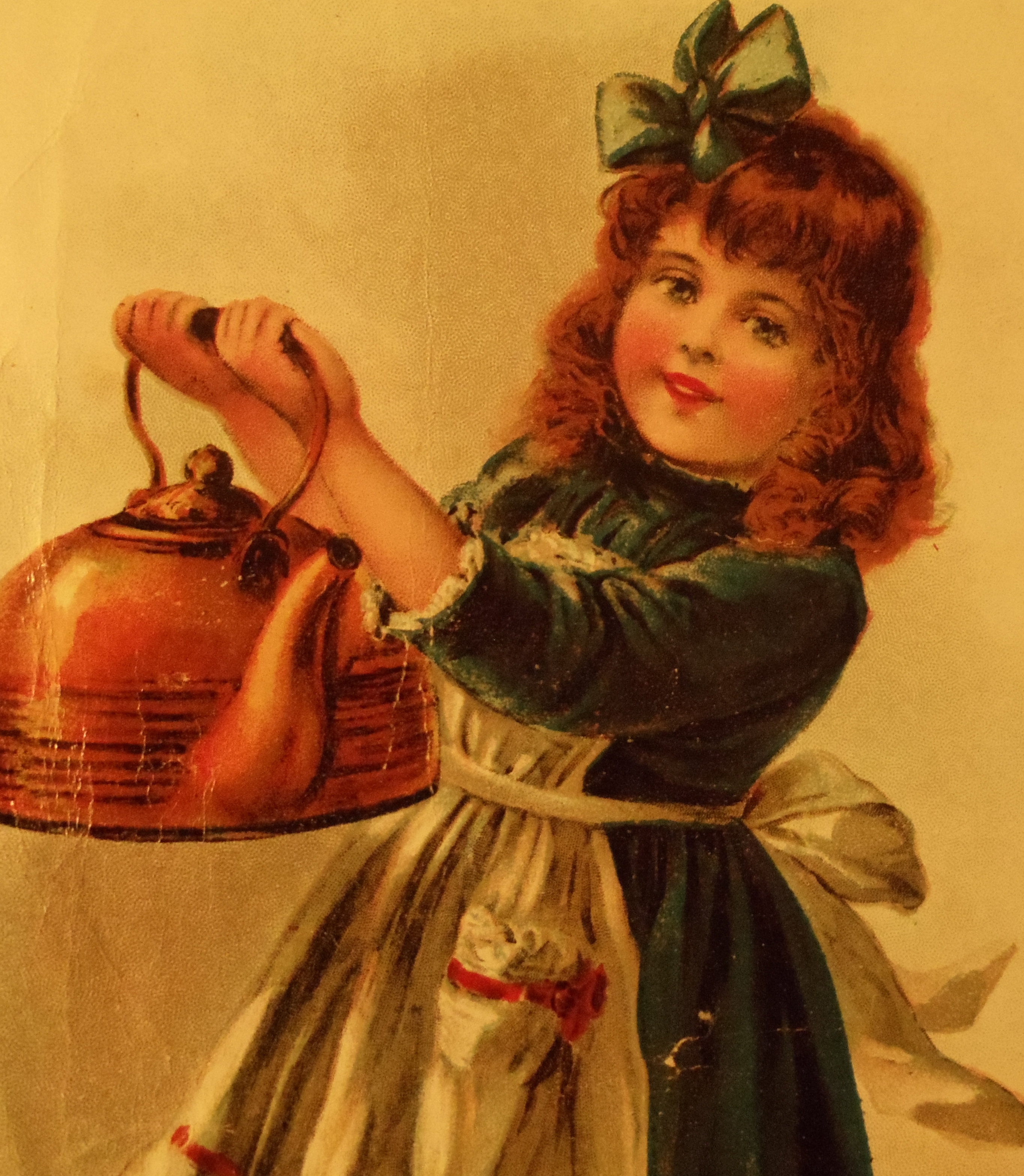
"Look. I'm carrying a kettle of scalding water."

“Look! I’m carrying a kettle of scalding water.”

What’s with the face? You don’t like honesty? It’s not completely accurate to say I don’t like kids, because I do–on a child-by-child basis. But the species in general? Not so much.

And in case you’re wondering, yes I have two children of my own. Do I love them? With all my heart. Do I want to be surrounded by a battery of wee nose miners on a daily basis? Oh, my. NO.

I knew it. “The face” is back. You’re wondering why I want to write children’s books when I’m not a super fan of kids. Let me explain how I reconcile the apparent disconnect–at least as I understand so far.

Not too long ago I met Andrew Karre, the editorial director for Carolrhoda Books, at a retreat for children’s writers. He told us he believes children’s literature is about children, and not written for children. What’s the distinction? Motivation. Rather than being audience-centric and focusing on pleasing the reader, Karre suggests the drive to create children’s literature needs to focus inward. Intriguing perspective, isn’t it? I had to noodle over it for quite a while, but I think he’s right.

From the time I recognized myself as a writer an ice age ago, I knew I wanted to write children’s books. Isn’t that odd? So specific. So narrow. Children’s literature has an innate openness, optimism, humor, bravery and tenderness that makes it irresistible to me, as a reader and a writer. Those are the qualities I want funneling through my brain, my heart and my imagination. Writing about children allows me to experience that. I am so lucky. Knowing a child may enjoy what I love to write is a spectacular bonus.

What about you? Why does children’s literature call to you?

(And by the way, if you like kids, it’s okay. I still accept you.)

A children’s story that can only be enjoyed by children is not a good children’s story in the slightest.
~ C.S. Lewis

i was born in the year of magic

Standard

Happy March! Can you feel the magic?

Vicky L. Lorencen's avatarWelcome to Frog on a Dime

frog in top hat I was born in the year of magic. Not many people can say that, but I can. March 4, I’m celebrating my first 50 years. When I was born, amazing things were bubbling up in the realm of children’s literature. Beloved books like Where the Wild Things Are by Maurice Sendak were published in 1963. I have no concrete evidence to connect my devotion to children’s books to the time I was born, but who’s to say otherwise? And just so you know, Theodor Geisel (aka Dr. Seuss) was born in March too–if that helps to convince you.

The 1960s were what I consider the golden age of children’s literature. Picture books we now consider classics like The Very Hungry Caterpillar by Eric Carle, The Snowy Day by Ezra Jack Keats, Go Dog Go by PD Eastman and Bedtime for Frances by Russell Hoban were enjoyed by parents and children…

View original post 260 more words

a power of incomparable worth

Standard
Photo and notes by Vicky Lorencen

Photo and notes by Vicky Lorencen

“Handwritten letters are more special. They’re heartfelt,” my teen daughter said. “They aren’t like texts. You want to read them over and over.”

Such a brilliant girl. [Mom blushes.] She recognizes the power of the written word–the handwritten word.

Eons ago I sent letters to a friend during a dark time in her life. But, to be honest, I had forgotten all about them until I received a surprise in the mail last week. My friend wrote to tell me, “Your loving, tender words were part of the life-saving medicine that kept me alive until I felt like living again.” Wow. I was clueless to the impact of my letters. Incapable of mending her broken heart or fixing her circumstances, all I had to offer were words. And so I did.

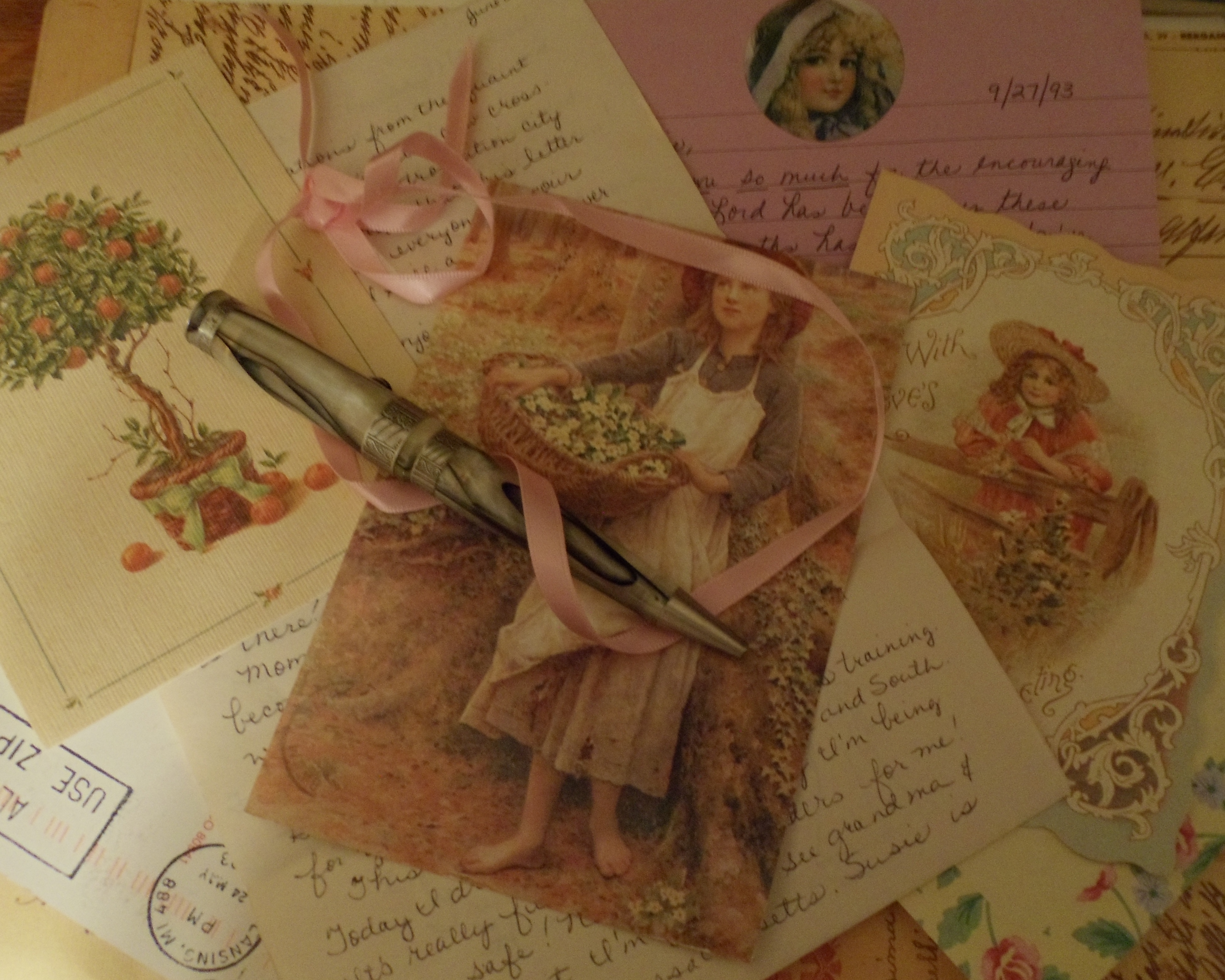
Inside her letter, wrapped in a pink ribbon, my friend tucked some of the more the two dozen letters she’d received from me and kept all these years. (See photo.) She said she wanted to return my words to me. How unexpected and exceptional! Re-reading those letters I’d penned ages ago made me grateful to know I was able to do something for a friend in need.

Words are free. Most anyone can draft a sentence. But it takes a willing writer to string those words into something meaningful and soul-touching. You have that ability. It’s a power of incomparable worth.

Whose life will be better because they received a word from you?

Take 20 minutes right now–less time than it takes to watch a sitcom–and write a letter to someone. Don’t fret over revising, critiquing, scrutinizing and all that jazz. Just let your heartfelt words flow. Then address that note, stick on a stamp and send it on its way.

Do it. Don’t delay. Exercise your power today.

To write is human, to receive a letter: Divine! ~ Susan Lendroth

making nice with the colonoscopy of the literary world

Standard

Photo & Collage by  Vicky Lorencen

Photo & Collage by
Vicky Lorencen

Be look-me-straight-in-the-eye honest . . .

If Synopsis sent you a Friend Request on Facebook, would you reply?
If you were mandated by law to have dinner with either Synopsis or a bagpipe-playing bulimic zombie, which one would you choose?
If Synopsis offered you an all expenses paid vacation to a secluded island paradise, would you go, if he had to share your bungalow?

If you answered:
No. Automatic decline.
Zombie. No doubt.
No way!
You are in the majority.

Poor Synopsis. He’s the colonoscopy of the literary world–you know you need to do it and it’s important, but you want to avoid it for as long as humanly possible. Just thinking about it makes you tense up.

The only one who actually likes Synopsis is Query Letter, because compared to Synopsis, he seems fun to be with.

So, seeing as we are all grown-ups here and knowing we will all have to face down Synopsis sooner or later–at a party, in an elevator or even in our office–let’s find a way to make nice, shall we?

Here are the bare bones basics for getting along with Synopsis (at least as I understand them). Think of it as Synopsis Etiquette 101.

Some authors like to create a chapter by chapter synopsis, but I prefer the kind that simply follows the high points, main characters and natural plot arc of the story. It’s really up to you. (Whenever possible, check to see what the recipient of your synopsis would prefer. A lot times you can find this info in a publisher’s or agent’s submission guidelines.)

Unlike jacket flap copy that teases the reader, a synopsis has to the spill the beans. Yes, you have to tell how your story ends, and how any of the major plot points you mention resolve themselves. Editors want to know you can bring a story to a satisfying conclusion. Sure, it seems counterintuitive to give away the ending when you want to lure someone into reading your work, but editors aren’t interested in being tempted. They want to be told. Not only does a complete synopsis tell the ending, it tells the editor you’ve completed a fully realized plot.

A synopsis is written in present tense. (Be sure to read your completed synopsis out loud to help you catch any tense lapses.)

Regarding formatting:

A synopsis is typically single-spaced, with double lines between the paragraphs.

Always use one-inch margins.

I would put the title in all caps, and then add the word Synopsis centered beneath it.

Depending on the desires of the editor or agent, you may need a one or two page synopsis. If you can do it justice with one page, then I think that’s fine.

There now. That wasn’t so bad, was it? Getting along with Synopsis takes practice and patience (and sometimes pharmaceuticals, as directed), but I have faith you two will find a way to make peace before you file for a restraining order.

Story is honorable and trustworthy; plot is shifty, and best kept under house arrest. ― Stephen King

the magical manuscript diet

Standard

Photo by Vicky Lorencen

Photo by Vicky Lorencen


I can’t take too much credit. I discovered it by accident really.

Here’s how it all went down . . . I wanted to read the entire first chapter of my middle grade novel at an open mic night. The trick? I had to limit myself to three pages. My chapter was four pages.

Drat.

Short of inventing Spanx for manuscripts, I commenced with some serious word whittling. I chopped. I reworded. I juggled and massaged.

Au revoir to adverbs!
G’bye to gerunds! (words ending in ing)
Adios adjectives!
Toodles to too much backstory!

I made every word plead for its life. When I was done, I’ll be darned if I didn’t even miss what was missing.

Eureka!

What if I went through my entire manuscript with virtual Ginsus, slicing and dicing like a Benihana hibachi chef. I became a knife-wielding word Ninja. A word whopping warrior princess. A slasher of syllables. I laughed in the face of paper cuts. I was, phew, I was exhausted.

But in the end, my manuscript was tighter, brighter and more focused. The Magical Manuscript Diet worked because I was willing to do the work.

How about you? Let me challenge you to revisit even one chapter in your current work in progress. See if you can shave off a page.

That’s the magic of revisions – every cut is necessary, and every cut hurts, but something new always grows.
~ Kelly Barnhill

that’s it. time to talk about “the F word.”

Standard

Photo by Vicky Lorencen

Photo by Vicky Lorencen


Don’t bat those Hello Kitty eyes at me. You knew we’d have to talk about this eventually, didn’t you?

That’s right, my little Tater Tots. It’s time to talk about “The F Word.”

It’s time to FINISH that thing you’re writing already.

Oh, yes. I know. We’re supposed to be all about the process.

Blah. Blah. Blah.

Fiddle faddle.

Fiddle dee dee.

The whole philosophy of enjoying the journey is true–but only to a point. Think about it. What would you say to a friend who booked a non-stop flight for her dream trip to Paris, then spent the entire week riding a shuttle around LaGuardia because she was enjoying the “journey” too much to actually set foot in France. I’d say her fromage had slipped off her cracker!

Here are my guesses as to why you have trouble finishing a manuscript (these are purely conjecture, of course, and in no way reflect my own personal experience):

Fear of failure
If you finish this thing, that means you’ll have no excuses left. You’ll have to submit it to an editor. And that could lead to rejection. Ouch. Pain bad. But if you never finish and never submit, you’re 100 percent guaranteed to never be published. Funny how that works.

Faking it is easier than finishing it
Are you telling fellow writers you’re still working on your manuscript, when you know darn well, you’d have to hunt your files for half an hour just to dig up the most recent version? Maybe it’s time to go legit and do the work.

Forgetting that writing is hard work
If you get to the point where your manuscript is a challenge, do you give up because you figure you must be doing it wrong? Sure, some days the words will flow and your muse will make you her favorite pet project, but most days aren’t like that. Writing is hard work. If it was easy, celebrities and talk show hosts would be doing it. (Drat. That did not help my point.) Don’t let the workiness of writing stop you from forging ahead.

Fuzzy focus
You’re “sort of” working on lots of things. You get stuck with your novel, so you decide to write an article because it’s shorter and more manageable, but then you need to do some fact checking and get derailed, so you thumb through your files and find a cute picture book idea you loved from years ago, so you fuss around with that until you remember why you abandoned it in the first place, so you go back to the novel, but by then you’ve kind of forgotten where you were going with it . . . [cue the sound of spinning wheels]

Enough with WHY we don’t finish. Let’s focus on WHAT to do about it . . .

Make a plan, Stan.
Maybe it’s deciding how many pages you can produce in a week. The number of pages you decide on–high or low–doesn’t matter at this point. It’s all about forward motion.

Go public with your plan.
Tell someone “I am going to finish my novel by [insert date here].” If you’re really brave, announce in on Facebook!

Identify at least one person (or a group) to hold you accountable for meeting your deadlines.

Are you not finished because you’re stuck? Well, then get unstuck.
Back up and move to another part of the manuscript. Get a paid critique. Read it out loud. Talk it over with someone who’s more experienced than you. Troubleshoot it with your critique group. Do whatever it takes to get unstuck. Staying stuck is simply not an option. You’re too fine for that.

Build in time to celebrate and reward yourself as you hit your targets.

Finally, flesh out an “I’m all finished” list–
Don’t just plan on finishing. Go a step further by compiling a list of where you’d like to submit your completed masterpiece. It doesn’t have to be a comprehensive list. Record the name of an editor or agent–maybe someone you met at a conference or blog you follow–then keep adding to your log. Having a head start on this list will fuel your momentum. It might sound like a mind game, but it can serve as reminder that your manuscript really will be finished, and when it is, you’ll be ready to take the next exciting step. And I can’t wait to celebrate your successes with you!

I want to confess that I was supposed to finish my second middle grade novel in 2013. I worked steadily and came close, but I’m still not done. For 2014, I’m going to apply my own advise and make it happen. Oh, it’s going down!

Okay, that’s it. Thanks for listening, Writing Warriors.

Our talk about “The F Word” is finished.

My therapist told me the way to achieve true inner peace is to finish what I start. So far today, I have finished 2 bags of M&M’s and a chocolate cake. I feel better already. ~ Dave Barry
oh, okay, you can take a peek

Standard

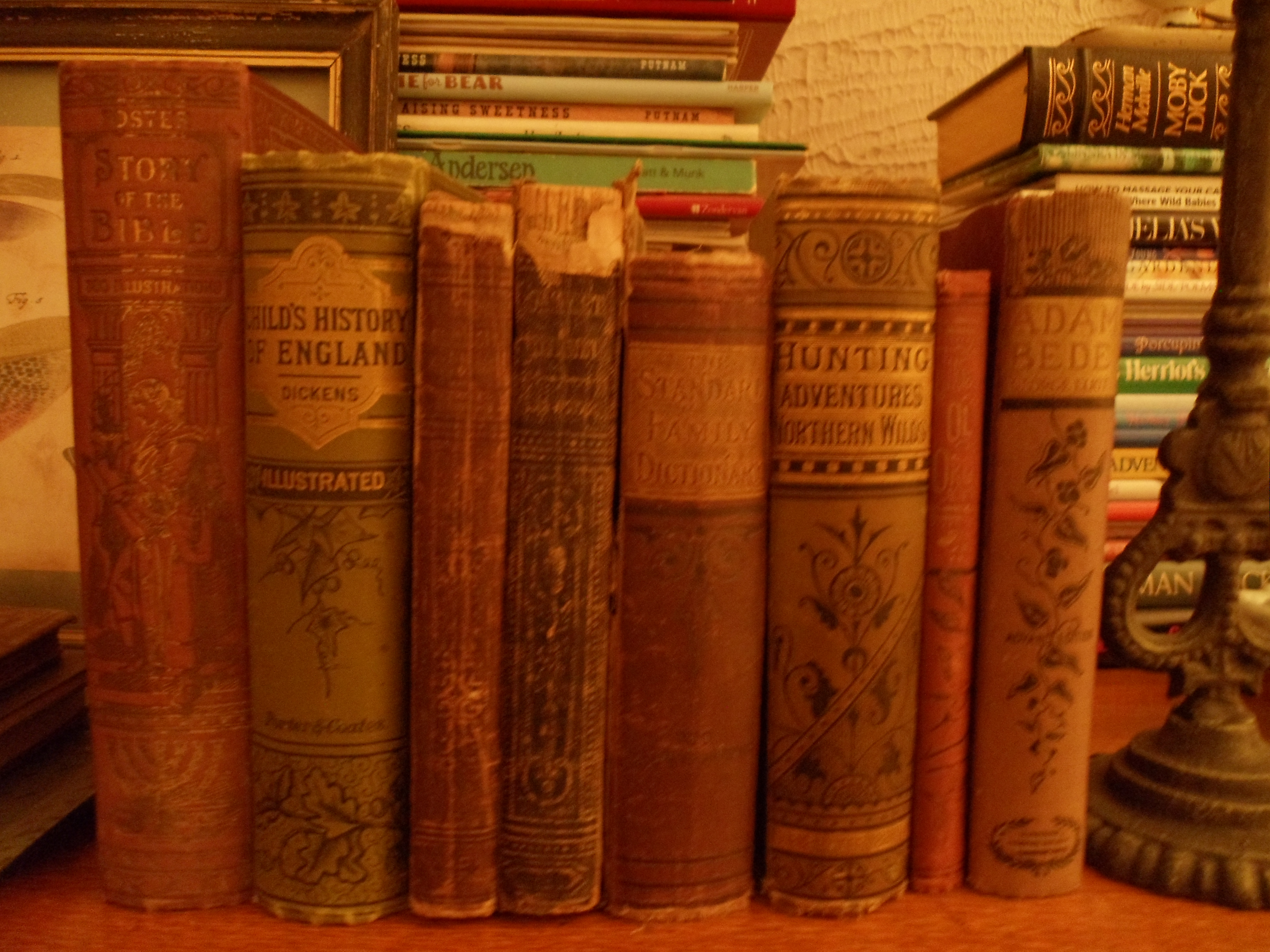
DSC02703When I was a freshman at a little liberal arts university in Indiana, I worked in the campus library. There I was given the privilege of rehabilitating antique books housed in the library’s tiny archives. Pulling on white cotton gloves, I dabbed a lanolin-based concoction on the poor old spines, backs and faces of leather-bound books to prevent “red rot” (or deterioration of the leather into a red powder).

DSC02709

Looking back, I guess you could say I was a book masseuse. Mind you, I had no formal training. I have no idea what possessed the librarian to be so trusting. Perhaps no one else wanted to sit in the dim, musky, climate-controlled room swabbing long-forgotten volumes. Or maybe Miss Holcalm could see how much I respected and loved the books. Then again, I was a freshman. She could have told me to go dust the dictionaries page-by-page and I would have done it.

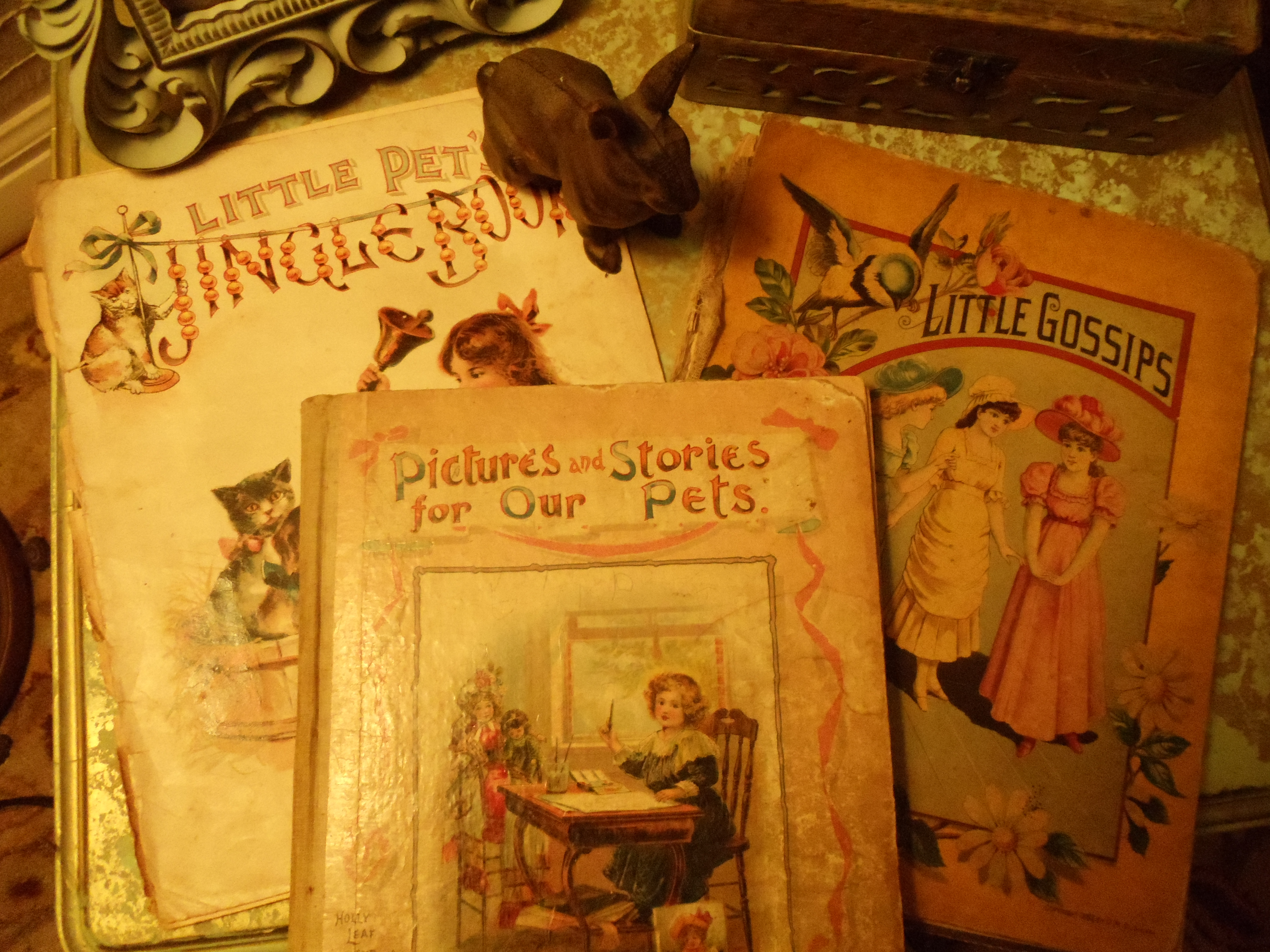
Knowing what you now know about me, you can understand why I was so thrilled when my husband brought home an entire box of antique books from his parent’s house. Dating back to the 1800s, these beauties with their embossed covers and intricate cover art and illustrations, are treasures. Here. Take a peek . . .
DSC02711
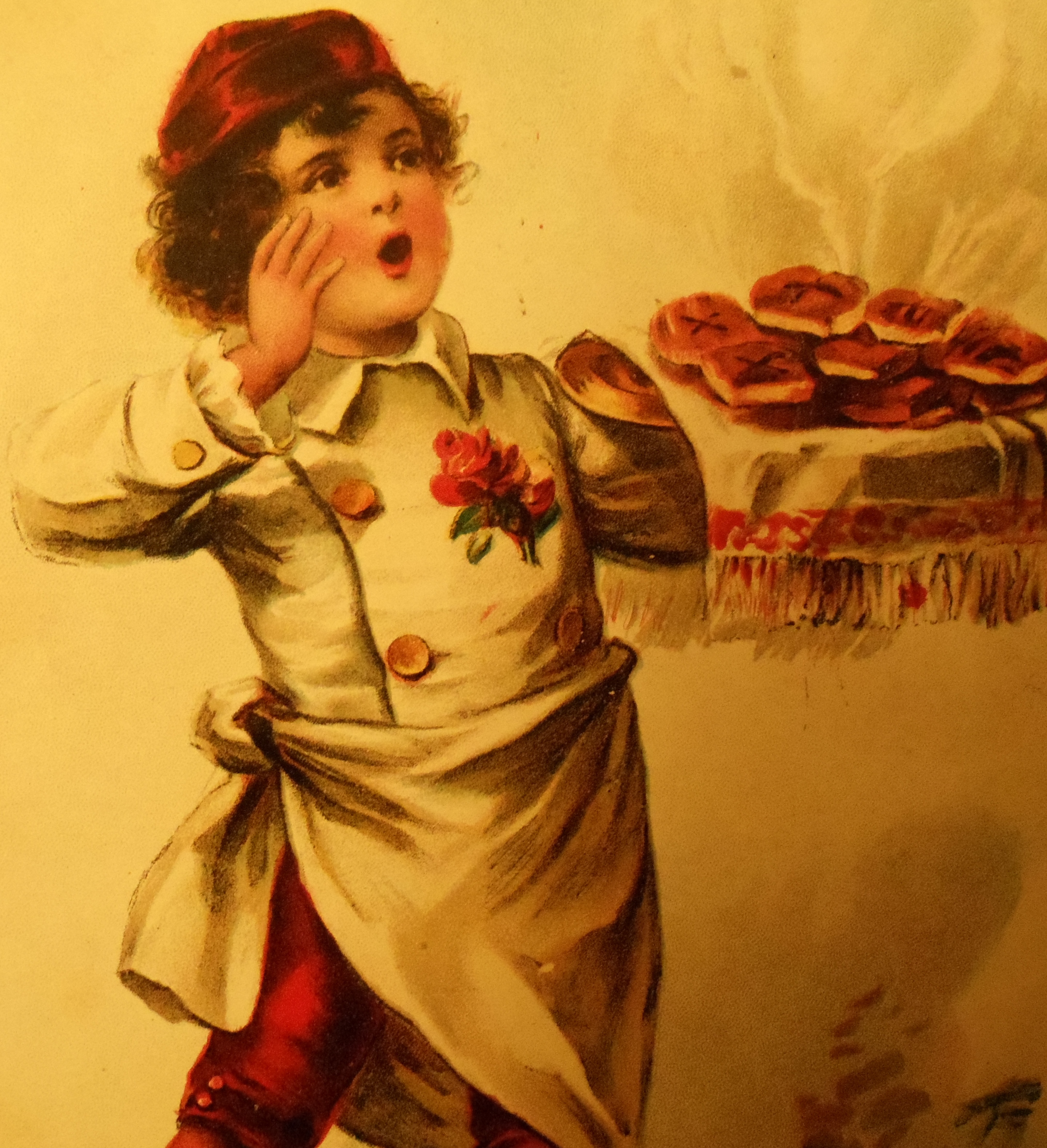
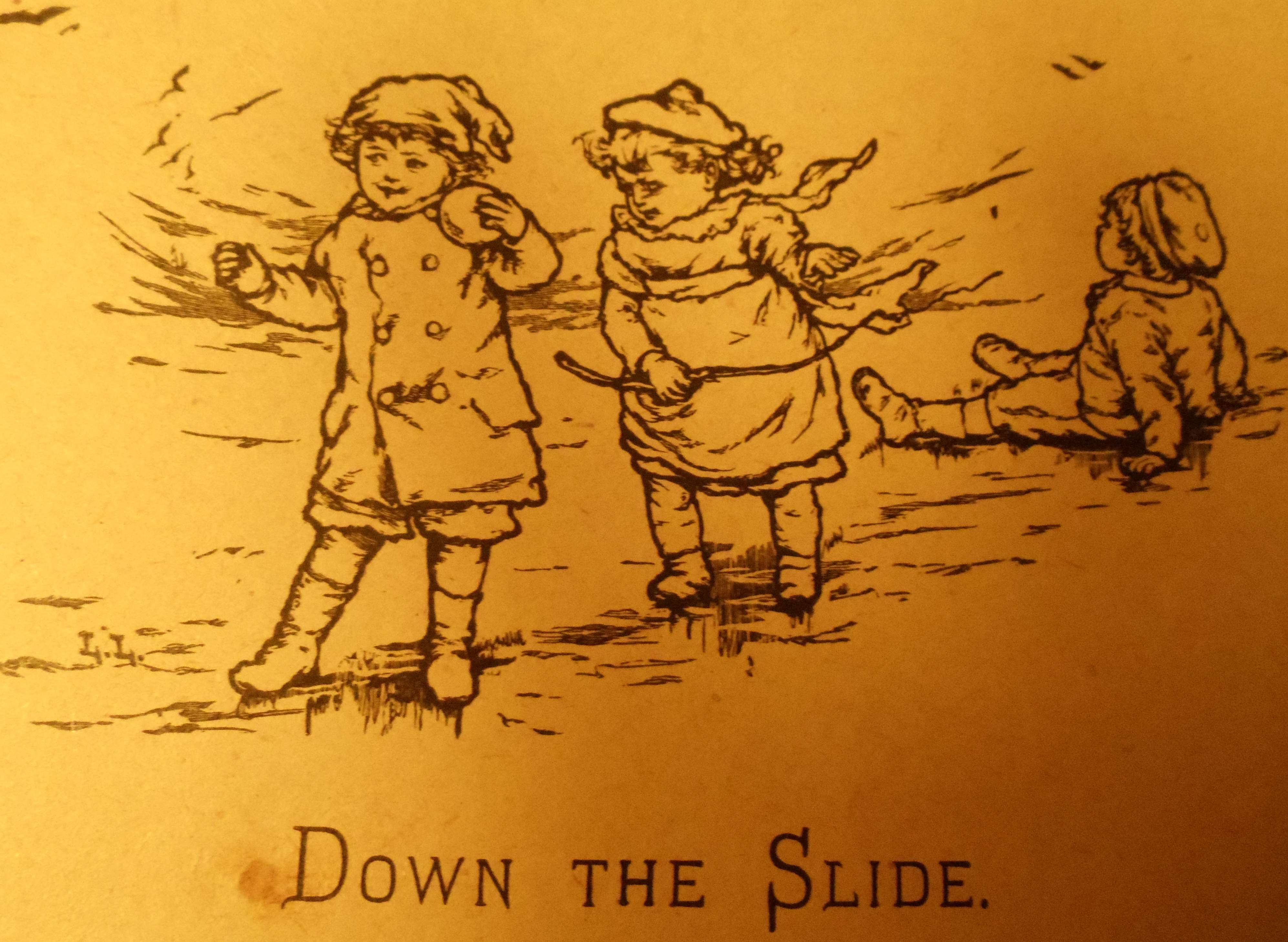
Loving children’s books as I do, I was delighted to carefully look through the charming illustrations and think about the little girl who once prized them.
DSC02696
DSC02705
DSC02704
Old books exert a strange fascination for me — their smell, their feel, their history; wondering who might have owned them, how they lived, what they felt. ~ Historical Novelist Lauren Willig
DSC02701

Does this novel make my butt look big?

Standard
cropped-frog-on-a-dime-color-red-1a

Illustration by Matt Faulkner

Talk about subjective. Are we comparing my backside to War and Peace or Charlotte’s Web? (No need to answer.)

And what about our crazy winter weather? Earlier this week, it was a frigid -12 where I live. And then this morning on my way to work, it was a balmy 27 degrees. I didn’t even bother to zip my jacket. It’s all relative.

Relativity + Subjectivity = Confusitivity!

And that, my talented, perplexed friends, is every writer’s dilemma. We write. We seek feedback. We rewrite. We wring our hands and rack our brains (simultaneously!), yet how do we know when what we’ve written is worth reading? It’s such sticky, subjective business.

Now, what about feedback–the kind you get from your writer’s group or a paid critique with an editor at a conference. Given that opinions are subjective, how do you know who to believe?

Then once you’ve written something you hope is solid, you have to contend with a submission process swaddled in subjectivity. It’s not that editors are fickle or capricious (generally), it’s that they’re people with particular tastes and needs, like the rest of us. I love kalamata olives and black licorice (not together, mind you). You think that’s gross. You’re wrong, of course. But you are still entitled to your opinion because matters of taste are subjective. And so it goes in publishing.

Let me be brave/silly and try to take a stab at this subjectivity business.

When in doubt, try it out. Let’s say someone in your critique group suggests a subtle shift in your main character’s personality or a major interruption to your subplot. If you trust this person and your respect her work, why not give it a go? If your story is stronger for it, be thankful. If it’s not, then at least you’re affirmed in your initial approach.

At a recent writer’s conference, a Scholastic editor admitted that she’d asked an author to make a major change in her YA novel and then realized she was wrong. After reading the results of six months of stellar revision, the editor had to admit the author’s first take was actually better. I’m sure the editor and the author were both surprised! Scary as it sounds, editors can’t always be right. But I admired the author for following her editor’s instructions. I’m sure she learned a lot in the process–and gained a deeper respect from her editor for trying.

Don’t get mad, get even (better). In my second middle grade novel, one of the main characters goes to school with an aide hired by the girl’s mother to assist her. My writing teacher told me that would never fly in a public school. But I liked the aide and I didn’t want to sack her. I was perplexed. Then, at a writing workshop this fall, two writers, who are also teachers, suggested I change the school from public to private. Perfect! Not only did I get to keep the aide, the private school environment introduced a whole new set of challenges for my fashion forward girl character. I found a way to make it work, instead of being stupid and stubborn by plowing ahead in the wrong direction.

If the reader don’t git it, it ain’t gonna git got. See, that’s the tricky thing about writing. It’s supposed to communicate something. If the sender sends, but the receiver doesn’t receive, well then, no communication. I have to remind myself of this when I’m tempted to “explain” something to my critique group. Sure, I can tell them what the character meant by a particular comment, but I won’t have that option to follow a ten-year-old around to see if he has any questions. There’s no “what the author meant was” button on an e-reader (at least not the last time I checked!) When my manuscript critique-provider/reader is confused, I can’t pass their comments off as subjective opinion, I know I have some refining and polishing to do. Git it?

Hear! Hear! You’re smart enough to know you don’t have to edit your manuscript because one person said she doesn’t like girl characters having boy names. But what if you’re getting the same advise from multiple reliable sources? That’s right. You avoid them all in the future. Who said that? What I meant to say was the obvious–when you keep hearing similar feedback on a particular plot point, you’re wise to heed and re-read. Chances are, your gut was telling you something wasn’t right with it in the first place, you just didn’t know what. Now, everyone’s telling you what’s what, confirming your suspicions. A plot hole is like cellulite. You can try to ignore it, but it ain’t going anywhere.

And speaking of your gut . . .

What’s that, Mr. G? In the end, you have to trust your gut (aka, Mr. G). (You had a gut feeling I was going to say that, didn’t you?) But I think applying the suggestions of trusted, respected writers and editors is still smart. I believe actively seeking feedback and really listening with an open mind and heart is vital to growing as a writer. I accept that I have room to improve (so we’re clear, we’re talking a room the size of a major league football stadium). But, for better or worse, when it all comes down to it, I have to do what feels right to me.

For example, I have a picture book manuscript for very young children that has been declared “perfect” by a professional illustrator and an accomplished picture book author. When I entered it in a contest, it finished in the top 5 out of 750 entries. Does that mean it’s been scooped up by a publishing house? Noop. It’s had close calls several times and received some champagne rejections, but no acceptances. I have taken each editor’s suggestions to heart and made some modifications, but I finally realized I can’t keep re-writing this poor little 375-word manuscript until I don’t recognize it or love it. I’m going to have to embrace it and trust that someone else will too.

Well, at least that’s my subjective opinion.

The faculty to think objectively is reason; the emotional attitude behind reason is that of humility. To be objective, to use one’s reason, is possible only if one has achieved an attitude of humility, if one has emerged from the dreams of omniscience and omnipotence which one has as a child. ~ Erich Fromm