Does this novel make my butt look big?

Standard
cropped-frog-on-a-dime-color-red-1a

Illustration by Matt Faulkner

Talk about subjective. Are we comparing my backside to War and Peace or Charlotte’s Web? (No need to answer.)

And what about our crazy winter weather? Earlier this week, it was a frigid -12 where I live. And then this morning on my way to work, it was a balmy 27 degrees. I didn’t even bother to zip my jacket. It’s all relative.

Relativity + Subjectivity = Confusitivity!

And that, my talented, perplexed friends, is every writer’s dilemma. We write. We seek feedback. We rewrite. We wring our hands and rack our brains (simultaneously!), yet how do we know when what we’ve written is worth reading? It’s such sticky, subjective business.

Now, what about feedback–the kind you get from your writer’s group or a paid critique with an editor at a conference. Given that opinions are subjective, how do you know who to believe?

Then once you’ve written something you hope is solid, you have to contend with a submission process swaddled in subjectivity. It’s not that editors are fickle or capricious (generally), it’s that they’re people with particular tastes and needs, like the rest of us. I love kalamata olives and black licorice (not together, mind you). You think that’s gross. You’re wrong, of course. But you are still entitled to your opinion because matters of taste are subjective. And so it goes in publishing.

Let me be brave/silly and try to take a stab at this subjectivity business.

When in doubt, try it out. Let’s say someone in your critique group suggests a subtle shift in your main character’s personality or a major interruption to your subplot. If you trust this person and your respect her work, why not give it a go? If your story is stronger for it, be thankful. If it’s not, then at least you’re affirmed in your initial approach.

At a recent writer’s conference, a Scholastic editor admitted that she’d asked an author to make a major change in her YA novel and then realized she was wrong. After reading the results of six months of stellar revision, the editor had to admit the author’s first take was actually better. I’m sure the editor and the author were both surprised! Scary as it sounds, editors can’t always be right. But I admired the author for following her editor’s instructions. I’m sure she learned a lot in the process–and gained a deeper respect from her editor for trying.

Don’t get mad, get even (better). In my second middle grade novel, one of the main characters goes to school with an aide hired by the girl’s mother to assist her. My writing teacher told me that would never fly in a public school. But I liked the aide and I didn’t want to sack her. I was perplexed. Then, at a writing workshop this fall, two writers, who are also teachers, suggested I change the school from public to private. Perfect! Not only did I get to keep the aide, the private school environment introduced a whole new set of challenges for my fashion forward girl character. I found a way to make it work, instead of being stupid and stubborn by plowing ahead in the wrong direction.

If the reader don’t git it, it ain’t gonna git got. See, that’s the tricky thing about writing. It’s supposed to communicate something. If the sender sends, but the receiver doesn’t receive, well then, no communication. I have to remind myself of this when I’m tempted to “explain” something to my critique group. Sure, I can tell them what the character meant by a particular comment, but I won’t have that option to follow a ten-year-old around to see if he has any questions. There’s no “what the author meant was” button on an e-reader (at least not the last time I checked!) When my manuscript critique-provider/reader is confused, I can’t pass their comments off as subjective opinion, I know I have some refining and polishing to do. Git it?

Hear! Hear! You’re smart enough to know you don’t have to edit your manuscript because one person said she doesn’t like girl characters having boy names. But what if you’re getting the same advise from multiple reliable sources? That’s right. You avoid them all in the future. Who said that? What I meant to say was the obvious–when you keep hearing similar feedback on a particular plot point, you’re wise to heed and re-read. Chances are, your gut was telling you something wasn’t right with it in the first place, you just didn’t know what. Now, everyone’s telling you what’s what, confirming your suspicions. A plot hole is like cellulite. You can try to ignore it, but it ain’t going anywhere.

And speaking of your gut . . .

What’s that, Mr. G? In the end, you have to trust your gut (aka, Mr. G). (You had a gut feeling I was going to say that, didn’t you?) But I think applying the suggestions of trusted, respected writers and editors is still smart. I believe actively seeking feedback and really listening with an open mind and heart is vital to growing as a writer. I accept that I have room to improve (so we’re clear, we’re talking a room the size of a major league football stadium). But, for better or worse, when it all comes down to it, I have to do what feels right to me.

For example, I have a picture book manuscript for very young children that has been declared “perfect” by a professional illustrator and an accomplished picture book author. When I entered it in a contest, it finished in the top 5 out of 750 entries. Does that mean it’s been scooped up by a publishing house? Noop. It’s had close calls several times and received some champagne rejections, but no acceptances. I have taken each editor’s suggestions to heart and made some modifications, but I finally realized I can’t keep re-writing this poor little 375-word manuscript until I don’t recognize it or love it. I’m going to have to embrace it and trust that someone else will too.

Well, at least that’s my subjective opinion.

The faculty to think objectively is reason; the emotional attitude behind reason is that of humility. To be objective, to use one’s reason, is possible only if one has achieved an attitude of humility, if one has emerged from the dreams of omniscience and omnipotence which one has as a child. ~ Erich Fromm
how to “rung” in the new year

Standard

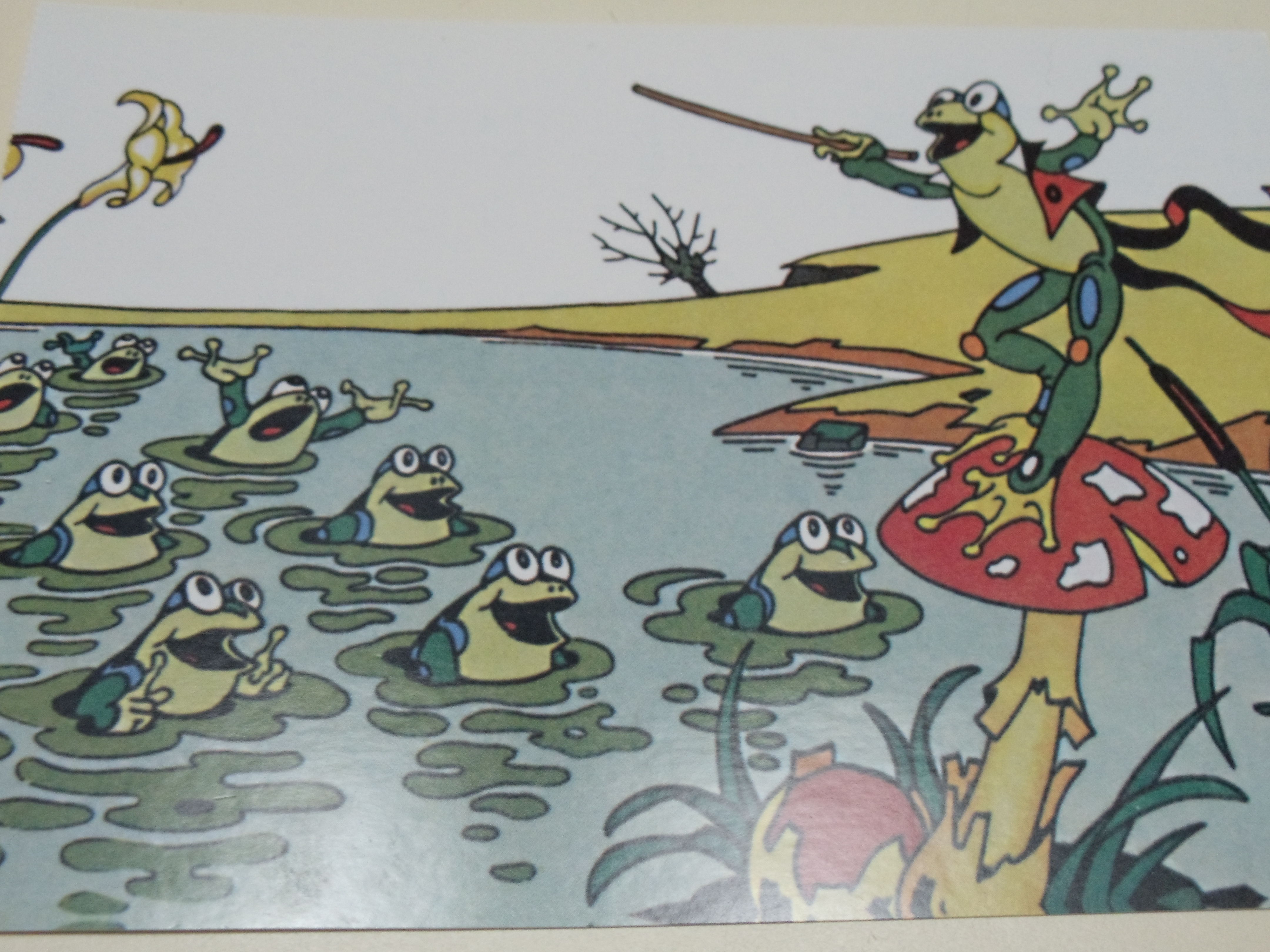
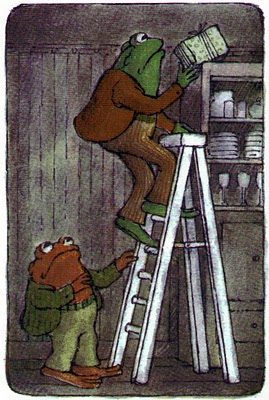
From "Frog and Toad"  by Arnold Lobel

From “Frog and Toad”
by Arnold Lobel

.

When you’re up high, let’s say on a ladder, people always tell you, don’t look down. But do me a favor, will you? Take a minute to glance over your shoulder. That’s right, look down the ladder the today. Here’s why . . .

When your sole focus is looking up the publishing ladder as you struggle to climb rung by rung, it’s easy to feel like you’ll never reach the top. But let me encourage you to hold the rung a second. Pause. Even for a moment. Stop craning your neck upward and turn. Look back down that ladder. You started at the bottom, maybe this year or maybe years ago. Now, see how far you’ve come!

Today, before you uncork some bubbly or sing that silly “Auld Lang Syne,” make a list–not a mental list, a REAL list on paper or screen–of all you’ve accomplished this year toward your writing goals. You have so much to be proud of. (I know, I should have said, You have so much of which to be proud, but that sounds kind of snooty for my purposes, and using proper grammar wasn’t one of my goals for 2013!)

Sure, there’s a lot more you want to do (same here), but treat yourself to a moment to appreciate how high you’ve already climbed. Take a deep breath. Enjoy the view!

My “rungs” for 2013 include:

January – Attending the annual SCBWI winter conference in New York City. Amazing!
February – Seeing my non-fiction article “Sculpting Lincoln” in Highlights for Children magazine.
March – Participating in a writers workshop at Vermont College of Fine Arts and receiving encouragement from incredible YA authors Cynthia Leitich Smith, Lauren Myracle and Candlewick editor Andrea Tompa.
July – Celebrating with my dear friend Kelly Barson on her debut novel “45 Pounds More or Less”–and being honored to be included in her acknowledgements page–a first for me!
November – Being selected to be part of the SCBWI – Eastern New York Falling Leaves master class workshop in Silver Bay, New York, and meeting five amazing edtiors, along with more than 30 encouraging writers.
December
– Enjoying another year of mutual support and feedback from my wonderful critique group (aka, Church of the Word!).
– Toasting the first anniversary of “Frog on a Dime.” I started with zero followers and now have 1,043. (Not record shattering, but hey, it’s progress.)
– Finishing through Lesson 8 of 9 in my Institute of Children’s Literature writing class. My second middle grade novel is almost done.
– Gathering ideas and details for my third middle grade novel that’s bubbling to the surface (Finally! Phew.) Exciting!

I’m wishing I could say my second novel is completely done. I’d like to say I have an agent and a two-book deal a publishing house. But those rungs are just ahead of me (fingers and toes crossed). I’ll be delighted to put those on my 2014 rung list.

What’s that? You say you submitted your work this year, but only have a stack of rejection letters to show for it? Well, that’s VERY rung-list worthy. (Honest. I’m not just saying that to give you something to put on your list.) You submitted your work (it’s virtually impossible to receive a letter of rejection otherwise!) You wrote, revised, researched publishers and took the leap to share your work for consideration. Okay, so you didn’t get the desired response, but you’re now ready to narrow your search and target new houses for submission in the new year. That’s great. Rung it up!

Happy New Year! Let’s “rung” it in together. Umquam porro. Ever forward, my friends. Ever forward. Rung by rung.

A poet is a man who puts up a ladder to a star and climbs it while playing a violin. ~ Edmond de Goncourt

and the birthday present goes to . . .

Standard

Happy first birthday,  Frog on a Dime!

Happy first birthday,
Frog on a Dime!

Congratulations to Jennifer Byrnes! Your name was selected in Frog on a Dime’s First Birthday Celebration Critique Giveaway. Jennifer, I will be in touch soon regarding the submission details for your free 10-page critique. I am truly looking forward to reading your work and doing what I can to help you make it even stronger.

Many thanks to all who entered the drawing, and to everyone who sent birthday wishes. You made me so “hoppy”! (Oh, c’mon. I can’t have a pun-less birthday!)

While I’m passing out gifts, and since it is the holiday season, I want to share my wishes for all of you . . .

I wish you the gift of laughter–even if it means laughing at yourself.
I wish you the gift of time to “be,” not do–just “be” for a moment and be mindful.
I wish you the gift of kindness–toward yourself especially. (We are our own worst critiques, aren’t we?)
I wish you the gift of inspiration from unexpected sources–and the presence of mind to write it down!
I wish you the gift of a tender, child-like heart–if even for a day, especially this time of year.

And now, if you’ll excuse me, I think I will give myself the gift of one more slice of birthday cake!

My mother asked me what I wanted for my birthday, so I said I wanted to read poetry with her. ~ Guy Johnson (author and Maya Angelou’s son)

happy first birthday, frog on a dime!

Standard

Happy birthday to you!

Happy birthday to you!

Starting a blog–the technical part–isn’t too difficult (especially when you have patient, tech savvy friends to help you), but actually launching the thing is scary. You’re putting yourself “out there.” What if everyone yawns and says, “What else ya got?”

As I shared right from post one, my intent for “Frog on a Dime” was never [cue dramatic music] total blogosphere domination. I just wanted to offer encouragement, inspiration and maybe some amusement to my fellow children’s writers. What a delight to see your response, and to go from zero to well over 1,000 followers this year. And so, it is with joy and humility (and yes, a bit of relief–phew! you showed up!) that I am celebrating the first full year of “Frog on a Dime.”

To be sure, the growing number of followers was a pleasant surprise. But the other thing I did not expect about my first blog experience was the way you all would become such a source of encouragement to me. What a bonus!

To thank you for reading and responding, I want to offer a special 1st birthday thank you gift–a FREE manuscript critique. Typically, I need to charge $45 for a critique, but I want to make it my gift to you. All you need to do is comment on this blog by midnight (EST) on Sunday, December 15 (Frog on a Dime’s actual birthday). I will draw a name and the winner will receive a ten-page critique of the picture book, middle grade or YA manuscript of your choice during the month of January. I can’t wait to read your work and do what I can to help you to become an even stronger writer!

Now . . . time to blow out the candles and make a wish! (Bet you can’t guess what that will be. And while I’m at it, I’ll make a wish for YOU too!)

It takes a long time to become young. ~ Pablo Picasso

merry muse-mas a la enid

Standard
Photo by Vicky Lorencen

Photo by Vicky Lorencen

My muse Enid goes to visit her mother in New Hampshire for the holidays, but before she goes, Enid always leaves me one of her “love notes” to keep my writing on track while she’s off slurping egg nog and chomping chestnuts.

This year is by no means an exception. Now that I have a blog, I thought I’d share some of Enid’s holiday goodies with you.

Photo by Vicky Lorencen

Photo by Vicky Lorencen

And so, without further fuss, here are my muse Enid’s Twelve Days of Revision:

Twas the night before deadline and all through the roost not a writer was sleeping, not even Proust.

(Sorry, that was the beginning to last year’s letter.)

Okay, off we go . . .

On the Twelve Days of Revision, my muse Enid said to me:

1. Snip-snip adverbs
2. Nix “very” and “really”–they really don’t add very much!
3. Keep tags simple (she implored with a heavy sigh)
4. Pinpoint POV for consistency
5. Pluck stuffy words–simple sings
6. Poo poo “start to”—just do the thing already!
7. Invigorate verbs
8. Specify specifics–no “thing” or “it”
9. Dice up long sentences
10. Juggle sentence structure
11. Extract “that”s–that’s about enough of that!
12. Read out loud (repeat)

After each round of revision, Enid recommends letting the manuscript “rest” for at least a few weeks so I can return to it with fresh eyes. (When she’s feeling cheeky, she says I should let the draft “ferment” a bit. What a sweetheart she is.) Snarky or sweet, Enid is right about writing. I can just hear her now–“I always am, my dear. I always am.”

Merry revisions to you all!

Following my muse has worked out pretty well so far. I can’t see any reason to change the formula now. ~ Chris Van Allsburg

how to magnitude your gratitude (dude)

Standard

Photo by Vicky Lorencen

Photo by Vicky Lorencen

I love words. Wipe that shocked expression off your face, you silly. You know I do.

This week I found out the word gratitude comes from the Latin word gratia, which means grace, graciousness or gratefulness. To me, grace means receiving something I don’t deserve–it’s that open-hearted expression of forgiveness, the kindness for which I’m unqualified and the willingness to overlook my writer-related neuroses (note the plural). That’s grace to me. And I’m grateful for every little bit I get.

Besides discovering the root of the word gratitude, I also learned from the Harvard Mental Health Newsletter that expressing thanks is strongly and consistently associated with greater happiness (and they have the research to back it up). Gratitude helps us to cultivate positive emotions, relish (and notice!) good experiences, improve our health, deal with the crappy stuff and build strong relationships. KA-pow! Gratitude is powerful.

What was of particular interest to me as a writer was that the researchers at the University of California and the University of Miami used writing exercises to gauge the impact of gratefulness. For example, one group of study participants was asked to keep a log of things they were grateful for over the course of a week. A second group got to list the stuffed that bugged them as the week progressed. The 10-week study not only showed that grateful people felt more optimistic–they were more physically healthy too.

When another group was challenged to write and hand deliver a letter of gratitude to someone who had never been properly thanked for his or her kindness, participants immediately experienced a huge hike in their happiness scores. And these benefits lasted for a month. (That’s better than chocolate!)

Photo by Vicky Lorencen

Photo by Vicky Lorencen

And now [cue drum roll] two sure-fire ways to write your way to happiness and better health . . .

Okay, okay. I know what you’re thinking. This is starting to sound like an infomerical for a self-help seminar or something. Not to worry. I’m sharing these ideas because, well, we writers are not always the most healthy people–physically or emotionally. We get discouraged and depressed. We fret. We are self-critical. And we sit on our bums a lot writing. Our bods and our brains could use a boost, wouldn’t you say? So try these ideas . . . (C’mon. You can do it!)

Write. Send. Repeat. Send someone a good old-fashioned written thank you note. Not an email. Not a text. A “real” note scribed with your own sweet little grabber. Don’t wait for someone to do something nice or give you a present. Pick a person you appreciate and then write to tell them why. It’s that simple. You will feel good and they will feel great. Why, you’ll knock their stinkin’ socks off! Your words carry positive energy. (Who knows, researchers may learn they contain fiber and anti-oxidants too!) Write and send a thank you note once a month. Pick a date you’ll remember–pay-day, your birthday or whatever, and then make it a habit.

Journal Good Stuff. Start by writing down three things you’re thankful for. It can be ANYTHING–the barista made my coffee just the way I like it, I got to work on my favorite writing project this week, my allergies aren’t acting up. You can build from there. Add one more thing each week. As the weeks progress, you’ll be more mindful of the good stuff and be excited to add it to your list. Bonus benefit–because you are cataloging these positive things, you can go back and reread your list for encouragement when life feels sucky. So, there’s that.

And just so you know. I’m grateful for you. No, really I mean it. Now stop reading this silly blog and go find a pen and paper before you get distracted. You’ll thank yourself for it.

Let us be grateful to the people who make us happy; they are the charming gardeners who make our souls blossom. ~ Marcel Proust

editors are awestruck by what?

Standard

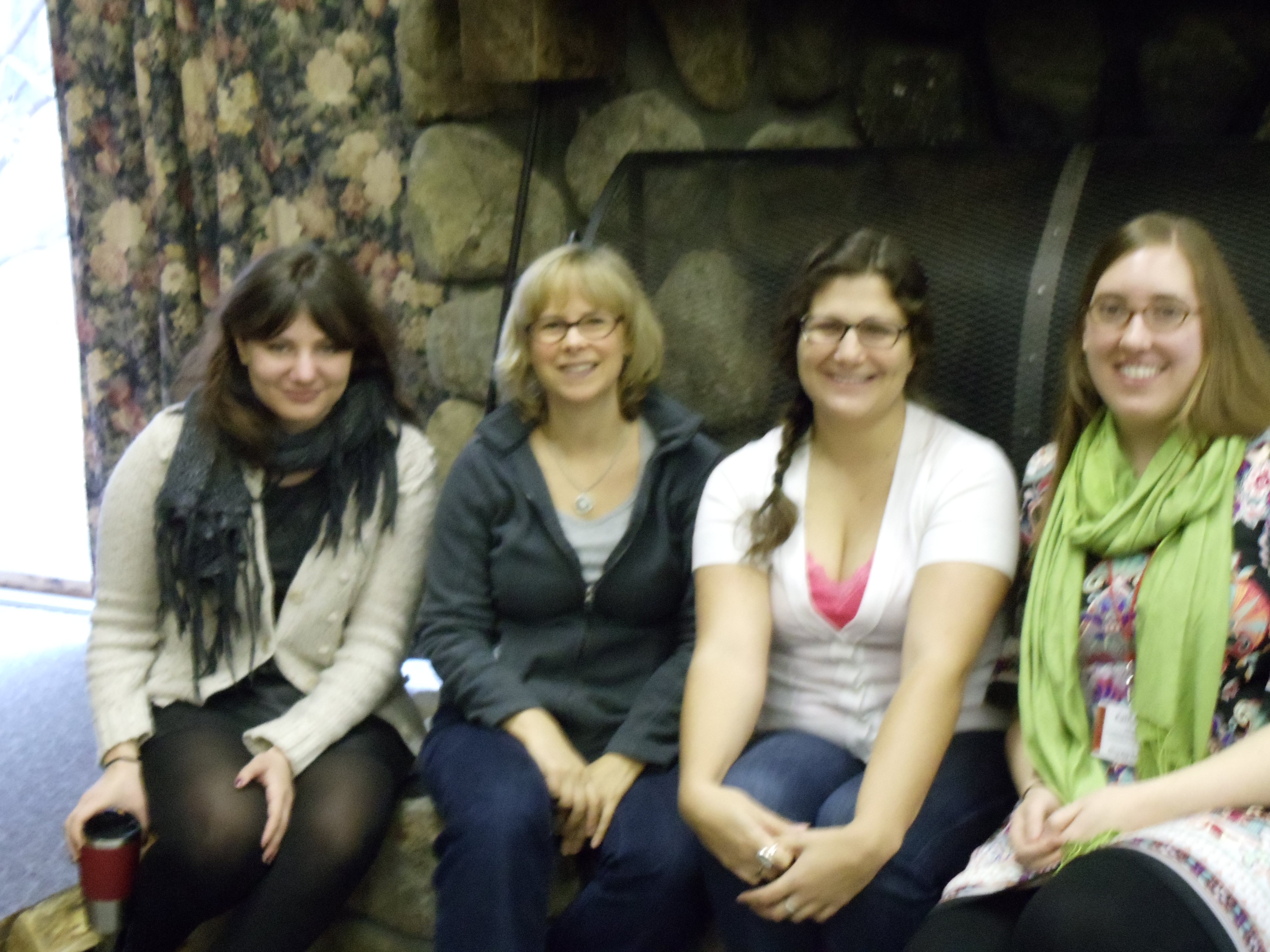
Fabulous editors/presenters-- Mallory Kass, Scholastic; Kathy Dawson, Kathy Dawson Books; Aubrey Poole, Sourcebooks; Katherine Jacobs, Roaring Book Press

Fabulous editors/presenters–
Mallory Kass, Scholastic;
Kathy Dawson, Kathy Dawson Books; Aubrey Poole, Sourcebooks; Katherine Jacobs, Roaring Book Press


I was shocked when I heard it. I mean, editors are the ones with all the power, right? They can choose to champion a manuscript or say pass. What leaves these powerful people awestruck?

This weekend I had the pleasure of participating in the Falling Leaves retreat in Silver Bay, NY, hosted by the SCBWI – Eastern NY chapter.

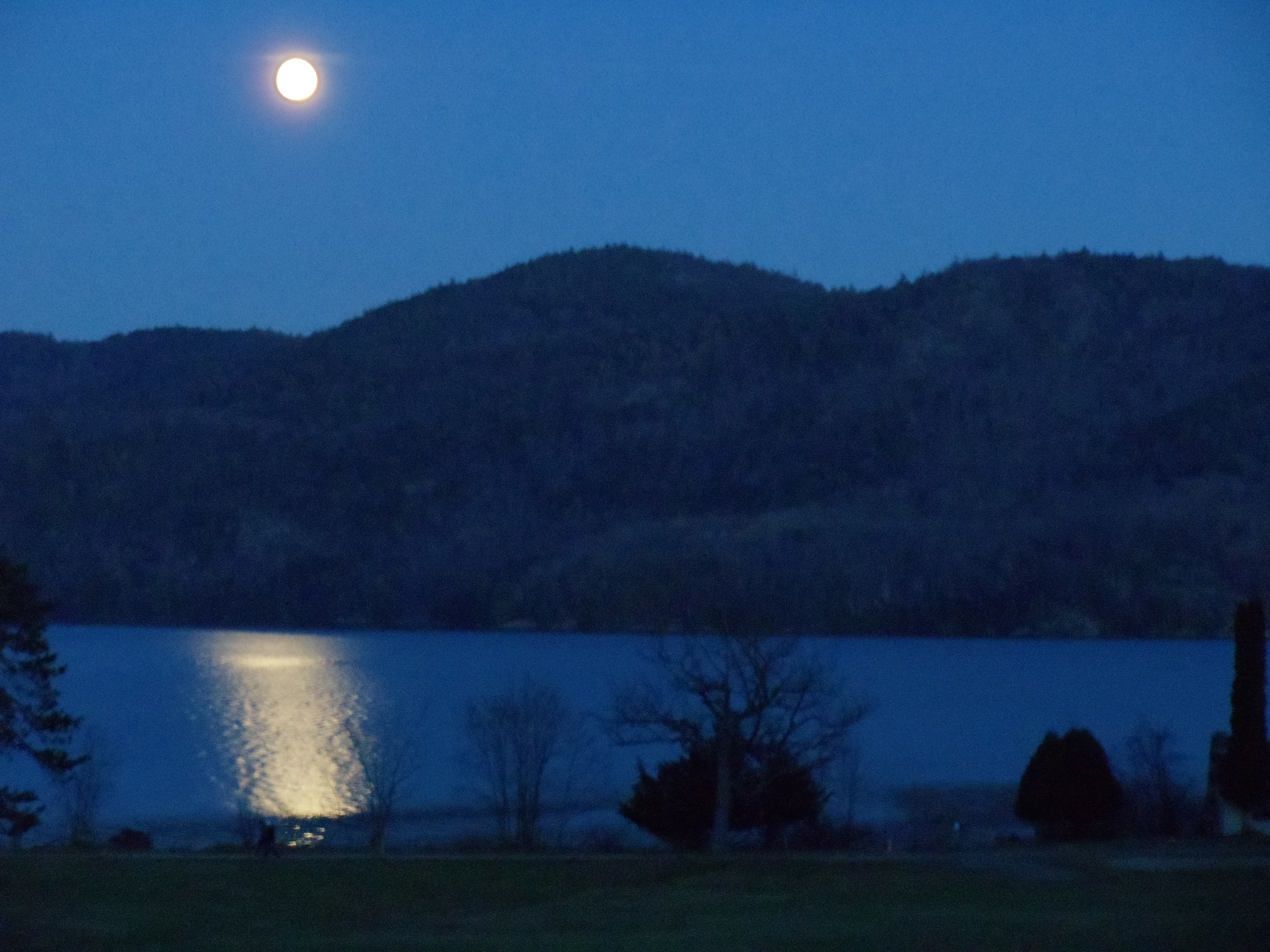
Moon over Lake George in Silver Bay, NY

Moon over Lake George

Over the course of the weekend we were treated to interactive presentations by five warm, wise editors who challenged, enlightened and encouraged us. During the final talk, Scholastic Press editor Mallory Kass made an impromptu comment that gave me pause.

Mallory said, “We are in awe of what you do. We love story and you’re the ones who create them.”

Hold on. Editors are awestruck by who?

Mallory’s table-turner made my heart skip a beat. Most of us are amazed by what editors can do–and I’m not just talking about acquiring manuscripts. We appreciate an editor’s extraordinary ability to take a great story and transform it into a dazzling published work. Editors make us look good. Thinking about the way editors see us as writers made me feel empowered and pleased.

If you surround yourself with other children’s writers via your critique group, retreats, Facebook, blogs . . . it can be easy to forget that not everyone does what we do. Think about it. How many people do you know in your “outside” life–at work, at church, at the gym or even in your whole city, who are actively pursuing a writing life? I know writers aren’t always easy to spot. We don’t go around with a scarlet W on our chests (thank goodness!), but I’m guessing, even if there are some “underground writers” in your area, they’re still a tiny group.

So, don’t forget among the writing, revising, hair pulling, submitting, cussing and nail biting that you’re doing something awe-inspiring.

Editors think so. You should too.

Silver Bay, Adirondack Mountains in NY

Silver Bay, Adirondack Mountains in NY

Look at people for an example, but then make sure to do things your way. Surround yourself with positive people. ~ Queen Latifah

Silver Bay YMCA on Lake George

Silver Bay YMCA on Lake George

right on cue . . . the pre-event meltdown

Standard

Finn the Kitten relates Photo by Vicky Lorencen

Finn the Kitten relates
Photo by Vicky Lorencen

.
Freak out. Meltdown. Keyed up. Pick a label. Doesn’t matter. It’s here–the pre-event emotional mixing bowl of jitters, doubt and insecurity, with just a pinch of dread. Holy synopsis, it’s the night before school starts all over again.

Seems any time I’m heading for a writing event—a conference, retreat, class, workshop or seminar, all of my irrational thoughts tap into their stash of steroids and pump themselves up to Library of Congress sized proportions. They tell me lie after lie about myself and my abilities (or lack thereof) until I am left feeling unworthy, talentless and ill-equipped. Maybe even a little gassy.

Why am I telling you all of this? You never feel this way. You approach every new opportunity with the confidence of a peacock.

Um, don’t you?

If there is a sliver of a chance you can relate, allow me to share how I fill the holes in my perforated confidence (aside from the obligatory (and liberal) doses of chocolate).

Phone a friend (email works too). I have some dear, patient friends who know how to bolster my saggy self-confidence. Having writers for friends can be especially beneficial at low points like these—they not only know what to say—they say it so well!

Be prepared. Doing my homework or polishing my manuscript till it sparkles (with the help of my clean-up crew, aka, critique group) helps me know I’ll be sharing my best.

Remind myself I’m in a big boat. Chances are, at any given event, there are lots of other people battling the same feelings I am (more or less on the 1 to 10 freak out scale). Feeling nervous isn’t a crime. Feelings ain’t good or bad. They just is.

Practice what I push. When my teenage daughter is reluctant to do something because she’s scared, I tell her to be brave. Being brave doesn’t mean you’re not afraid. Being brave is being afraid, but doing it anyway.

Reconnect to purpose. Why the heck am I putting myself through this anyway? Reflecting on the exceptional, encouraging experiences I’ve had at past conferences, and the amazing people I’ve met along the way helps me to remember it’s going to be worthwhile.

Shift my focus. Instead of thinking about myself, I will intentionally focus on the others and how I can make them feel at ease.

Impress less. Sometimes I forget to remind myself to remember this one. As I shared in an earlier blog post, I still cringe when I think about some of my behavior at my very first conference. I was so intent on fitting in and making sure people knew that I knew what they knew, that I know I must have been a pain in the bookend. Since then I’ve found that I learn a lot more when I relax and come ready to absorb not impress.

Next weekend I’ll be putting my tactics to the test. Be watching for a progress report!

I’m good enough. I’m smart enough. And doggone it, people like me. ~ Stuart Smalley, SNL 2010

You is good. You is kind. You is important. ~ Aibileen from The Help by Kathryn Stockett

my first (and probably only) controversial post

Standard

Photo by Vicky Lorencen

Photo by Vicky Lorencen

When I started pursuing publication a decade ago, I was strongly advised against self-publishing. I was told editors liked to find debut authors. Self-publishing would mean I wasn’t a book virgin any more. Times and opinions have changed. But mine hasn’t. I may eat my word some day, but I never intend to do a “selfie” when it comes to publishing.

Now, I’m well aware that like most things associated with publishing, there are always, always exceptions. You and I can both name novels like Christoper Paolini’s Eragon that were self-published, that were later acquired by what I’ll call a traditional publishing house, resulting in financial gain and critical acclaim. But those books are rare. We can agree on that, can’t we? (And I think it’s worth mentioning, it’s very likely that Eragon and others like it were “re-edited and polished” after the publisher bought the self-published version.)

If you’ve self-published, I’m not here to make you feel bad. I’m sure you put a lot of thought into your decision, did your homework and understood up front how much work it was going to be to wear a stack of hats as author, publisher, sales agent and promoter. I genuinely hope you’re glad about your decision and that it’s bringing you the satisfaction and success you were seeking. I really mean that.

But let’s say you’re not published yet, and you just want to exhale. You’re fed up with submitting and putting yourself out there, only to feel like you can’t get traction. Self-publishing sounds like an attractive option. Maybe. And it’s true the quality of self-published books has been elevated substantially over the last decade. But I’m sad to say I can still spot a self-published picture book long before I’ve reached the bookstore shelf. Maybe the author is proud of her work or maybe she is simply relieved to have a book out (such as it is). Is that what you want–relief?

Let me encourage you to read wise author Darcy Pattison’s insightful blog post Out There: The Wrong Goal of Self-Publishing. Think of Darcy like a master chef. Please gobble up her food for thought and digest her message.

See, I don’t think self-publishing is inherently evil (not even close!) or that it’s necessarily a cop-out or a short cut. But I think it can be if you’re doing it for the wrong reasons. Your work deserves the best you can give it. By that I mean, it deserves the benefit of a professional editor and the perks of a publishing house. Most of all, children deserve only the very best. Does that mean that traditional publishers only produce stellar works? Hardly. But aren’t the chances for success exponentially better? I think so.

Let me encourage you to write your best and to do the best by your work, whatever you decide that to be. I’ll do the same. Cross my heart and pinky swear.

Phew. Now let’s go eat some chocolate.

You should always be well and bright, for so you do your best work; and you have so much beautiful work to do. The world needs it, and you must give it! ~ Marie Corelli