Category Archives: Writing Techniques

blog hop tour hops to frog on dime

Standard
Photo by Vicky Lorencen

Photo by Vicky Lorencen

Blog Hop is a blog tour showcasing authors and their writing process. I was honored to be tagged by Kristin Lenz, writer of YA and New Adult novels, and all around super fly, groovy chick. (Thank you, Kristin for inviting me!) I tagged another YA writer extraordinaire, Ann Finkelstein, for the next leg of the Blog Hop. You can learn more about Ann at the close of this post.

So, here we go with the Q & A portion of our program.
I hope you are grading on a curve. (And remember, I was promised there would be NO math problems.)

What am I working on now?
I just finished my second contemporary middle grade novel, SHORT CHANGED, at the end of May. Thankfully, as I was wrapping up novel two, ideas for middle grade number three began to percolate. Did I mention Ray, the main character of this novel, is forcing me to learn to knit because he likes to knit? He takes his protagonist role very seriously. I don’t want to disappoint him.

How does my work differ from others in its genre?
It has my voice. What would be the point of imitating anyone else? We already have a Jerry Spinelli and Sharon Creech. I like to blend humor with tenderness (tempered with enough references to boogers or puke to make it believable and boy-friendly).

Why do I write what I do?
Writing middle grade is a sweet spot for me–readers are still young enough to appreciate my dorky sense of humor, but sophisticated enough to handle more complex plot lines, language and themes. But I don’t have to write any “content.” (blushing) I know. I know. I’m such a ninny.

How does my writing process work?
First off, you should know, I never ever intended to write a novel, much less two, going on three. I remember showing my grandpa one of my published magazine stories. He said, “That’s good, Vick. Now, where’s your novel?” I told him flat-out, “I’m not a novelist. There’s no novel in me.” (See? Such a ninny I am.) It wasn’t until a friend asked me to collaborate on a novel with him that I ever thought to attempt such a crazy thing. I mean, novel writing was for, sheesh, I don’t know–novelists. But I reasoned that before I co-wrote a novel, maybe I’d better see if I’m capable of creating a one on my own. And so it began.

My first middle grade novel, SHRINK, germinated from a short scene based on a childhood memory. The story took on a life of its own as I began to ask why–why did the main character say that? Why does he feel this way? Why did he make that decision? To whom is he telling his story? And why? Because I was neon green at novel hatching, I pretty much let the characters run the show, which meant I had a lot of clean up to do on the back side. (Kids are not known for their logic or consistency you know.) I still love the characters in that first novel and even miss them when I see a real-world kid who looks like one of them. I must have done something right.

My second novel was inspired by a stupid idea. I thought it would be clever and ironic to write a novel with the title SHORT STORY. But that, I was wisely advised, would get way too confusing. So, I changed the title to SHORT CHANGED, but kept the basic story. I tried writing this novel on my own, like the first one, while trying to avoid the rookie pitfalls. But eventually, I opted to enroll in a novel-writing course through the Institute of Children’s Literature. The individualized instruction and the built-in deadlines helped me progress. I’d recommend taking an ICL class. If you want to know more, just let me know via my contact page and I’ll get right back to you.

My third novel is unfolding very differently. I want to plot and plan and outline before fully immersing myself in this novel. I am gathering articles and ideas too. And, as I mentioned earlier, I’ve got to take those knitting lessons. I’m also going to “interview” each of my characters in order to create character sketches. I treat characters like they are already fully-formed people. It’s my job to get to know them and create a world for them to live in and circumstances to respond to. (And how “simple” is that?)

Based on what I’ve experienced so far, I love the entire novel-writing process–the first niggling from a new idea, meeting my characters, creating that first draft, revising (ad nauseam), receiving critiques, revising again . . . I love it all. Except when I don’t.

(I hope I got the answers right.)

The next stop on the Blog Hop tour will be hosted by my talented friend and Sock Sister Ann Finkelstein. Ann writes young adult novels in Michigan. She enjoys biking, hiking, cross-country skiing and photographing the great outdoors. Read more about her. You can read Ann’s brilliant answers about her writing process on Friday, June 20. Don’t miss it!

Writing in English is the most ingenious torture ever devised for sins committed in previous lives. ~ James Joyce
making nice with the colonoscopy of the literary world

Standard

Photo & Collage by  Vicky Lorencen

Photo & Collage by
Vicky Lorencen

Be look-me-straight-in-the-eye honest . . .

If Synopsis sent you a Friend Request on Facebook, would you reply?
If you were mandated by law to have dinner with either Synopsis or a bagpipe-playing bulimic zombie, which one would you choose?
If Synopsis offered you an all expenses paid vacation to a secluded island paradise, would you go, if he had to share your bungalow?

If you answered:
No. Automatic decline.
Zombie. No doubt.
No way!
You are in the majority.

Poor Synopsis. He’s the colonoscopy of the literary world–you know you need to do it and it’s important, but you want to avoid it for as long as humanly possible. Just thinking about it makes you tense up.

The only one who actually likes Synopsis is Query Letter, because compared to Synopsis, he seems fun to be with.

So, seeing as we are all grown-ups here and knowing we will all have to face down Synopsis sooner or later–at a party, in an elevator or even in our office–let’s find a way to make nice, shall we?

Here are the bare bones basics for getting along with Synopsis (at least as I understand them). Think of it as Synopsis Etiquette 101.

Some authors like to create a chapter by chapter synopsis, but I prefer the kind that simply follows the high points, main characters and natural plot arc of the story. It’s really up to you. (Whenever possible, check to see what the recipient of your synopsis would prefer. A lot times you can find this info in a publisher’s or agent’s submission guidelines.)

Unlike jacket flap copy that teases the reader, a synopsis has to the spill the beans. Yes, you have to tell how your story ends, and how any of the major plot points you mention resolve themselves. Editors want to know you can bring a story to a satisfying conclusion. Sure, it seems counterintuitive to give away the ending when you want to lure someone into reading your work, but editors aren’t interested in being tempted. They want to be told. Not only does a complete synopsis tell the ending, it tells the editor you’ve completed a fully realized plot.

A synopsis is written in present tense. (Be sure to read your completed synopsis out loud to help you catch any tense lapses.)

Regarding formatting:

A synopsis is typically single-spaced, with double lines between the paragraphs.

Always use one-inch margins.

I would put the title in all caps, and then add the word Synopsis centered beneath it.

Depending on the desires of the editor or agent, you may need a one or two page synopsis. If you can do it justice with one page, then I think that’s fine.

There now. That wasn’t so bad, was it? Getting along with Synopsis takes practice and patience (and sometimes pharmaceuticals, as directed), but I have faith you two will find a way to make peace before you file for a restraining order.

Story is honorable and trustworthy; plot is shifty, and best kept under house arrest. ― Stephen King

the magical manuscript diet

Standard

Photo by Vicky Lorencen

Photo by Vicky Lorencen


I can’t take too much credit. I discovered it by accident really.

Here’s how it all went down . . . I wanted to read the entire first chapter of my middle grade novel at an open mic night. The trick? I had to limit myself to three pages. My chapter was four pages.

Drat.

Short of inventing Spanx for manuscripts, I commenced with some serious word whittling. I chopped. I reworded. I juggled and massaged.

Au revoir to adverbs!
G’bye to gerunds! (words ending in ing)
Adios adjectives!
Toodles to too much backstory!

I made every word plead for its life. When I was done, I’ll be darned if I didn’t even miss what was missing.

Eureka!

What if I went through my entire manuscript with virtual Ginsus, slicing and dicing like a Benihana hibachi chef. I became a knife-wielding word Ninja. A word whopping warrior princess. A slasher of syllables. I laughed in the face of paper cuts. I was, phew, I was exhausted.

But in the end, my manuscript was tighter, brighter and more focused. The Magical Manuscript Diet worked because I was willing to do the work.

How about you? Let me challenge you to revisit even one chapter in your current work in progress. See if you can shave off a page.

That’s the magic of revisions – every cut is necessary, and every cut hurts, but something new always grows.
~ Kelly Barnhill

merry muse-mas a la enid

Standard
Photo by Vicky Lorencen

Photo by Vicky Lorencen

My muse Enid goes to visit her mother in New Hampshire for the holidays, but before she goes, Enid always leaves me one of her “love notes” to keep my writing on track while she’s off slurping egg nog and chomping chestnuts.

This year is by no means an exception. Now that I have a blog, I thought I’d share some of Enid’s holiday goodies with you.

Photo by Vicky Lorencen

Photo by Vicky Lorencen

And so, without further fuss, here are my muse Enid’s Twelve Days of Revision:

Twas the night before deadline and all through the roost not a writer was sleeping, not even Proust.

(Sorry, that was the beginning to last year’s letter.)

Okay, off we go . . .

On the Twelve Days of Revision, my muse Enid said to me:

1. Snip-snip adverbs
2. Nix “very” and “really”–they really don’t add very much!
3. Keep tags simple (she implored with a heavy sigh)
4. Pinpoint POV for consistency
5. Pluck stuffy words–simple sings
6. Poo poo “start to”—just do the thing already!
7. Invigorate verbs
8. Specify specifics–no “thing” or “it”
9. Dice up long sentences
10. Juggle sentence structure
11. Extract “that”s–that’s about enough of that!
12. Read out loud (repeat)

After each round of revision, Enid recommends letting the manuscript “rest” for at least a few weeks so I can return to it with fresh eyes. (When she’s feeling cheeky, she says I should let the draft “ferment” a bit. What a sweetheart she is.) Snarky or sweet, Enid is right about writing. I can just hear her now–“I always am, my dear. I always am.”

Merry revisions to you all!

Following my muse has worked out pretty well so far. I can’t see any reason to change the formula now. ~ Chris Van Allsburg

the one thing I never think about when I’m editing

Standard

Photo by Vicky Lorencen

Photo by Vicky Lorencen

Maybe you didn’t know it (and maybe it doesn’t show), but in addition to being a writer, I’m an editor. Part of my job as a Communication Specialist is to edit other people’s work. I think about a lot of things when I’m editing, but I guarantee you there’s one thing I never think about . . .

Let me backtrack a sec. Just so you know, there are a lot of things I do think about when I’m editing a piece of non-fiction. For my job, I pour over articles, letters, brochures, ads, scripts and the like. Here are the kinds of questions I ask myself during the editing process:

Who’s the audience for this piece?
What’s the bottom line—the message—to be conveyed?
Does this truly communicate the message or is it a lot of pretty words strung together?
Is there a simpler way to say it?
Could this be tighter? Is there fluff or useless repetition or verbosity . . . (oops, now I’m doing it!)
Is this the best format for this piece? Would subheads help, for example?
Is there a flow and connection throughout?
Is the tone and language appropriate to the message and the audience?
Is there proper use of grammar and punctuation?

Quite a list, isn’t it? So, what “don’t” I think about? I do not think about the author. Hold on. I should be more specific. Maybe it sounds heartless, but I don’t think about the author’s feelings. Sure, when I’m editing, I do try to keep the author’s intent and style in mind. I don’t want to edit to the point that the piece no longer sounds like the author. But as I’m editing, the last thing I care about is the author’s feelings. It’s not even part of the equation.

Here’s what I care about: answering my list of questions above to the best of my ability so that the end product is a clean, eloquent, effective piece of communication. That’s it. I never once ask myself if it would hurt the author’s feelings if I take out an entire paragraph or reorder the piece or change silly things like utilization to a perfectly fine, simpler word like use. And even though that might sound cold, it’s truly a marvelous thing. Think about it–would you rather have your byline attached to a solid piece of writing or a so-so piece? C’mon. Let me hear you say it. Mm-hmm. I thought so.

Why am I telling on myself? I want you to remember this the next time your work is edited or you’re swirling in a vortex of editor comments. Your editor isn’t heartless. Your editor wants to make your work shine. And sometimes that means hauling out the sandblaster and pick ax. It can be painful at the time. But, baby, it’s for your own good. So, try not to take it personally. It really isn’t about you. It’s about making your work better. And what’s not to like about that?

Just don’t touch “my” work!

Editing should be, especially in the case of old writers, a counselling rather than a collaborating task. The tendency of the writer-editor to collaborate is natural, but he should say to himself, ‘How can I help this writer to say it better in his own style?’ and avoid ‘How can I show him how I would write it, if it were my piece?’ – James Thurber

the downside of being colorblind

Standard
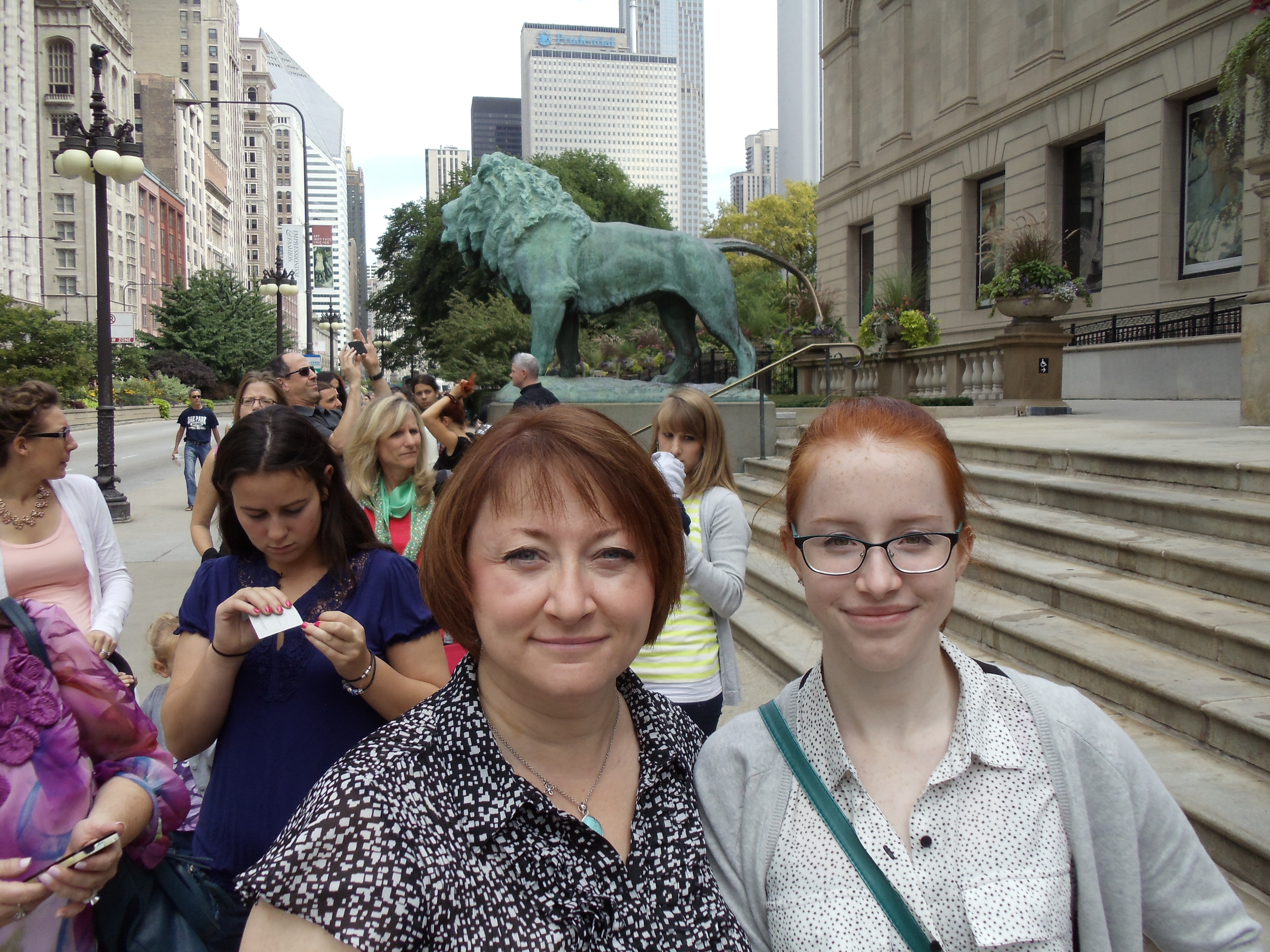
My daughter and me in Chicago

My daughter and me in Chicago

During a recent trip to Chicago, my daughter and I were walking outside the Art Institute of Chicago when she observed, “English is the language I’m hearing the least here. It’s refreshing.”

Now hold that thought, and please indulge me for a minute as I hop down a rabbit trail. (I promise it’ll make sense, eventually. Well, maybe promise is too strong a word. Let’s just say I hope it will make sense.)

When I was a kid growing up in the 1960s, I was fortunate enough to attend an interracial school. Perhaps because of the heightened racial tensions we were experiencing in American culture at the time, our teachers made a point of helping us little white kids to appreciate “colored people” and even taught us Negro spirituals like “Rock My Soul in the Bosom of Abraham.” (At the time I assumed the song referred to Abraham Lincoln!)

I recall being encouraged to understand that we are all equal and all alike inside. In my childish mind, I took that to mean, people may come in different colors, but inside we’re all the same–a white person like me. I also took it to mean that a person’s color was something I was to pretend I did not see.

Now, I’m guessing you learned better than that long before I did.

But as an adult, thankfully, I do see things–particularly people–differently. I still believe we are all equal and that as humans we share many common aspirations, insecurities and needs. But it took me longer than I’d like to admit to come around to the dangers of ignoring a person’s race, or more importantly the culture associated with it. White people like me seem particularly good at making this mistake. We act like we don’t see a person’s color or race, when of course, we do. Just like people of all races “see” others who are different from themselves. For whatever reason, we see this “not seeing” as a good thing, as if being Asian or white or hispanic or black is an unspeakable impediment to be tolerated or ignored. But a person’s racial heritage and color is not something to overlook like it’s a flaw; it’s something to be esteemed and celebrated.

And so, that brings me back to my daughter’s comment about finding it refreshing to be surrounded by different languages. (We live in a very homogeneous part of the Midwest, so while I was pleased about her observation, I wasn’t exactly surprised!) It made me think about the stories I’m creating for young readers her age and a bit younger. How often do I include a character who’s outside my white, middle class world? How can I help kids understand the importance of appreciating people inside and out?

How about you? Do you lean toward the familiar or do you intentionally branch out to create characters that reflect a broader worldview or culture or color? Let me encourage you to think of ways you can enrich a young reader’s world–or make it refreshing, as my daughter would say–by incorporating more diverse characters in your story.

Please don’t misunderstand me, I’m not asking you to change a main character’s name from Pete to Pedro, and call that “diversity.” You know better than that. I’m simply suggesting that when it makes sense, or maybe even when it doesn’t initially, consider how you can build richer worlds for your readers by word-painting with all the colors.

I promise I’ll do the same.

Thinking is the hardest work there is, which is probably the reason why so few engage in it. ~ Henry Ford

are you grandmothering your manuscript?

Standard
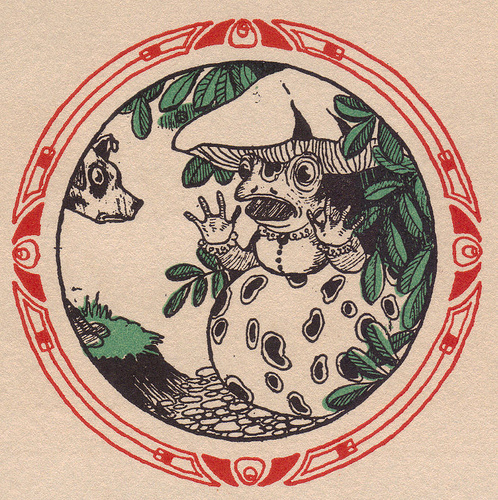
Grandma Frog by E.R. Crowell

Grandma Frog by E.R. Crowell

I was once a manuscript’s grandmother. When I drafted my first novel, I was like a grandmother to my characters–heck to the whole story itself–I thought everything my characters did was adorable. If they wanted to toddle down a rabbit trail, I tagged along, allowing the little darlings do or say pretty much anything their hearts desired. It was fun!

As a doting grandparent, I said, “Well, the kids are only here for such a short time. Let them twist the plot to smithereens. Who cares if this dialogue doesn’t contribute to the story. We’ll clean up the mess later.” Oy. And such a mess they (we) made. Like cleaning up the PB&J on the walls after the grandkids go home, the revision process that followed was messy and painful.

I will confess that I chose the “grandparenting approach” intentionally (and in my defense as a once novice writer, unwittingly) because I thought writing that first draft was all about discovery. Who could work from an outline, I thought. How boring to know how the story will end ahead of time. It’s the not knowing that pushes you to keep writing. Isn’t that the way it’s supposed to be?

I’ve since learned (through much wailing and gnashing of teeth) that parenting a manuscript is the way to go. Motivated by love for my characters, I have disciplined myself to tell them no. I must also allow my sweeties to make bad choices and to get themselves cowlick-deep in doo-doo (something a rescuing grandma could never do). And I have come to appreciate pre-writing and planning because, not unlike a parent who is looking out for a child’s future, it propels me to be more productive and create a stronger product sooner than I might otherwise.

Parenting and novel writing have another thing in common–the goal is to work yourself out of a job. A parent wants to raise a happy, independent, responsible adult, not a kid who stays a kid forever. A novelist wants to create a fully-formed (and finished!) story, not a germ of an idea that never develops or sits half-finished in a file forever. Planning and preparation aren’t guarantees, but they do increase your chances of finishing what you started and being pleased with the result.

Consider these jump starters to help you parent your manuscript to maturity:

* Snowflakes Try Randy Ingermanson’s amazing Snowflake Method
* Notebook Paper Create a traditional outline (you know, Roman numerals, et al.)
* Index Cards Draft the novel scene by scene on index cards (pretty ones)
* Paper and Markers Use mind mapping (great for very visual writers, plus, you get to color)

(Now, do any of these sound that scary?) 

If you’ve always taken the grandparenting approach, let me challenge you to give one of the jump start methods an honest try. It will feel confining and foreign at first. But I think you’ll be delighted to discover, as I did, that these methods still allow you lots of wiggle room to be surprised by your characters as you get to know them, to “see” something new you hadn’t anticipated in the planning phase, and just like a proud parent, you may see your work grow to become something even better than you first imagined.

If you’re going to write a novel, you have two choices: Jump in or wade in. Either way you’re gonna get wet. So, why not give manuscript parenting a try?

To Grandma, For being my first editor and giving me the best writing advice I’ve ever received: ‘Christopher, I think you should wait until you’re done with elementary school before worrying about being a failed writer.’ ― Chris Colfer, The Wishing Spell

anne lamott had her nostrils removed?

Standard

pinnochio frog

pinnochio frog

Has your muse gone to visit her mother in the Hamptons? Consider one of these fine reads to top off your inspiration tank. These are my five favorite go-to books . . .

Bird by Bird, Some Instructions on Writing and Life by Anne Lamott
This book is a classic for a reason. It’s full of solid advise and insights, wrapped in Anne’s wry wit. But Bird by Bird earned a cozy place in my heart for two very personal reasons. While I read it–more like absorbed it–I saw myself in her pages. As I was nodding my head, I realized I related to Anne’s words and experiences because I really am a writer. Not a writer-wanna-be, but someone with the heart of a real writer. Mmm-mmm-mmm. That’s some good soul-sticking stuff right there.

While I’m at it, I may as well confess my silly association with this book. I recall reading Bird by Bird for the first time by lamplight, alone in my living room. My daughter came running in when she heard me let out a loud gasp. I had just read the part where Anne shares about having her nostrils removed. You read that right–her nostrils! (Silly me. My eyes transposed a few letters. Anne had her tonsils removed. Oh, right, tonsils. Sure. I knew that.)

Take Joy, a Book for Writers by Jane Yolen
Lots of reasons to love and read this little volume. First off, Jane Yolen wrote it. That’s reason enough. Secondly, I love the title because it’s based on one of my favorite quotes from Fra Giovanni–“The gloom of this world is but a shadow. Behind it, yet within our reach is joy. Take joy.” Jane’s book is a warm, lovely mixture of instruction, wisdom, observation and encouragement.

Making a Literary Life, Advice for Writers and Other Dreamers by Carolyn See
Whether she intended to be or not, I think Carolyn See is a hoot. While she does devote about half of her book to craft, in the first half she talks about things like how to pretend to be a writer (hey, we all have to start somewhere) and she offers advise I’ve never seen included in any other book on writing–how to dress for your first trip to New York (seriously–right down to the jewelry), about sending charming notes (every day) to help you make connections with publishing people, about writing a thousand words a day, and about setting up a writing account to help you make your writing life a reality. She’s so pragmatic and dramatic at the same time. And by the way, I took Carolyn’s advise on the writing account and I’m so glad I did. Whenever I sell a little article or make a bit of extra cash, I tuck it in that account. Knowing the money is there for writing-related ventures gives weight and reality to my otherwise dreamy dreams.

On Writing, a Memoir of the Craft by Stephen King
I am not a Stephen King fan. (Won’t he be crushed?) He’s talented alright, but his stories are just too scary for me. (Yes, I’m a ninny.) I enjoy this memoir because I think it’s fun to learn what makes other writers tick. And that brilliant Stephen, he’s got himself some ticks. I wouldn’t read On Writing for particulars on craft or technique, but more for inspiration and insight.

Walking on Water, Reflections on Faith and Art by Madeleine L’Engle
This is by far my favorite, favorite, favorite book on writing. (And just to be clear, Walking on Water is not a how-to book!) This book is filled with many of Madeleine’s favorite quotes (I have her to thank for introducing me to the Fra Giovanni quote I love), along with stories of her life and family, and faith, philosophy and the artistic process. Best of all, she opens her heart and reflects on writing for children and why it matters so much. I deeply admire Madeleine’s respect for children and the importance of giving them only our very best as writers.

This summer I intend to re-read all of these, even if my muse returns early from the Hamptons.

How about you? What are your favorite books on the craft of writing?

The profession of book writing makes horse racing seem like a solid, stable business.~ John Steinbeck

3 Rs to improve your writing–today

Standard

frog and quill
The term “best practice” has become a bit of a buzzword. I hear it a lot at the health system where I work as a writer and editor. As I understand it, a best practice is a method that consistently shows superior results. Best practices become the standard for the way we do our work.

I’d like to suggest three simple best writing practices to help you become a stronger writer today (yes, this very day!)

Try these best practices or the “3 Rs”:

Relax. (Yes, you read that right!) Guess I should be more specific. By relax, I mean, remember that the reason we write that first draft is so we’ll have something to re-write. Take some pressure off yourself. Download the thoughts from your head to your keyboard and then you can play with them. Before they can be perfect or precise, they simply need to be.

Reduce your word count by five percent. Words are powerful, but they don’t have to be precious. Choppity-chop the excess. (Let me pause right now to apologize. I’m sorry I didn’t warn you there would be math. But if I had, would you still be reading this? Here’s how to easily calculate 5%–let’s say you’ve written a fresh page of 246 words. Look at those first two numbers–24–that’s 10%. Now, what’s half of 24? That’s right, 12 (or 5%). See how easy? So, you’d need to delete 12 words. The calculation is the easy part. Taking out the excess words–that’s the tricky part.) When you manage to make your manuscript lean, your writing is tighter and brighter, not just lighter. Pardon the sappy rhymes, won’t you? And honestly, cutting words can be a fun challenge. Why, you won’t even miss the words once they’re

Read your work out loud. And I’m not just talking to picture book authors here. Whatever your genre, make it a practice to read your writing out loud. Yes, your family or office mates will think it’s weird at first, but they’ll get over it. When you “hear” your work, you not only catch grammatical glitches or overused adjectives, you can listen to the rhythm of your words. If you’ve never tried this before, try it today.

Maybe the “best” best writing practice is practicing. So, relax. Fill that page. Lop off five percent. Read it out loud. And try again tomorrow.

There are three rules for writing a novel. Unfortunately, no one knows what they are. ~ W. Somerset Maugham