100 things I wouldn’t know

Standard

In honor of my 100th blog post, I want to share 100 things I wouldn’t know if I’d never become a children’s writer.

Collage by Vicky Lorencen

Collage by Vicky Lorencen

  1. Follow submission guidelines like you are assembling a nuclear warhead. No fudging.
  2. Trends are to be watched, not followed.
  3. Focus on what you’re doing well. Do more of that.
  4. A synopsis is as much for your benefit as it is the editor’s.
  5. Writing is reductive. Writing should be like a sale at the GAP–it should always be 20% off. (Mo Willems)
  6. Waiting for opportunities is fiddle faddle. Create them.
  7. Don’t ask too much of a first chapter. It’s an invitation to the reader and an opportunity to assure her you can be trusted. (Andrew Karre)
  8. Query letters are the most important and least read letter you’ll ever write.
  9. Show a character’s feelings through reactions.
  10. Just about everybody struggles with jealousy. I am jealous of those who don’t.
  11. Picture books are an art form unto themselves.
  12. Query letters need to sound like your real voice, not a superficial marketing pitch.
  13. Joining a critique group can be a game changer.
  14. Having a social media presence is important, but don’t let it infringe on your writing time.
  15. Always send thank you notes.
  16. Scene = Time + Place + One Change (Candace Fleming)
  17. Having beautiful file folders makes revision more funner. More fun, that is.
  18. Do not bother with Goodreads.
  19. Use index cards to map out scenes in a novel.
  20. For novels, ask–what is the job of this chapter?
  21. Facebook can really mess with your head.
  22. Follow-up with queries and submissions. You did the sending after all.
  23. Keep in touch with the editors, agents and participants you meet at conferences.
  24. Small workshops are often more worthwhile than big conferences.
  25. Back up your files and back up your back up files.
  26. Write what you know.
  27. Write what you wish you knew.
  28. Look for the seeds to resolving your story’s conflict within the story itself.
  29. Characters have been alive a long time before they introduced themselves to you.
  30. Writing costs money, time and energy. It’s worth it.
  31. If you feel stuck in your genre of choice, shake things up by writing in a different one.
  32. Everybody wants to quit at some point.
  33. Giving back doubles the investment you’ve made in your own writing.
  34. The journey to publication is not a race.
  35. Take thank you notes with you to conferences so you can thank people right away.
  36. Identifying (and eradicating) your crutch words can help to tighten your writing. Find/replace is your friend.
  37. Print out your entire novel in 8 pt. font, highlight the “solid” parts, then spread it out to see where the plot sags. (Thanks, Darcy Pattison)
  38. One carry-on bag is really all you need.
  39. Characters must undergo an inner and outer journey.
  40. Resist the urge to hide during conferences.
  41. Talk about your dreams and ambitions.
  42. Having a blog is fun work.
  43. You don’t have to start a novel with a big bang. Let the reader get to know the character before the inciting incident.
  44. Flying solo isn’t heroic. It’s nonsense.
  45. In a query letter, use quotes from the book to show character. (Christy Ottaviano)
  46. Your first idea is not unique. Twist it.
  47. Accept critiques with grace.
  48. Give critiques with humility.
  49. An editor’s job is to help clarify what your book is about.
  50. When you read, read like a writer.
  51. Give the same amount of care to world building/setting as you do to creating characters.
  52. A good cup of tea can fix a lot of things.
  53. Progress is the difference between finding time to write and making time to write.
  54. We write to re-write. And then to re-write what we re-wrote.
  55. Editors and agents are people too.
  56. Writing is an act of revelation. (Cynthia Leitich Smith)
  57. Use Find & Replace to weed out those just so very, very, very useless words.
  58. Your family may never grasp that staring off in space in part of the writing process.
  59. Writing will drive you to do otherwise loathsome tasks like cleaning the refrigerator (at your neighbor’s house because you’ve already cleaned yours. Oh, and organized your sock drawer. Twice.)
  60. Writing makes every life experience—from fixing a flat to flying in a helicopter–fodder for future writing.
  61. Disappointment is standard issue.
  62. You can always quit. No one is forcing you to write.
  63. Reading at open mic is a hoot. (I mean this.)
  64. Figure out a way to remember names (for when you go to conferences). You’re a word person. You can do this.
  65. There are two kinds of non-writing people—those who are in awe of you and those who think anyone can be a writer, especially for children. Don’t worry about either kind.
  66. Pretend to be confident. You may be a shy person, but that’s no one’s business but your own.
  67. Rejection sucks.
  68. There are three effective ways to make rejection suck less. I don’t know what those ways are.
  69. Readers bond with characters when we ask them to stretch. (Cynthia Leitich Smith)
  70. When you get stuck, stop. Move on to something new or take a nap. Let your mind wrestle with the knots a while before you go back.
  71. Writing is like wood carving. You go from larger to smaller, so don’t focus on details first.
  72. Most parents only get to name two, three, maybe four or so people. Writers get to name lots of people. Cool.
  73. Characters may push you. Let them.
  74. Grammar matters. At least know the rules before you snap them.
  75. Be respectful to everyone, even (and especially) on social media.
  76. Stories must balance between the specific and the universal.
  77. It’s important not to have a sense of preciousness with your work. (Shaun Tan)
  78. In writing, the author is the third wheel. You’re in the way. No one wants you there. You need to be invisible. (Mo Willems)
  79. Laughing at your own writing is a great feeling, so long as you were intending to be funny.
  80. Writers cannot emotionally protect themselves. (Coe Booth)
  81. It’s important to love my secondary characters as much as my main characters.
  82. Reinvention is the dark chocolate in the writer’s life. (Jane Yolen)
  83. Secondary characters can’t simply exist to serve the main character’s story.
  84. Don’t let details overwhelm or derail a story.
  85. Before you begin drafting a novel, create character sketches by interviewing each character.
  86. Stay out of a character’s head as long as possible. (Andrew Karre)
  87. Invest in your friendships with other writers. It will always, always be worth it.
  88. Pay attention to what kids do, enjoy and worry about now. Some things never change, but not everything.
  89. No one wears a T-shirt with their favorite plot on it. Readers fall in love with characters.
  90. A writer’s validation has to come from what her work means to a reader and not from reviews or awards. (Ed Spicer)
  91. Reliable WiFi and a laptop with a light up keyboard are splendid things.
  92. Create a room in your home (or at least a zone) that’s for writing only.
  93. The feel of book pitch needs to match the tone of the story.
  94. Something as ordinary as weather can be used to impact the mood of a story. [Cue the thunder-clap.]
  95. To learn about my characters, I need to ask where am “I” in my writing. (Coe Booth)
  96. You can write an entire novel without once using a semi-colon.
  97. Ultimately, the purpose of storytelling is to remind us of something ordinary or familiar. (Shaun Tan)
  98. Generally speaking, chocolate will not fill plot holes. But it can’t hurt to try.
  99. Brilliance strikes two seconds after you hit send on a submission.
  100. Everything takes longer than you think it will. Even reading lists.

The list could surely go on, and there is nothing more wonderful than a list, instrument of wondrous hypotyposis. ~ Umberto Eco

nine picture book topics to avoid

Standard
By Leslie Helakoski Boyds Mills Press

By Leslie Helakoski
Boyds Mills Press

While we’re still knee-deep in winter, it helps to have something GREAT to look forward to. Here’s what I high-as-a-snowbank highly recommend . . .

Children’s book author Darcy Pattison and children’s book author/illustrator Leslie Helakoski will co-lead a unique workshop, PB&J: Picture Books and All That Jazz at Highlight’s Foundation in Honesdale, PA on April 23-26, 2015. Join them and learn how to make your story rise above the fierce competition.

For a taste of what’s to come at the PB&J workshop, here’s a wisdom-filled article written by Darcy and Leslie . . . 

When people think about writing a children’s picture book, clichéd topics pop up. These classic themes are based on universal childhood experiences. It’s not that these topics are taboo. Instead, they are so common that competition is fierce. As they say, children’s publishing is a bunny-eat-bunny world.

Here are the top 9 topics to avoid. Also listed is a children’s book, published within the last 5 years, that is a fresh take on the topic. If you are considering writing a picture book about one of these topics, it will be a harder sale unless you can find an original way to approach it.

1. First Day of School. Everyone wants to get kids ready for the first day of school, and it’s hard to find a fresh approach.

Updated title that works:

Dad’s First Day (July, 2015), written and illustrated by Mike Wohnoutka.

2. Tooth fairy. People have 32 teeth, and losing baby teeth in early elementary school is a universal experience. The tooth fairy often has a place in a family story, which makes it a perennial topic for a children’s book.

Updated title that works:

The Dinosaur Tooth Fairy (2013) by Martha Brockenbrough, illustrated by Israel Sanchez.

3. Christmas/Halloween. Major holidays are often the focus on children’s books.

Updated Titles that Work:

Christmas Parade (2012) written and illustrated by Sandra Boynton.

Smudge and the Book of Mistakes: A Christmas Story (2013), by Gloria Whelan, illustrated by Stephen Costanza.

 4. Wanting a pet. From gerbils to dogs, cats to chinchillas—humans love their pets. It’s a natural topic for a children’s book.

Updated titles that work:

I Want a Dog: My Opinion Essay (2015) by Darcy Pattison, illustrated by Ewa O’Neill.

I Want a Cat: My Opinion Essay (2015) by Darcy Pattison, illustrated by Ewa O’Neill.

5. Dealing with a disability. With today’s cultural emphasis on diversity (#WeNeedDiversity), libraries are looking for stories with disabled characters.

Updated title that works:

My Three Best Friends and Me, Zulay (2015) by Cari Best, illustrated by Vanessa Brantley-Newton.

6. Visiting Grandma and Grandpa. Who buys books for children? Grandparents! And of course, grandparents want to encourage a close relationship with their grandchildren. Do this topic with humor and honest emotion and you’ll have a winner.

Updated titles that work:

How to Babysit a Grandpa (2012) by Jean Reagan, illustrated by Lee Wildish.

How to Babysit a Grandma (2014) by Jean Reagan, illustrated by Lee Wildish.

 7. New baby in the family. Young children often have to move over and make room for a new sibling. Books helps them work through the complicated emotions when a new baby arrives

Updated title that works:

You Were the First (2013) by Patricia MacLachlan, illustrated by Stephanie Graegin.

8. Barnyard stories/rural nostalgia. The rural roots of America are ever-present in children’s books. One of the first things kids learn is the sounds made by farm animals. From there, chickens and pigs rule!

Updated title that works:

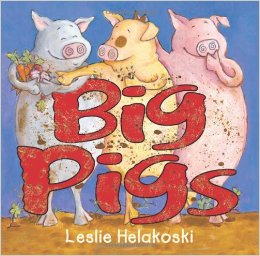
Big Pigs (2014), written and illustrated by Leslie Helakoski.

9. Bedtime stories. Kids who are read to become better readers. What better time to read than bedtime? And if the story ends on a quiet note that encourages the kids to go to sleep faster, parents will love you.

Updated title that works:

Goodnight, Goodnight Construction Site (2012) by Sherry Duskey Rinker, illustrated by Tom Lictenheld.

Not convinced that you should avoid these topics? Then put on your A-Game! Because the competition for children’s picture books about these topics is fierce. Yet, if you write a fantastic story about one of these topics, it might just become a classic.

how to give your writing shine, volume and manageability

Standard
Photo by Vicky Lorencen

Photo by Vicky Lorencen

You’ve seen the commercials. There’s a woman with limpity blahsville hair. Her shoulders, schlumpy. Her eyes, rolled. She blows a puff of air upward from her lower lip and ruffles her scruffy bangs–the universal breath of disgust. Then, some product whooshes onto the screen. It’s a bottle of glamorous, sexy-smelling hope for hair. Ms. Lackluster snatches the wunderproduct, suds it through her sorry locks and voila! Cue the fans to blow a mane so magnificent as to make Fabio throw in the towel.

What if there was a “product” that could do the same–give shine, volume and manageability–to your writing? Good news! There is. It’s called Critique Group.

Here’s how this amazing product works:

Shine. Nothing will give your writing that dazzling sheen you desire like a robust critique. Your group can help you snip those dry, split ends created by worn or useless verbiage, identify stronger verbs and methodically polish your work.

Volume. Receiving regular feedback on your work helps to fuel your momentum, which hopefully, results in higher word counts and more pages than you may have accumulated as a solo act. So luxurious!

Manageability. Critique groups, regardless of how you arrange them, typically come with a schedule for sharing your work. Knowing you have these deadlines can help you plan, set goals and make the whole writing process more aimful instead of aimless.

You say you don’t have a critique group of your very own? Instead of pulling out your hair, let’s find you a group ASAP.

Consider these ideas for either starting or connecting with an established group:

  • Use social media. Let Facebook friends or Twitter followers know you’d like to join or start a group.
  • Visit discussion boards and search “critique groups” to see who’s seeking. For example, you could start with the SCBWI (Society of Children’s Book Writers and Illustrators) and explore the Resources section.
  • Talk with your local children’s librarian or a writing instructor at your local community college about your desire to form a group. You may learn about others who have expressed the same. If there’s a public bulletin board at the library or community college, post a “Want Ad” there.
  • Go to writing conferences or take writing classes and do a little friendly snooping to find out about the groups of your fellow attendees. Who knows, they may be hoping to add a new member.
  • Ask other writing friends for ideas. Ask how they decided between joining a face-to-face or online group (and the advantages/disadvantages of each), how their group is structured and if they know of a group with an opening. If your friend is groupless, ask about starting a new group of your own.

If you’re already in a group and have more ideas, tips for how to structure or improve a critique group, please share.

Wishing you gorgeous “hair” days ahead!

You have to write the book that wants to be written. And if the book will be too difficult for grown-ups, then you write it for children. ~ Madeleine L’Engle

the one right way to find an agent

Standard
Photo by Vicky Lorencen

Photo by Vicky Lorencen

To date, there are 487 wrong ways to hunt for an agent. There is but one right way. And that, my friends, is the way that

is best for you. If you’re still finding your way to your way, and you don’t mind me meddling a bit, I’d like to pass along a few fibrous tips to help your process go more smoothly. Do not mistake me for an expert. I myself am a hunter, but I have learned a thing or three so far and I’m happy to share. M’kay, here we go . . .

Track yourself. Do identify a way to log your queries. Otherwise, you’ll be asking yourself who you asked. Such silliness that would be.

Me? Well, I have a simple three list system–but you do what works for you.

List 1: I keep a list of agents who are currently considering my query. You may want to compile more detail, but I just include the agent and agency, when I queried and when I can anticipate a response (many agents will indicate this in their submission policies). I don’t just say six weeks; I actually indicate an expiration date. No word by then? NEXT!

List 2: This is comprised of agents who are ready to move up to the first list as soon as I receive a no from an agent (or the query expires). I add to this second list of names as I discover a new possibility via FB or a friend (but only after I have run the agent through the good-fit test). Don’t just make a list of names. Do your homework first.

List 3: Sure, as you’d expect, I have a list of agents who have declined. With this, I indicate if the agent actually declined or was simply a “no response.”

Go public. Hunting for an agent and expecting not to be rejected is like walking onto a used car lot and expecting not to be hounded. Because of this, it’s scary to tell people you’re looking. I know. Trust me, I know. But here’s what I’ve learned–the more people I tell about my search, the more friends I have hunting for me. It’s rare for a week to pass without getting a tip–“Just heard Agent X is looking,” “Saw this on Twitter and thought of you,” “Have you queried Agent XYZ yet? He’d be a great fit for you.” So, don’t keep your hunt hush-hush. You don’t have to blab to the world. Simply sharing your agent pursuit with a circle of trusted comrades will more than double your search party. G’head. Do it. (And be sure to reciprocate!)

Photo by Vicky Lorencen

Photo by Vicky Lorencen

Keep moving. Can’t lie. So far, there have been a couple of rejections that have bruised a bit. But truly, and maybe I’ve developed a kind of literary immunity, but I don’t fuss much over a decline any more. It’s just part of the process. If it does hurt, I give myself a day to feel schlumpy and then I jump back on the hunt. Having that second list of pre-approved agents is the trick. To insure I have about five queries out at all times, I prepare a new query as soon as a rejection arrives. It keeps my momentum humming and prevents me from poor-me-stinating. (Poor-me-stinating is similar to procrastinating, but more pathetic looking–think Sarah McLachlan rescue animal commercial pathetic–I know. So bad.)

Now, what about you? You got any ideas you’d like to share? Please do. And happy hunting!

Beware of adviceeven this. ~ Carl Sandburg

diagnosis: chronic “stupbornness”

Standard
Art Institute of Chicago, photo by Vicky Lorencen

Art Institute of Chicago, photo by Vicky Lorencen

When you’re stupborn, you’re stupid and stubborn. I know because that’s what I am. At least that’s what I surmise. The lab tests are inconclusive, but a decade of firsthand observation cannot be ignored.

After more than ten years of writing, revising, reading, work-shopping, conference-going, networking, critique-grouping, class-taking, submitting and querying, I am still without a book contract. A smarter, less bull-headed person would have given up by now.

And why not? No one is forcing me into this pursuit. It’s self-inflicted without question. Yet, here I am peering into the shiny, giddy-go-lucky face of a new year and I am trudging ahead. I am not buoyed by hope or spurred by optimism. In fact, I feel quite hopeless. But my chronic stupbornness will not permit me to retreat or resign.


How about you?

Are you stupborn too?

You are? Oh, bless your heart. You need a cookie and a nap. But first, I’ve culled these quotes to encourage you:

There is a stubbornness about me that never can bear to be frightened at the will of others. My courage always rises at every attempt to intimidate me. ~  Jane Austen

I promise I shall never give up, and that I’ll die yelling and laughing, and that until then I’ll rush around this world I insist is holy and pull at everyone’s lapel and make them confess to me and to all. ~ Jack Kerouac

It gives me great pleasure indeed to see the stubbornness of an incorrigible nonconformist warmly acclaimed. ~ Albert Einstein

Happy New Year, my dear, sweet, stupid, stubborn friends. (And yes, yes, certainly, warm wishes to my smart friends too.)

Let’s show 2015 what we’re made of!

happy 2nd anniversary to frog on a dime!

Standard
Photo by Vicky Lorencen

Photo by Vicky Lorencen

Can’t believe Frog on a Dime is celebrating its second year!

My warmest–gooey in the center–thanks to my followers and to everyone who  commented, gifted me with suggestions, invited friends to hop on over, and most of all, dolloped me with encouragement. My goal was to encourage you, but oftentimes, I’m the recipient and I am so grateful!

If you have ideas for future post-ibilities, topics you wish to see covered here or quotes you’d like to pass along, please do.

So excited to be heading into year three with all of you! There’s more encouragement on its way.

Wishing you an outrageously productive, creative, inspired New Year. I mean, the blow your socks off variety. Why not? You deserve it.

Happy, hoppy Holidays from Frog on a Dime!

Let us be grateful to the people who make us happy; they are the charming gardeners who make our souls blossom. ~ Marcel Proust

congratulations to the winners of the jumpin’ jolly triple-triple-triple (holy holly this title is long) giveaway to giveaway!

Standard
Giveaway goodies!

Giveaway goodies!

Congratulations to . . .

  • Randy Bulla, winner of JAKE and LILY by Jerry Spinelli.
  • Danielle Hammelef, winner of FLORA & ULYSSES by Kate DiCamillo.
  • Erin Fanning, winner of EXTRA YARN by Marc Barnett, illustrated by Jon Klassen.

Winners, please contact me with your mailing address and let me know if you’d like to take me up on the free gift wrapping option.

Whether you decide to experience the joy of giving away your giveaway prize or cherishing it yourself (and who could blame you?), I hope this special treat adds fun to your holiday.

Many thanks to everyone who entered–and invited friends to follow Frog on a Dime. I understand a few squirrels may be added to the list (thank you, Randy!)

Wishing you all a lovely holiday season, filled with laughter, craziness (the jolly kind), moments for quiet reflection (and of course, reading) and much joy!

Oh, and cookies. Can’t forget those.

Merry Reading from Frog on a Dime! Photo by Vicky Lorencen

Merry Reading from Frog on a Dime!
Photo by Vicky Lorencen

it’s the frog on a dime jumpin’ jolly triple-triple-triple (holy holly this title is long) giveaway to giveaway!

Standard
Photo by Vicky Lorencen

Photo by Vicky Lorencen

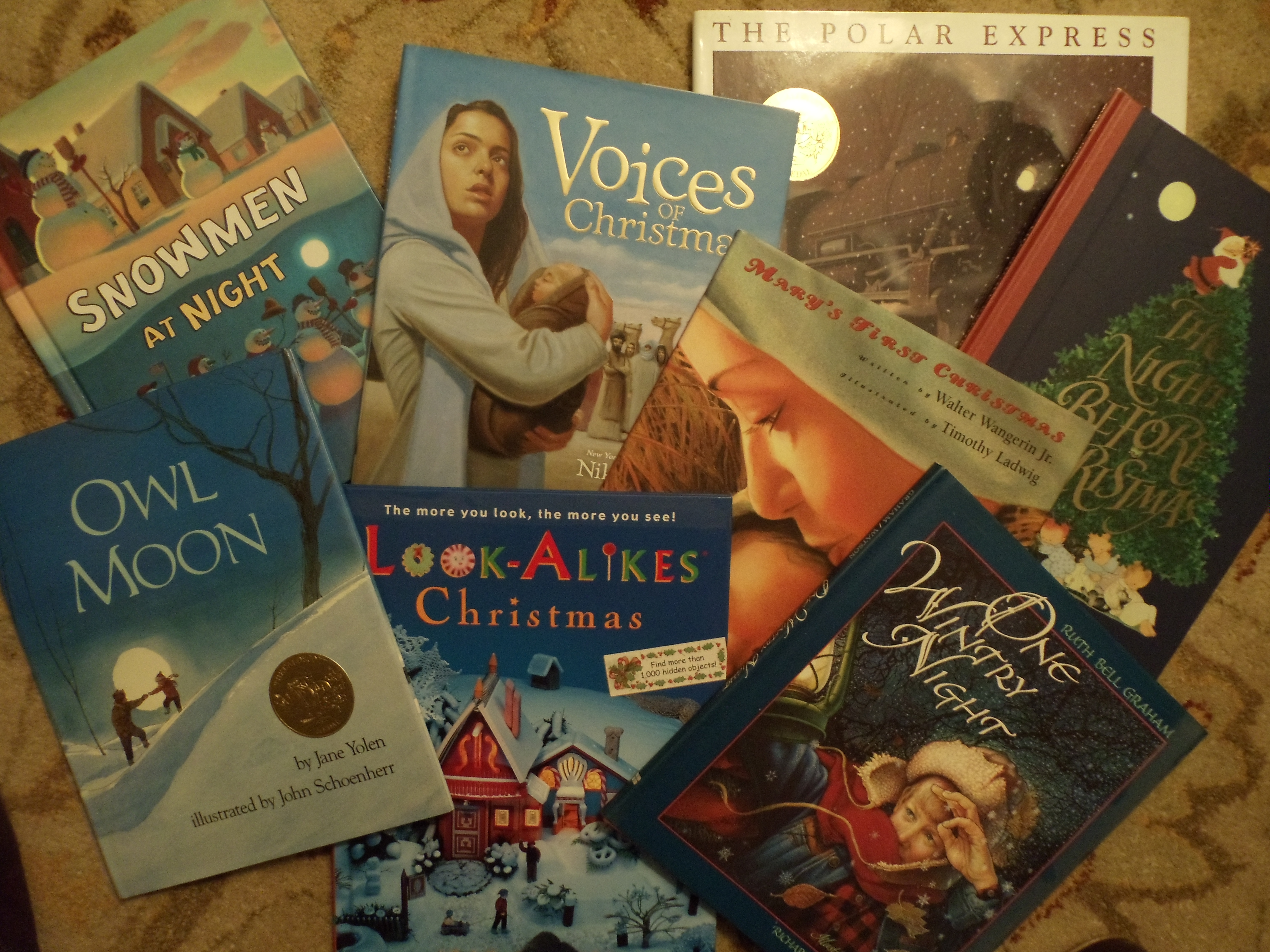
One of the ways I “still” myself during the holiday season is to sit and sip tea while perusing my collection of favorite and familiar Christmas and wintry books. There’s something magically lulling about those beloved images and the lilting language. Looking at the covers, I can almost hear a cheery “welcome back” before I even turn the first page.

Knowing you love children’s book and might very well love to give a book to a child you love, Frog on a Dime is offering a very special holiday giveaway for you to giveaway!

There are three outstanding children’s books up for grabs . . .

Giveaway goodies!

Giveaway goodies!

JAKE and LILY by Jerry Spinelli

FLORA & ULYSSES by Kate DiCamillo

EXTRA YARN by Marc Barnett, illustrated by Jon Klassen

To enter:

Step 1: Invite a friend to follow Frog on a Dime.

Step 2: Leave a comment on this post to let me know which book you’d prefer (with a 2nd choice, just in case) AND let me know that you’ve invited a friend. You don’t have to name names. We’ll be on the honor system. (Just remember, “he” knows if you’ve been bad or good, so be good for goodness sake.)

I will draw three names on Friday, December 12 at Noon. Each winner will receive a book—and I’ll even gift wrap it with my own little hands, if you like. Then I’ll send them off to the lucky winners spit-spot!

Enter today!

Happy, happy Christmas, that can win us back to the delusions of our childish days; that can recall to the old man the pleasures of his youth; that can transport the sailor and the traveller, thousands of miles away, back to his own fire-side and his quiet home! ~ Charles Dickens, The Pickwick Papers (1836)

4 simple ways to keep writing over the holidays

Standard
Photo by Vicky Lorencen

Photo by Vicky Lorencen

No, my little sugar plums, I haven’t been sampling the “enriched” eggnog. There really are at least four simple ways to keep putting one snowshoe in front of the other (writing-wise) through the holiday season.

Now, I know some of you actually first-drafted an entire novel in November (HUZZAH!), but instead of taking a well-deserved break, why not keep that keyboard humming? And if you’re like me, and didn’t exactly knock out an entire book last month, maybe you’ll want to try these ideas to keep your writing muscles from going fudgy and flabby.

To keep writing a part of the holiday season without turning into a stark raving nutty fruitcake:

  1. Have a way to capture thoughts/quotes/ideas with you at all times. Time spent with friends and relatives over the holidays can be golden opportunities for writers. Jot down details, mannerisms, expressions, dynamics, kid’s questions–in an inconspicuous way, of course! These notes will make fabulous fodder to kick-start your January writing.
  2. Use the time doing semi-mindless tasks, such as gift wrapping, cookie baking or waiting for wee ones to finish pageant practice, to think about your writing. Ponder how to make a character’s personality fresher or concoct a new barrier to put in his path. You could untangle a knotty plot problem while you untangle the Christmas tree lights. Or use your noodle to dream up the perfect title or a character’s name.
  3. Give yourself the gift of 30 minutes three times a week to write. If you have a day job, you could use your lunch hour. It’s not really so much about word count as it is maintaining forward momentum. It’ll make it a lot easier to charge ahead in January. And while we’re on the subject, try idea number four.
  4. Compile a list of writing goals for the New Year. Go for realistic and specific. Say adios to the grandiose.

DSC02577Sound like too much? Just try one or two of the ideas. Or come up with your own (and please share!)

Oh, and remember to write yourself a thank you note. You’re so amazing!

One of the things I learned the hard way was that it doesn’t pay to get discouraged. Keeping busy and making optimism a way of life can restore your faith in yourself. ~ Lucille Ball


encouragement is like hot buttered toast (gluten-free, of course)

Standard

Last week I sent the opening pages of my third middle grade novel to my critique group. My accompanying email read:

Photo by Vicky Lorencen

Photo by Vicky Lorencen

Here are the first measly, tender baby words of my new middle grade novel. Now, I will be completely transparent and say I’m really looking for encouragement here, but not the fake kind where you’re just making stuff up to make me feel good. I want you to be honest, but mostly focus on what’s going right (if anything no matter how small), so I can do more of that. You will be welcome to be much, much tougher once I’m further along.

Thank you so much for taking the time to look at my new baby. Remember to support her head, and for Gerber’s sake, keep your dang thumb away from that soft spot on her head would ya? (And I apologize in advance if she smells like poopy.)

Is it just me? You’ve been there, right? I was so vulnerable and needy (one of my all-time favorite states of being for sure). I knew my critique group would be fair and kind, but I was not prepared for the first comments I got back.

I got dark chocolate covered, name in neon lights, to Neptune and back, crazy ENCOURAGEMENT!!!

How did that make me feel?

Hopeful!

Energized!

Confident to push ahead!

As I see it, encouragement is more than good cheer or offering support. It’s fortifying a friend who is afraid–afraid to act, afraid to take a risk, afraid to speak up or afraid to ask. In other words, encouragement provides courage (See there? It’s right in the word itself. How ’bout that?) And that’s what my group gave me.

Photo by Vicky Lorencen

Photo by Vicky Lorencen

Encouragement is like . . .

  • Jumping through the sprinkler on an August scorcher.
  • Finding $20 tucked in your wallet.
  • Scoring a gorgeous pair of shoes (at 75% off).
  • Savoring a well-timed cup of tea (with a scone, of course).
  • Receiving an unexpected hug (or a wink).
  • Admiring December’s first snow.

Encouragement makes your soul say, ahhhhhh. You feel full, different, better and ready to take the next step. Little wonder Frog on a Dime‘s primary goal is to provide encouragement to writers.

Who’s been your biggest encourager lately? Who will you encourage today?

Remember, man does not live on bread alone: sometimes he needs a little buttering up. ~  John C. Maxwell