Category Archives: Encouragement

anne lamott had her nostrils removed?

Standard

pinnochio frog

pinnochio frog

Has your muse gone to visit her mother in the Hamptons? Consider one of these fine reads to top off your inspiration tank. These are my five favorite go-to books . . .

Bird by Bird, Some Instructions on Writing and Life by Anne Lamott
This book is a classic for a reason. It’s full of solid advise and insights, wrapped in Anne’s wry wit. But Bird by Bird earned a cozy place in my heart for two very personal reasons. While I read it–more like absorbed it–I saw myself in her pages. As I was nodding my head, I realized I related to Anne’s words and experiences because I really am a writer. Not a writer-wanna-be, but someone with the heart of a real writer. Mmm-mmm-mmm. That’s some good soul-sticking stuff right there.

While I’m at it, I may as well confess my silly association with this book. I recall reading Bird by Bird for the first time by lamplight, alone in my living room. My daughter came running in when she heard me let out a loud gasp. I had just read the part where Anne shares about having her nostrils removed. You read that right–her nostrils! (Silly me. My eyes transposed a few letters. Anne had her tonsils removed. Oh, right, tonsils. Sure. I knew that.)

Take Joy, a Book for Writers by Jane Yolen
Lots of reasons to love and read this little volume. First off, Jane Yolen wrote it. That’s reason enough. Secondly, I love the title because it’s based on one of my favorite quotes from Fra Giovanni–“The gloom of this world is but a shadow. Behind it, yet within our reach is joy. Take joy.” Jane’s book is a warm, lovely mixture of instruction, wisdom, observation and encouragement.

Making a Literary Life, Advice for Writers and Other Dreamers by Carolyn See
Whether she intended to be or not, I think Carolyn See is a hoot. While she does devote about half of her book to craft, in the first half she talks about things like how to pretend to be a writer (hey, we all have to start somewhere) and she offers advise I’ve never seen included in any other book on writing–how to dress for your first trip to New York (seriously–right down to the jewelry), about sending charming notes (every day) to help you make connections with publishing people, about writing a thousand words a day, and about setting up a writing account to help you make your writing life a reality. She’s so pragmatic and dramatic at the same time. And by the way, I took Carolyn’s advise on the writing account and I’m so glad I did. Whenever I sell a little article or make a bit of extra cash, I tuck it in that account. Knowing the money is there for writing-related ventures gives weight and reality to my otherwise dreamy dreams.

On Writing, a Memoir of the Craft by Stephen King
I am not a Stephen King fan. (Won’t he be crushed?) He’s talented alright, but his stories are just too scary for me. (Yes, I’m a ninny.) I enjoy this memoir because I think it’s fun to learn what makes other writers tick. And that brilliant Stephen, he’s got himself some ticks. I wouldn’t read On Writing for particulars on craft or technique, but more for inspiration and insight.

Walking on Water, Reflections on Faith and Art by Madeleine L’Engle
This is by far my favorite, favorite, favorite book on writing. (And just to be clear, Walking on Water is not a how-to book!) This book is filled with many of Madeleine’s favorite quotes (I have her to thank for introducing me to the Fra Giovanni quote I love), along with stories of her life and family, and faith, philosophy and the artistic process. Best of all, she opens her heart and reflects on writing for children and why it matters so much. I deeply admire Madeleine’s respect for children and the importance of giving them only our very best as writers.

This summer I intend to re-read all of these, even if my muse returns early from the Hamptons.

How about you? What are your favorite books on the craft of writing?

The profession of book writing makes horse racing seem like a solid, stable business.~ John Steinbeck
where’s your permission slip?

Standard

(c) Vicky L. Lorencen

(c) Vicky L. Lorencen

(c) Vicky L. Lorencen

(c) Vicky L. Lorencen

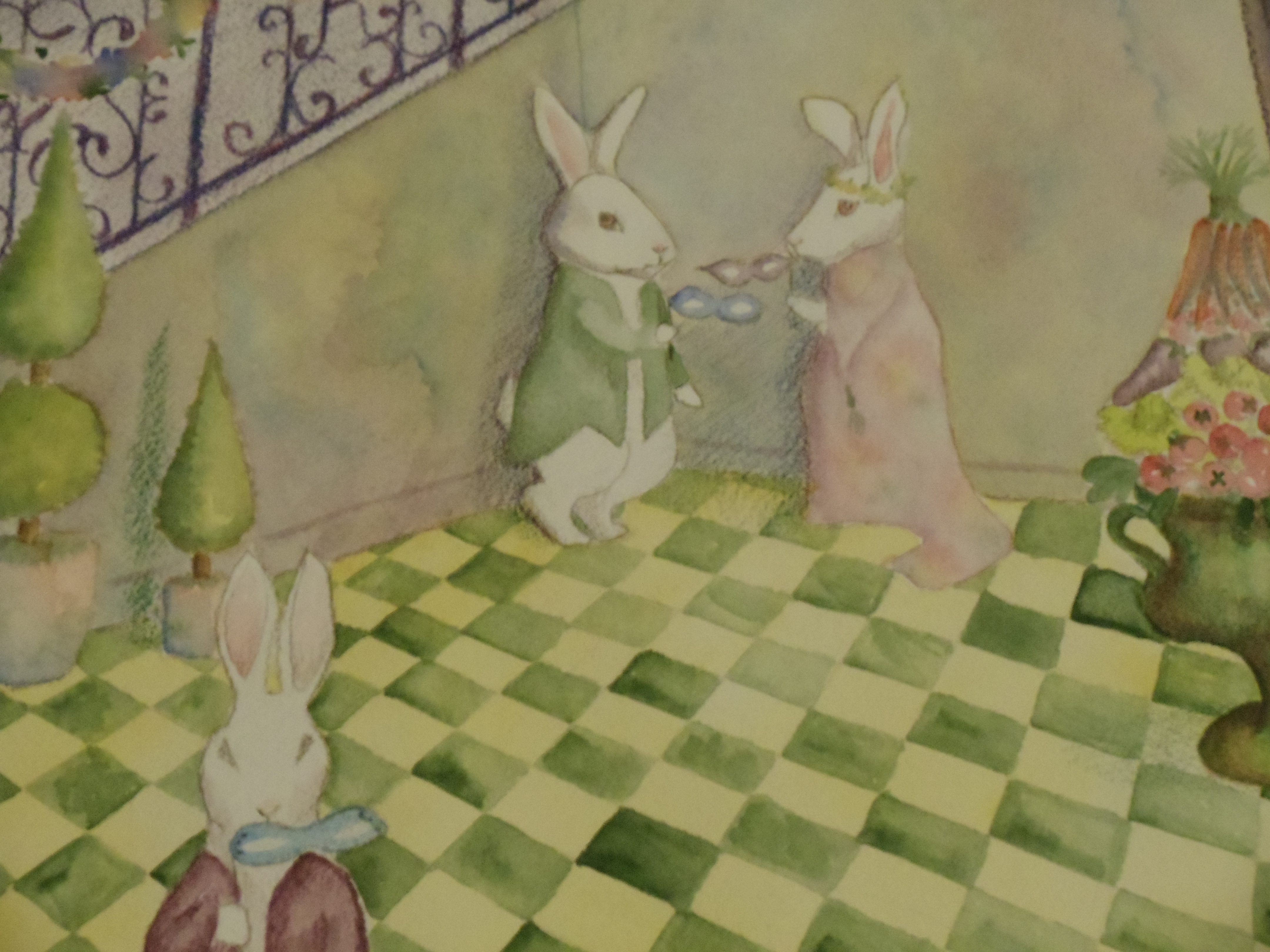
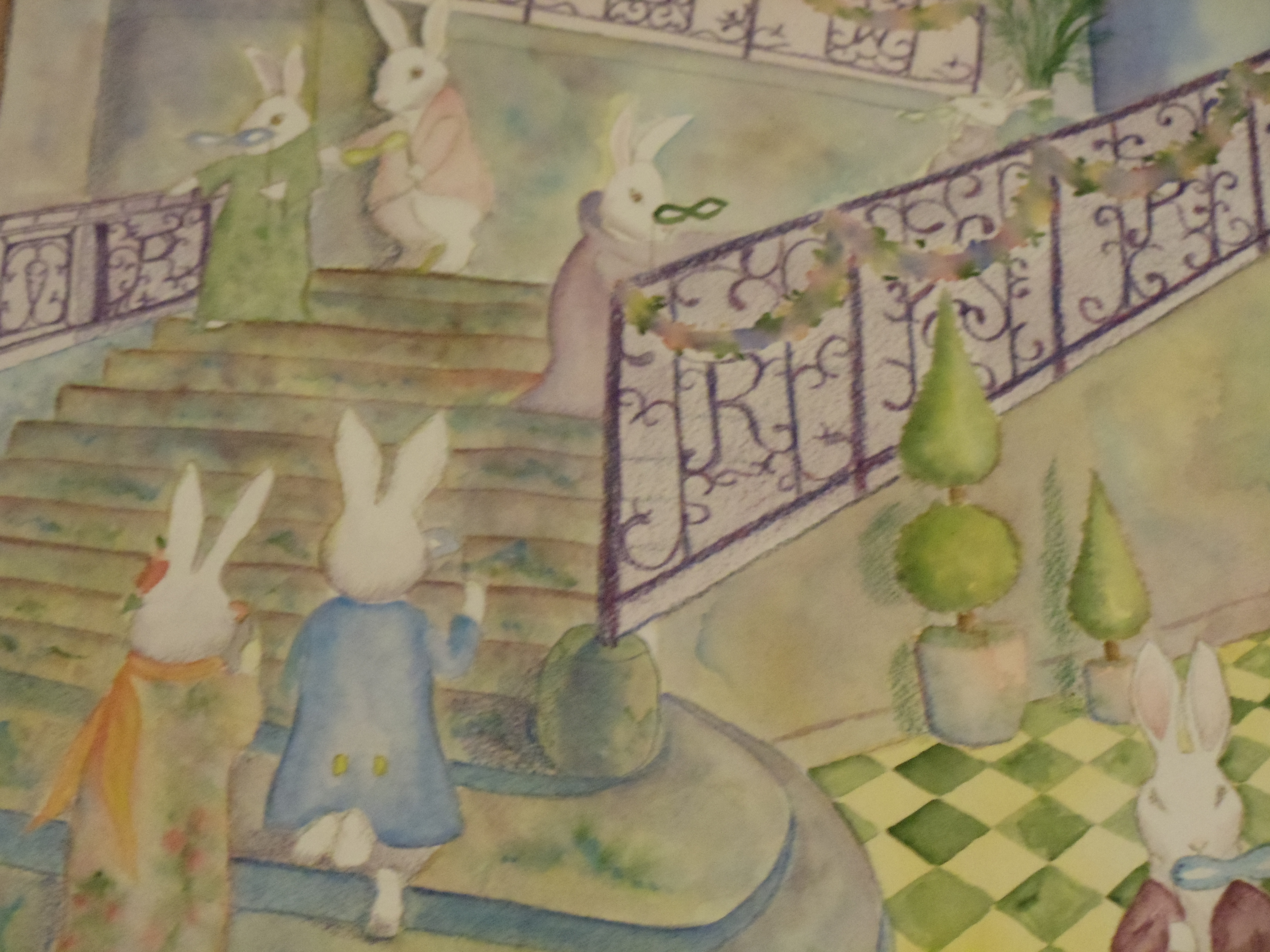
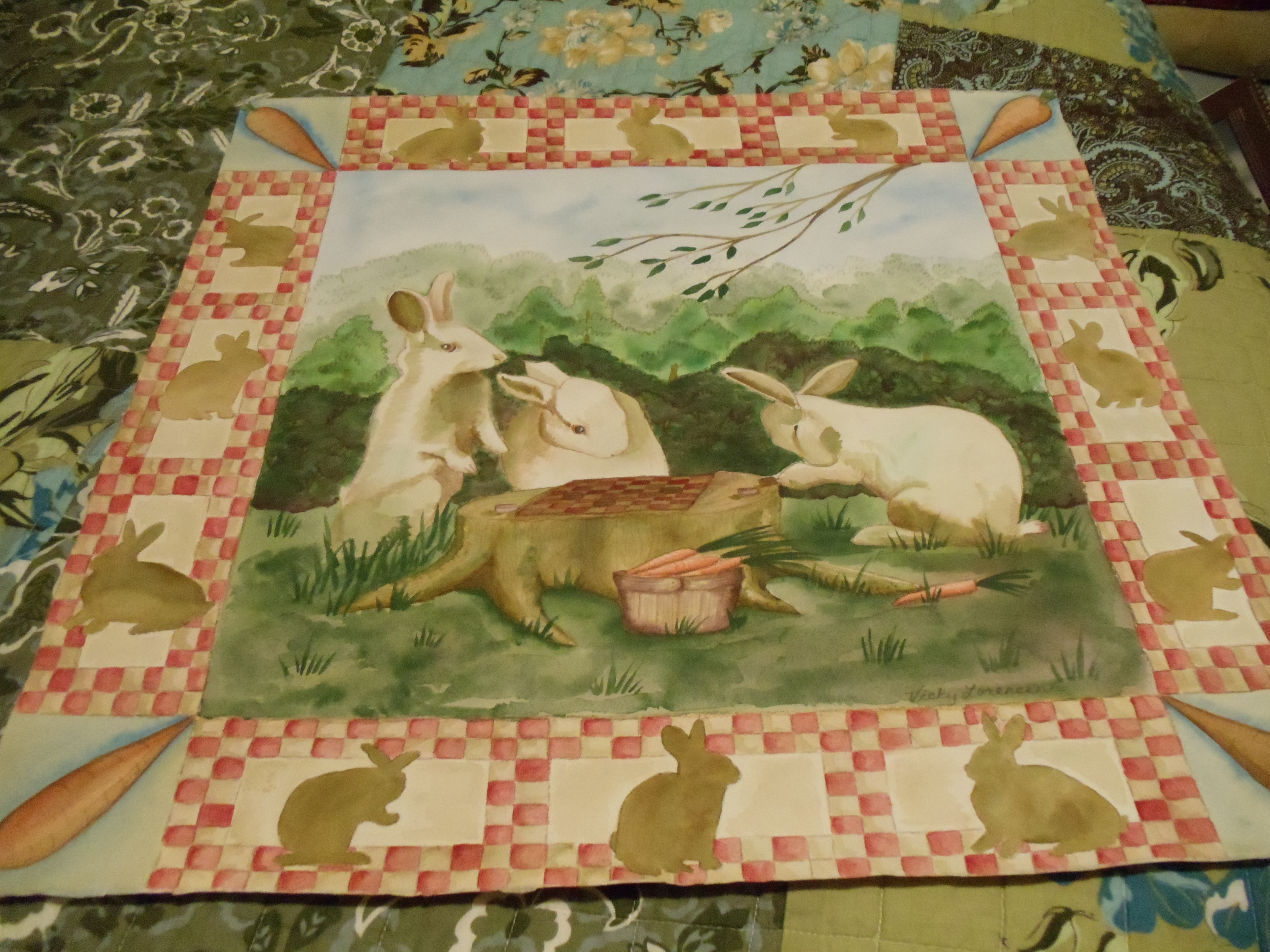
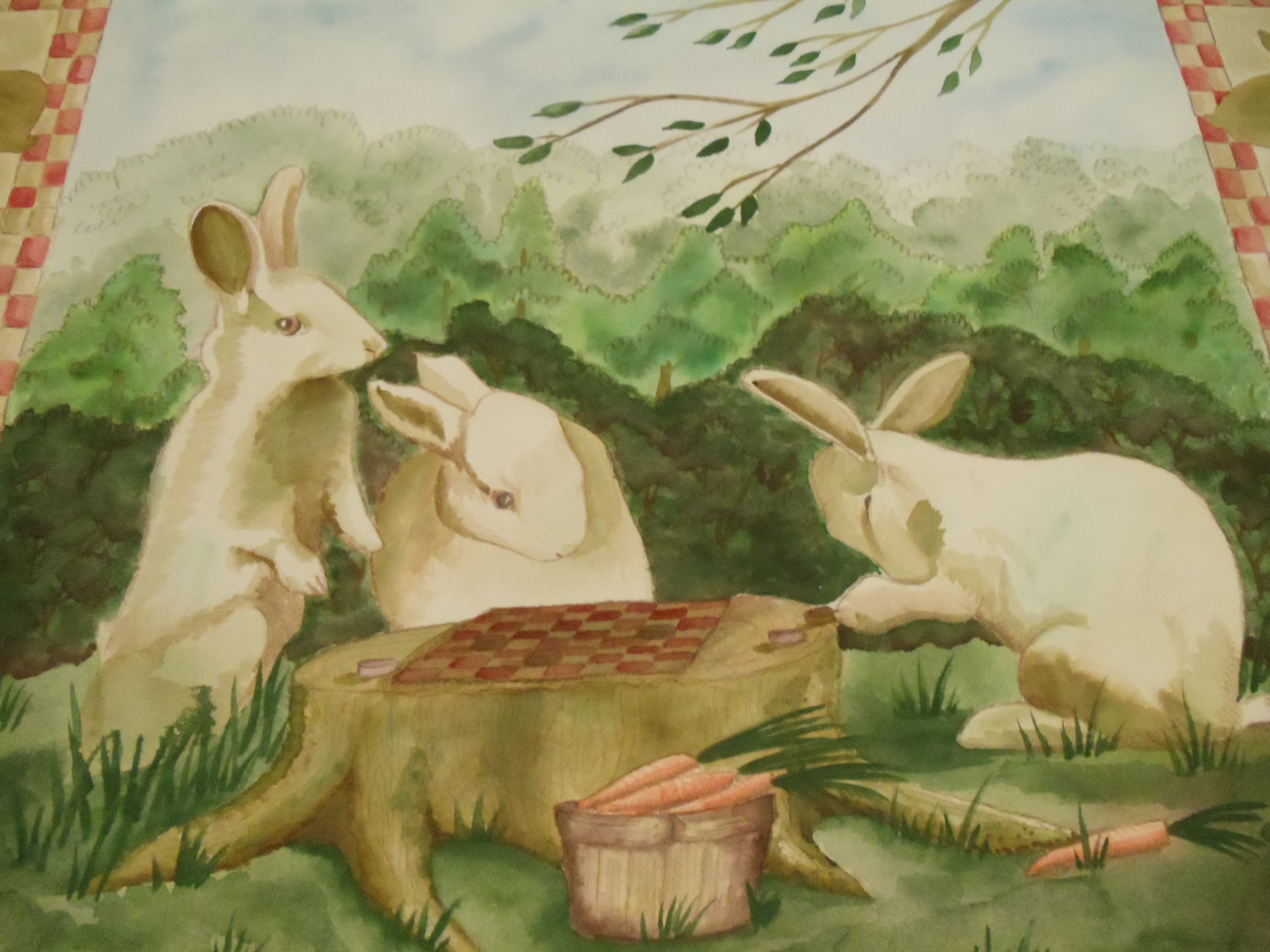
When I took my first watercolor class, I painted the usual subjects–you know, a bowl of fruit, a self-portrait, a landscape . . . but then, my teacher allowed me to do an independent study. That’s when I started painting bunnies. I learned a lot in the first class, but it wasn’t until I was cut loose and given permission to paint what I liked that the fun really started. Sure, not everyone likes to paint bunnies playing checkers, but I do! (Consider it my nod to dogs playing poker.)

Do you find it a challenge to give yourself permission to try something new or to take a risk?

Mind if I help you with that?

Complete the permission slip below.

It’s all set to go. All you need to do is fill in the blank.

* Grant yourself permission to submit a polished manuscript to an editor.
* Join a critique group.
* Query an agent.
* Set yourself free to dabble in a new genre. Ever written a haiku? A biography? A mystery?
* Let go of a project that’s sapping your creative energy.

You decide!

———————————————————————————————————

I, Vicky Lorencen of Frog on a Dime,

grant you permission to ______________________________________ with my blessing.

Please report back about what you did!

Write yourself a permission slip to be surprised by someone’s potential. Who knows? One day that person could be you. ~ Sherri Shepherd

meet debut YA author K. A. Barson

Standard

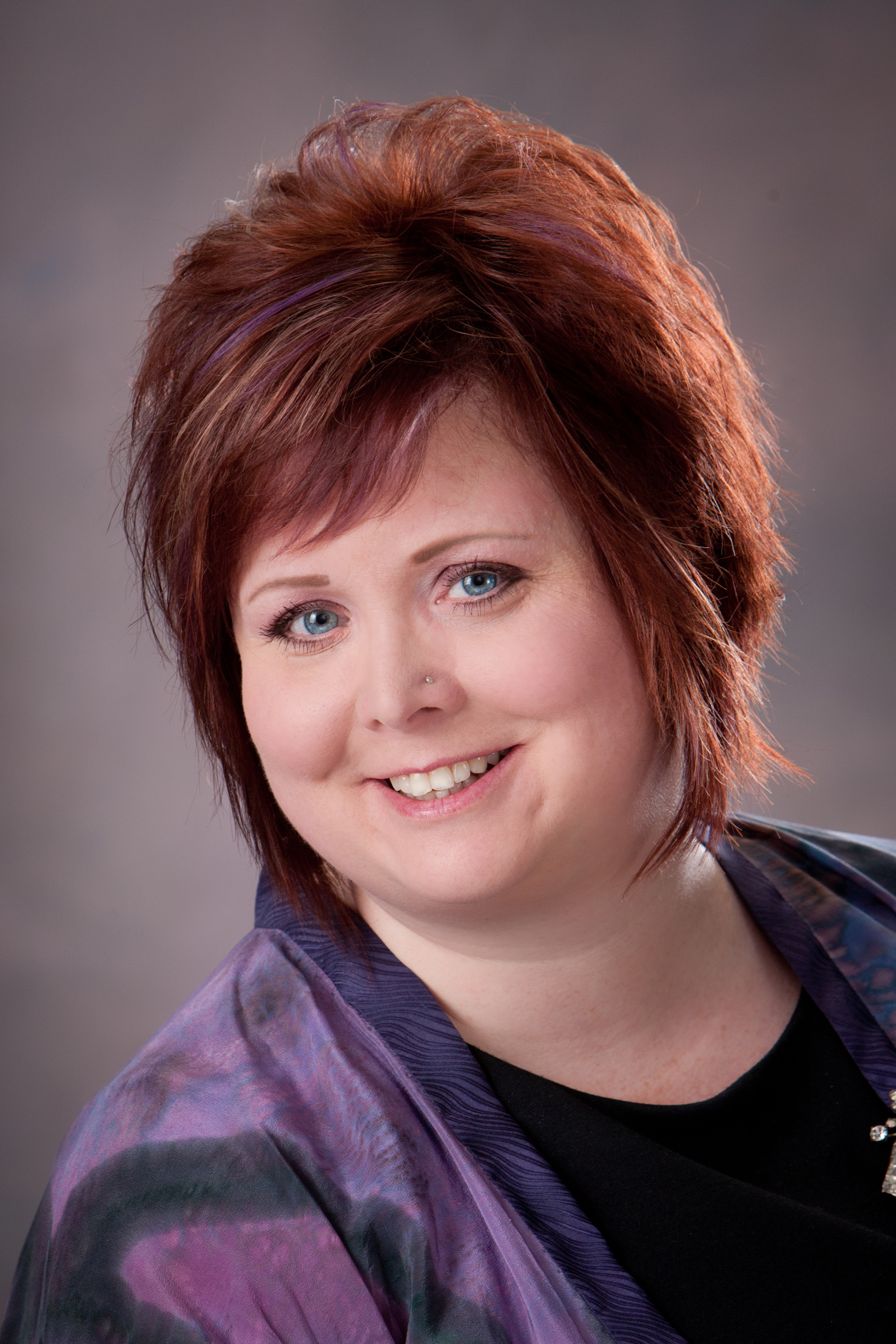
K.A. Barson (aka my friend Kelly)

K.A. Barson (aka my friend Kelly)

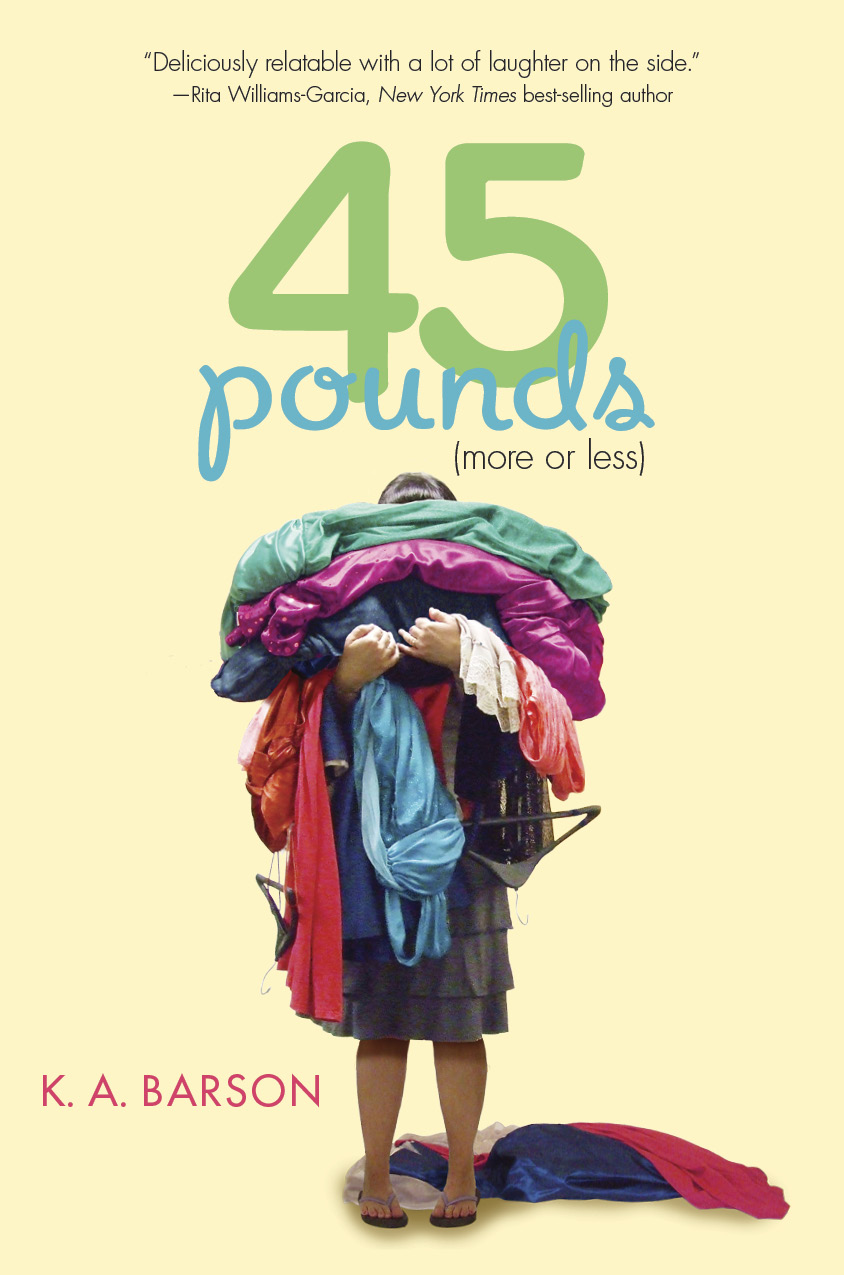
45 Pounds More or Less by K.A. Barson

45 Pounds More or Less by K.A. Barson


What a delight to welcome my friend and favorite new YA author K.A. Barson to Frog on a Dime. Kelly’s debut novel 45 POUNDS (More or Less) will be released by Viking on July 11. I was lucky enough to read it this week. Trust me, you will want to pre-order yours now! In fact, order two–one for you and one for a teen girl you love. She’ll thank you for it!

Recently Kelly was kind enough to pull up a dime and spend a little time answering a series of grueling, mind-numbing questions. She’s quite a trooper.

So, Kelly, when did you know you wanted to become a writer?
I don’t remember ever not wanting to be a writer, but for most of my life it wasn’t a real dream. It was like wanting to be President or an astronaut or professional basketball player or rock star kind of dream. I wrote stories and sometimes submitted them. One rejection meant they were destined to live in my file cabinet. I didn’t realize that it was something I could really do until I shared with a friend from church that I’d written a book for young readers (it had a file condo in my cabinet) and she introduced me to this group called SCBWI. Her name is Vicky. Maybe you know her?

Very funny, Kelly. So, back to you, what is it about writing for children that appeals to you versus writing for adults?
I don’t have much in common with adults. Kids’ and teens’ feelings and life experiences feel the most alive and real to me. Whenever I imagine a story, it’s from a young person’s perspective. They have the most unique ways of looking at the world.

What were your favorite books growing up?
My first loves were Mother Goose and Dr. Seuss. I remember making up my own stories to the Mother Goose illustrations. I would look at them for hours, long before I could read. Then I devoured everything by Beverly Cleary and then Judy Blume. As a teen, I loved Stephen King.

What is the best writing advice you’ve ever been given?
When talking about my work-in-progress at the time, a mentor once told me that my character has to DO something besides not die. That really stuck with me. Knowing a character’s motivation–what s/he wants and why s/he reacts a certain way–has helped me shape my work ever since.

What do you know now that you wish you’d known when you were starting out?
It takes 10,000 hours to master any craft. I wish I would have had the patience to wait until I had my hours in before submitting. I was gutsy enough to think I had what it took long before that. Maybe I needed that intestinal fortitude to keep going, but when I read some of the stuff I submitted too early, I’m embarrassed.

What are you glad you didn’t know when you were starting out?
I’m glad I didn’t know how long it would take. If my Magic 8 Ball had given me cold, hard numbers and dates of when things would finally start happening, it might have been too overwhelming. I might have given up. I hope I wouldn’t have, but the idea that it “could happen tomorrow” kept me going. I might not have worked as hard if I knew it would still be years away.

What’s the most encouraging thing anyone has ever said to you (related to writing)?
This is the hardest question. I’ve been blessed with a massive support network–from my dear friend Vicky who first encouraged me to be a real writer to multiple-award-winning authors who’ve cheered for me every step of the way. Just thinking about the answer to this question has overwhelmed me with gratitude.

What advice would you give to someone who has been pursuing publication for a long time, with close calls, but no contracts?
Never give up. “The Call” happens in an instant, often when you least expect it. Just keep plugging along and don’t let discouragement rule you. It really could happen tomorrow.

You’re a great encourager, Kelly. Thank you so much for stopping by. Best wishes on the release of your awesome first novel. I know teen readers will love it as much as I did.

And, as always, we end with a quote. This one happens to be one of Kelly’s favorites . . .

Whether you think you can or you think you can’t–you’re right. ~ Henry Ford.

celebrating frog on a dime with a prize drawing

Standard

By Stephanie Stouffer

By Stephanie Stouffer


Can you believe Frog on a Dime is six months old already? Frog on a Dime exists to encourage writers, but you all encourage me too! To thank all of my visitors and faithful followers, Frog on a Dime is offering a special PRIZE DRAWING.

Here’s what you need to do: Hop on over to Frog on a Dime and leave a comment on today’s post. Please let me know what you like about Frog on a Dime, what you’d like to see more of (or less of) and/or how I can make my blog even more encouraging to you. (Sorry Facebook comments do not qualify. I love them, but they won’t count for this drawing.)

On Monday, June 3 at Noon, I will select a name at random from the folks who’ve commented . That lucky person will receive a surprise care package filled with young adult novel ARCs, cool office supplies AND an encouraging personal note from me.

What are you waiting for? Get hoppin’!

Oh! And there’s one more Frog on a Dime way to celebrate in June . . . be watching for an interview with one of my favorite debut YA authors! Can’t wait for you to meet her!

I’m not a diva. I’m a tadpole trying to be a frog. ~ Tony Braxton

what else you got?

Standard

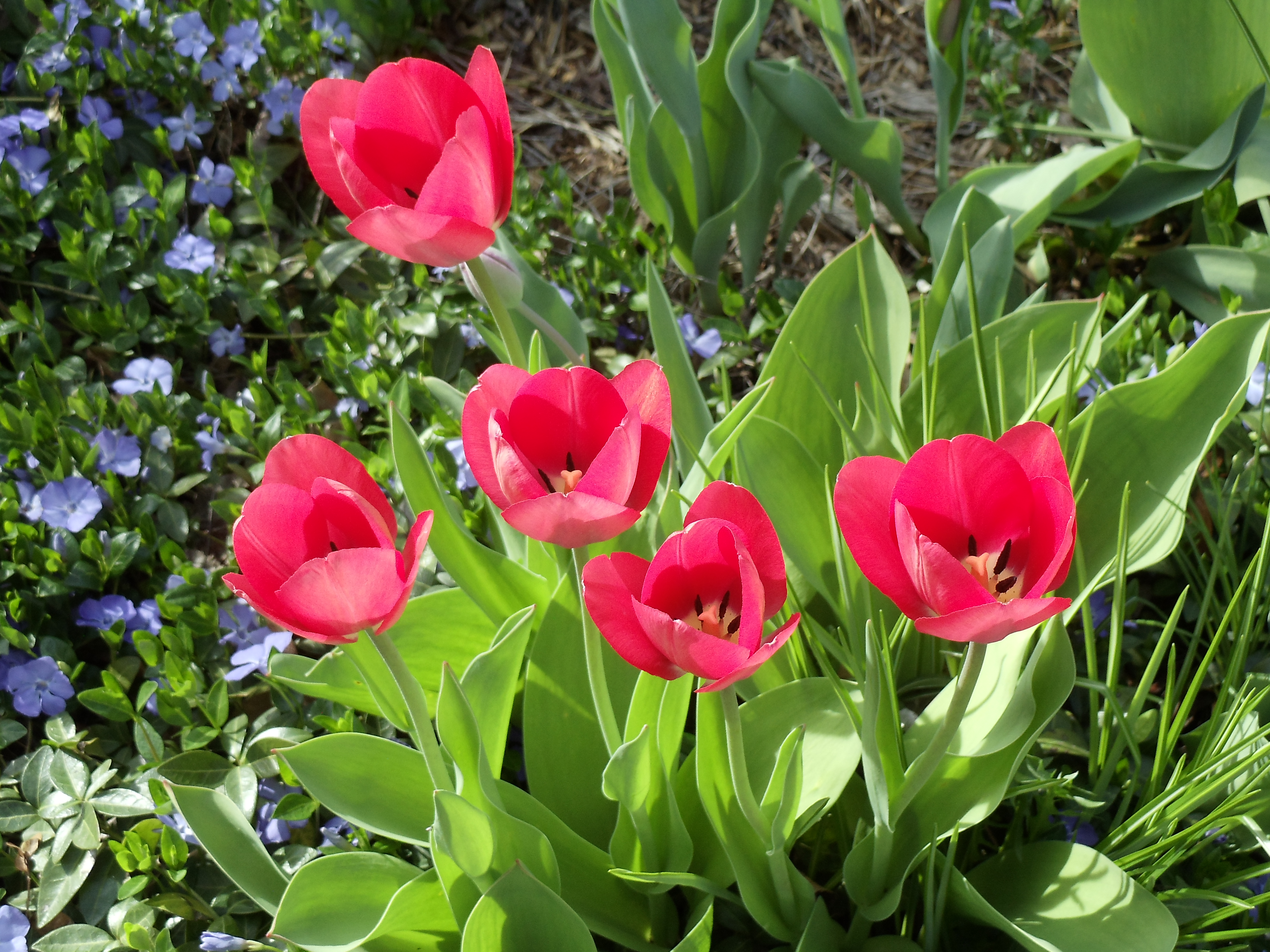
Vicky's Garden

Vicky’s Garden

Ever met a belly dancing, marathon running, gourmet cooking, gardening, crafting writer? No? Well, I have. Maybe not all wrapped in the same person, but I do have writer friends who also have cool hobbies like that. Yes, I know there are “outsiders” who might see writing as a hobby, but not my circle of friends. They’re pretty hard-core about it. Me too. Guess that’s why we’re in the same circle.

So, what’s this all about, you ask? Fair enough. (I know I’ve got a point around here somewhere. Ouch! Found it.) My point is that it’s important for us as writers to be well-rounded people. Sorry, Huey Lewis, but it’s not hip to be square. When we pursue hobbies or outside interests it enriches, informs and colors our writing in beautiful and often unanticipated ways. These interests stretch parts of our brain that go untended if we stay in continuous writing mode.

Between my day job as a writer and editor, and my own personal writing pursuits, I can spend a lot of time tethered to a screen and living inside my head. For me, gardening is a welcome retreat. I’m just a novice, but planting flowers, pulling weeds and playing in the dirt feels good and energizes me.

Years ago when I was an adjunct writing instructor at our community college, I’d “spend” the credits I’d earn as part of my compensation on art classes. I had a wonderful instructor who allowed me to do an independent study and choose my own subjects and medium. It was a joy to create fanciful watercolor and colored pencil paintings of bunnies. I want to start painting again–just for fun and for the sake of my writing.

(c) Vicky L. Lorencen

(c) Vicky L. Lorencen

(c) Vicky L. Lorencen

(c) Vicky L. Lorencen

(c) Vicky L. Lorencen

(c) Vicky L. Lorencen

What about you? I know. I know. It’s tricky enough to find time to write, and now I’m suggesting you add a hobby. But isn’t there something you love to do that you’ve been neglecting? Let me challenge you to carve out a little time for it this week. You and your writing time will be all the better for it.

My personal hobbies are reading, listening to music, and silence. ― Edith Sitwell

what? you have no “yes” file?

Standard

blue frog

Frog on a Dime is all about keeping writers encouraged. Let’s face it. We can be a melancholy bunch when left to our own devices. That’s why I believe it’s important to keep a “Yes!” file. A what now?

A “Yes!” file consists of tangible evidence to keep you creative, dreaming and hopeful when everything around you hollers, “Give up already!” By tangible evidence, I mean acceptance letters or even those “champagne” rejections that contain thoughtful comments from an editor. But that’s just for starters. You can fill your Yes! file with cards or notes you’ve received from your “cheerleaders,” teachers, friends or relatives, even hard copies of emails that have topped off your emotional tank. If most uplifting messages come to you by email, why then, open an electronic file and tuck them away there. The whole idea is to have a safe place to keep those words so that when you’re asking the question–Can I keep going? You’ll have a file full of praises shouting “Yes!” right at your fingertips.

Perhaps it’s a sign of my neediness, but today I discovered that I’ve been keeping two Yes! files–one in my home office and one at my day job. I had to clean out my top desk drawer at work because it was almost too stuffed to close and I couldn’t figure out why. The reason, I discovered, was that I had accumulated so many nice cards and notes–and I’d forgotten I’d jammed them in there! It was such a pleasure to re-read those messages from colleagues, many of whom I now call friends.

Maybe you’ve been keeping a file like mine too. Have you looked in it recently? Go find it. Re-read those words. Let the positive affirmations wash over you.

If you’ve never thought of creating a Yes! file for yourself, please start one today. Consider it a gift to yourself. Don’t think you don’t have anything to put in it yet? Why not print off a “Frog on a Dime” post that has encouraged you. I hope by now you know I believe in you!

And, if I may, I’d like to suggest one additional step–why not make it a point to send a fellow writer some enriching and empowering words for his or her Yes! file this week? Or send a thank you note to someone who may not be a writer, but has always been a believer in you and your talents. I still think handwritten notes are treasures, but if it comes down to sending a text or email versus not sending anything, by all means, do whatever works. It’s your words that matter. If anyone understands and the appreciates the power of words, it’s writers, right? Yes!

I thank you God for this most amazing day, for the leaping greenly spirits of trees, and for the blue dream of sky and for everything which is natural, which is infinite, which is yes.~e.e. cummings

are you lucky?

Standard

dreamy frog

Recently, on an ordinary Thursday afternoon, a perceptive friend said something that gave me pause. “You’re lucky to have a dream,” she said. Hmm. I’d never thought about that before, but she was absolutely right. “I am lucky,” I said to my friend. “Having a dream is a burden, but it’s a burden I’d miss if it went away.”

By now, you know my dream is to become a children’s author. I’m working the steps, logging some encouraging signs of progress, practicing my craft and doing my part to make that happen. Still, unlike failure, which is a snap, there are no guarantees of success. That’s not an easy reality to embrace, but the thought of living dreamless would be much more difficult. My dream gives me a nudge, a sense of purpose and a life infused with a sense of expectation. Why would I disconnect from that?

A zillion.5 years ago when I was in high school choir, our teacher chose a song for us from the musical Pippin. I can still recall the lyrics to the beautiful song, “Corner of the Sky.” My guess is these words have remained in my brain because of the way they speak to me as a dreamer:

Every man has his daydreams
Every man has his goal
People like the way dreams have
Of sticking to the soul
Thunderclouds have their lightning
Nightingales have their song
And don’t you see I want my life to be
Something more than long
….

Isn’t that lovely–and true?

So, how about you? Do you see yourself as lucky (or blessed or whatever descriptor you like) for having a dream? Embrace your dream. Say thank you for it. Dare to keep dreaming!

Rivers belong where they can ramble/Eagles belong where they can fly/I’ve got to be where my spirit can run free/Got to find my corner of the sky. ~ Pippin

stop shoulding on yourself

Standard
DSC05844

Photo by Vicky Lorencen

Writers love-love-love it when someone starts a sentence with, “You know what you should write . . . .” We want to reply, “Is that right? Well, you know what you SHOULD do?”

What’s funny is, as much as I resent someone else telling me what I should write and can easily dismiss it (unless it’s an awesome idea!), I have a much harder time ignoring every should I pile on myself.

Do any of these sound familiar to you?

I should be published by now.
I should be able to edit my manuscript on my own.
I should read more.
I should be writing every day.
I should be done with this novel.

Those shoulds can really stack up. So, what should we do?

Consider sorting your shoulds. By that I mean, ask–Is this should self-imposed and unrealistic because I’m comparing myself to someone else? Or Is there a way I can change this “I should” into an “I will”?

Let me give you one real life example of how I did just that. For several years I struggled to finish a middle grade novel. And I’m ashamed to admit that. Here’s what held me up–I kept telling myself, You like this story. You love your characters. You know what to do. You should be done with this novel by now. Just do it. But then, another year would go by with no novel to show for it. I had to face the reality that shoulding on myself did not work.

I changed I should to I will be done with this novel–because I will seek help to make it happen. That simple change pushed me to enroll in a class with the Institute of Children’s Literature. My instructor and the deadlines keep me accountable, motivated and making progress. This year I will be done with my novel. I love-love-love being able to say that.

Far be it from me to prescribe how you should turn your I should into an I will. But aren’t you ready to stop shoulding on yourself? I say you should be.

I always wanted to be somebody, but now I realize I should have been more specific.~Lily Tomlin

3 Rs to improve your writing–today

Standard

frog and quill
The term “best practice” has become a bit of a buzzword. I hear it a lot at the health system where I work as a writer and editor. As I understand it, a best practice is a method that consistently shows superior results. Best practices become the standard for the way we do our work.

I’d like to suggest three simple best writing practices to help you become a stronger writer today (yes, this very day!)

Try these best practices or the “3 Rs”:

Relax. (Yes, you read that right!) Guess I should be more specific. By relax, I mean, remember that the reason we write that first draft is so we’ll have something to re-write. Take some pressure off yourself. Download the thoughts from your head to your keyboard and then you can play with them. Before they can be perfect or precise, they simply need to be.

Reduce your word count by five percent. Words are powerful, but they don’t have to be precious. Choppity-chop the excess. (Let me pause right now to apologize. I’m sorry I didn’t warn you there would be math. But if I had, would you still be reading this? Here’s how to easily calculate 5%–let’s say you’ve written a fresh page of 246 words. Look at those first two numbers–24–that’s 10%. Now, what’s half of 24? That’s right, 12 (or 5%). See how easy? So, you’d need to delete 12 words. The calculation is the easy part. Taking out the excess words–that’s the tricky part.) When you manage to make your manuscript lean, your writing is tighter and brighter, not just lighter. Pardon the sappy rhymes, won’t you? And honestly, cutting words can be a fun challenge. Why, you won’t even miss the words once they’re

Read your work out loud. And I’m not just talking to picture book authors here. Whatever your genre, make it a practice to read your writing out loud. Yes, your family or office mates will think it’s weird at first, but they’ll get over it. When you “hear” your work, you not only catch grammatical glitches or overused adjectives, you can listen to the rhythm of your words. If you’ve never tried this before, try it today.

Maybe the “best” best writing practice is practicing. So, relax. Fill that page. Lop off five percent. Read it out loud. And try again tomorrow.

There are three rules for writing a novel. Unfortunately, no one knows what they are. ~ W. Somerset Maugham

write like your life depends on it

Standard
  • ???????????????????????????????????????
    Yesterday I had the privilege of presenting two of the many workshops offered to middle school and high school students at the Youth Writing Festival at Calvin College in Grand Rapids, MI. My workshop, “Write Like Your Life Depends on It,” was intended to empower students who love to write with the knowledge that they possess a rare and marketable skill. We talked about how they can prepare now for future career options that will allow them to make use of their superpower.

    Most of all, I encouraged students to be honest about what they would like to do–it’s okay to say I want to be a professional writer. It’s a skill to celebrate, not cover up. When I was open about my desire to write for children, it was amazing how opportunities, people and resources came my way.

    Let me encourage you to be true to your calling too!

    Here’s the list of career options I shared with the students. Maybe it will inspire you, too, if you’re unsure what you want to do when you grow up. (No rush!)

    Novelist (any genre)
    Non-fiction writer
    Journalist
    Copywriter
    Web content writer
    Game content writer
    Blogger
    Screenwriter (TV or movies)
    Speech writer
    Playwright
    Grant/proposal/application writer
    Poet (perhaps as a lyricist or greeting card verse writer}
    Technical writer (for example, business writing, textbook content, medical writing)
    Freelance writer (magazines, newspapers, online columns, work for hire projects)

    Writing-related career options:
    Editor
    Proofreader or copy editor
    Writing instructor or tutor
    Marketing/Advertising/Public Relations
    Critic/Reviewer

    Have YOU used your superpower today?

    I love being a writer. What I can’t stand is the paperwork.~Peter De Vries