Accidental Treasures

Standard
Photo by Vicky Lorencen

Photo by Vicky Lorencen

This week I read a blog post by an author who shared her frustrations over a particular manuscript’s near-misses. This author’s husband towed her from melancholy by reminding her of all she’s gained amid her pursuit of a sale. The sad sack author glanced over her shoulder to see the accumulation of things—including her husband and her child—that came, at least in part, because of her publishing pursuits (regardless of the coveted contract).

Feeling inspired, I compiled my own list of accidental treasures I’ve accumulated as I push (tumble/slide/skid) toward publication.

  1. My concentric circle of friends. It is difficult for me to imagine my life without this ever-growing congregation of creative people (mostly because I don’t want to imagine it!) Every year since I got serious about writing, I’ve had the outrageous fortune of adding more smart, talented, soul-sweetening friends into my life. I could stop the list right here and be satisfied.
  2. Books and their authors. How many times have I had the pleasure of reading a book by someone I actually know? Lots. Not everybody has that in their lives. I do. I don’t have to rely on Goodreads or Amazon to tell me what to read next. I know amazing authors who faithfully produce well-crafted literature I can devour. It’s a fine system, if you ask me.
  3. Travels and experiences. The Big Apple; mountainous Montpelier, Vermont; lovely Lake George in upstate NY; charming Chautauqua, NY; homey Honesdale, PA; plus oodles of spots in my home state of Michigan (including one-of-a-kind Mackinac Island). Now, I know this isn’t exactly a list of the world’s four corners, but I loved all of these places and it’s quite likely I would have missed most of them (minus Michigan, of course) had it not been for my publishing pursuits.
  4. Frog on a Dime. Never thought I’d be a blogger, but this is fun, and I owe it all to my writing ambitions.

How about you? Stop for a moment. Look back. Look around. How is your life different–better–because of your passion for writing? You may be surprised and delighted by your own list. (You’re welcome to share it with me, if you like.)

If one advances confidently in the direction of his dreams, and endeavors to live the life which he has imagined, he will meet with a success unexpected in common hours. ~ Henry David Thoreau

why I lied

Standard
Photo by Vicky Lorencen

Photo by Vicky Lorencen

Yes, I lied. But I had a good reason. It made my life simpler.

See, ages ago, when I was college-bound, well-meaning folks asked me about my intended major. When I said, English, they’d immediately said, “Oh, you’re going into journalism, then.” And I would nod.

I was nod-lying, you know. I never intended to become a journalist. I’ve always known I wanted to be a writer–a children’s writer, specifically. But admitting that was too messy. There’d be uncomfortable follow-up questions I wasn’t prepared to answer. Or worse yet, there’d be unfounded advise or words that sounded like “How interesting,” which really meant, “That’s not a real job, Sweetheart.” And so, to avoid all that discomfort, I lied.

Learning to un-lie about my ambition was a process. While still in college, I decided to “out” myself to an English professor because it seemed relatively safe. The good thing was, he took me seriously. In a letter of recommendation, he wrote (among other things), “I believe Vicky’s chances of success with her chosen profession are better than most because she is willing to define herself so exactly.” That experience bolstered my courage–a tad.

I endured lots of awkward, sidestepping conversations before I could say, “I’m a writer and I want to write for children,” without first weighing the potential for quizzical looks. But you know what? Telling on myself was freeing. Making my dreams known opened up connections with once-unknown-to-me children’s authors in my own community, allowed me to grow, to network and to uncover resources to advance my pursuits toward publication.

Now, back to that nod-lying I’d mastered long ago, it turns out that skill can be re-warmed and re-applied (minus the actual lying part, which is nice). When you say, “I’m working on a children’s book,” and someone starts in with all of their well-meaning advice, you can simply smile and nod. They’re just being kind because they’re excited for you. You are pursuing your dream–and extraordinary dream–and that excites people and makes them want to help you (even if they don’t know what the heck they’re talking about). And that’s cool. Those are among the people who will be celebrating with you when your book comes out.

Please try being honest about your ambitions and what’s in your heart.  You will be amazed by how liberating and energizing it will be. Good things and great people will find you as a result.

Before I let you go, you want to try that nodding thing with me? Sure you do. Go ahead try it. Turn up the corners of your mouth and bob your head gently up and down. Don’t overdo it. We aren’t going for bobblehead, just polite recognition of what’s being said to you. Now, wasn’t that easy? (Ahem. That’s your opportunity to practice nodding and smiling.)

Don’t bend; don’t water it down; don’t try to make it logical; don’t edit your own soul according to the fashion. Rather, follow your most intense obsessions mercilessly. ~ Franz Kafka

got the right shoe? what’s left?

Standard
Photo by Vicky Lorencen

Photo by Vicky Lorencen

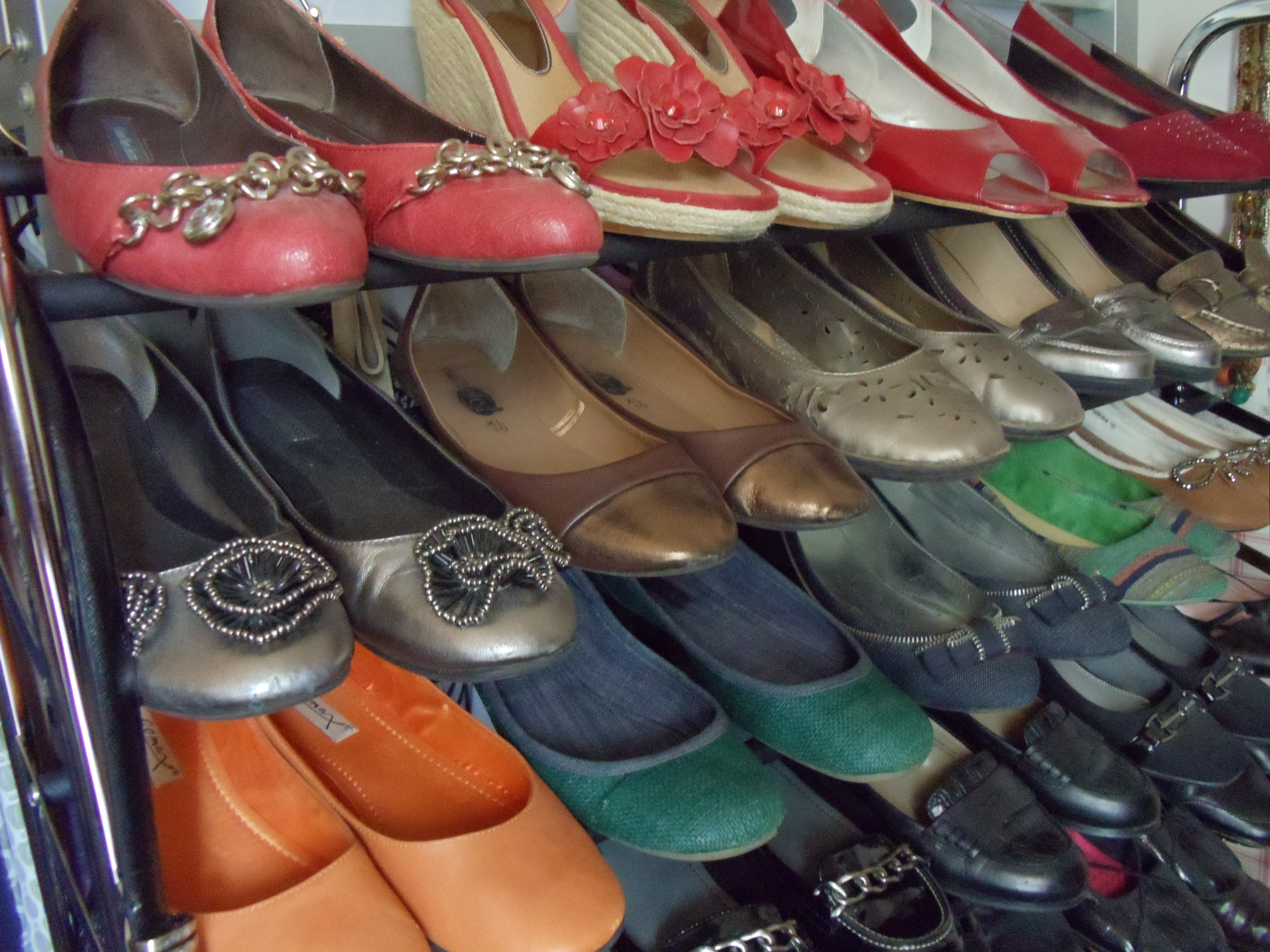
Agent shopping can be daunting. But recently, and who knows how, I connected agent-shopping with shoe-shopping, and the process is taking on new meaning (and making me want a new pair of pumps).

Here’s how I pair my shoe and agent preferences . . .

Must match. Having one fabulous flat isn’t so fab, is it? Sure, it looks pretty and fits like a dream, but unless I’m leaving a ball in a hurry, going half shoeless is no way to go. And just like shoes, I want to be paired with an agent whose genre preferences and approach match my own.

Must be the right fit. This is a biggie, isn’t it? I may have written the most charming picture book or witty MG novel, but if it  doesn’t “click” with an agent, it just doesn’t. Agents are people with tastes and personalities just like anyone else. An agent needs to be flipped over my work in order to be its best champion. Much as I’d like to, I can’t cram my size 10 dogs into a pair of six 6 mules. I can’t, and wouldn’t want to, force an agent-client relationship either.

Must compliment what’s already in my wardrobe. I wouldn’t pick a pair of chartreuse polka dot flats that only go with one outfit. Ideally, I want an agent who can embrace all of my ambitions and not just one part of my writerly “wardrobe.” (It absolutely can work on a one-genre basis, but it’s not the best option.)

Must be supportive. Oui. Oui. I know. It makes me sound like I’ve become what the French call a woman of a “certain age,” but I want shoes that not only look stylish, but feel comfy too. And while I don’t think an agent has to be my best ever friend, I do want someone who can support not only my project in progress, but encourage me as an author as well.

Must receive good reviews. This is a deal breaker category for me. I sometimes buy shoes online, but I never, ever click “Complete Order” until I’ve read customer reviews. I work in marketing and I know that while the description may be beguiling–and hopefully accurate–it doesn’t tell the whole story. I want to hear from those who have walked in those shoes. It’s no different with agents. Whenever possible, I talk with current clients of the agent–politely and discreetly of course–about their experience before I click “Send” on that shiny query letter.

Must be able to go the distance. Nothing’s worse than trudging half-way across a mall or reaching the half-mile on a hike and realizing I wore the wrong shoes. I want shoes that offer the right fit and support so that I can feel comfortable and confident. As far as agents go, I want someone who would be there for me for the long haul too.

Here’s wishing all of us in search of an agent a perfect pairing soon (and yes, maybe some new sling-backs too).

Give a girl the right shoes, and she can conquer the world. ~ Marilyn Monroe

constipation and you

Standard

dreamy frog

Recently a writing friend reminded me of something I wrote long ago: “Looking at it physiologically, perhaps writer’s block is more akin to constipation–things get all backed up in your semi colon.”

Yep, I know a few delusional mugwumps believe writer’s block is a myth, but let’s “pretend” it does exist. Why not apply constipation remedies to get your semi colon unstuck?

Strive for a balanced diet. Read and write in equal proportion.

Increase your fiber intake. Read outside your genre-of-choice to challenge yourself.

Drink plenty of water. By which I mean, drink plenty of water. Dehydrated writers produce dry writing.

Elevate physical activity. Maybe you’ve been practicing Anne Lamott’s dictum too much. It’s time to get arse out of chair and move. Walking is a time-honored way for writers to get the creative wheels whirling.

Get into a routine. For the love of prunes, if we can train your bowels, can’t we train our brains too? Establishing a writing pattern–whatever that looks like for you–helps your noggin’ to shift gears and be productive more quickly.

Heed the call. If your body says you need to, you know, “go,” then go. If your brain gifts you with a cool story idea or a solution to a knotty plot issue, jot it down, text it to yourself or tell a friend, don’t assume you’ll remember later.

Try applying these tips for two weeks, and you too could become a Smooth Operator. (Thanks, Sade.)

I wish that being famous helped prevent me from being constipated. ~ Marvin Gaye

congratulations to the winner of the give-a-quote giveaway!

Standard

Congratulations to Patti Bumpus Richards, winner of the give-a-quote giveaway!
You’ll find a fun, inspirational surprise package in a mailbox near you soon!

Photo by Vicky Lorencen

Photo by Vicky Lorencen

Thank you to everyone who added to my stash of inspirational quotes. I look forward to sharing them (and crediting you) in future blog posts.

Thanks to Patti for this pithy reminder from Mr. Edison . . .

Opportunity is missed by most people because it is dressed in overalls and looks like work. ~ Thomas A. Edison

give-a-quote & enter-a-giveaway!

Standard

Photo by Vicky Lorencen

Photo by Vicky Lorencen


If you’ve ever visited Frog on a Dime, you know I’m a sucker for a crackerjack quote. (I include one with every post to make sure my blog is inspiration-fortified.)

Now through Friday, August 15, visit Frog on a Dime and leave your favorite quote as a comment. You’ll automatically be entered into a drawing for a keen package of fun, schlock-free writing supplies, hand-picked to inspire you. Trust me. You’ll like it–I’ll have a hard time parting with it.

Now, hop to it!

Hold fast to dreams/For if dreams die/Life is a broken-winged bird/That cannot fly. ~ Langston Hughes

five benefits of being uppity

Standard

Okay, so maybe it’s another of my odd habits, but when I walk into a library, hotel lobby or museum, I typically look up. Come to think of it, I look up on walks through the woods. Or when I’m outside on a cloudless night.

Photo by Vicky Lorencen Hidden Lake Gardens, Tipton, Michigan

Photo by Vicky Lorencen
Hidden Lake Gardens, Tipton, Michigan

(Yes, I’ve had a few near head-on collisions, but it’s almost always worth it.) I like to see what’s up there, not just what’s straight in front of me. Looking up gives me a different perspective, both in the physical realm and that weird world that exists between my ears.

Photo by Vicky Lorencen Navy Pier, Chicago

Photo by Vicky Lorencen
Navy Pier, Chicago

Here’s one of my favorite “uppity” quotes: “The gloom of this world is but a shadow. Behind it, yet within our reach, is joy. Take joy.” ~ Fra Giovanni

I love this quote because it reminds me I have a choice. I can look down and focus on what’s painful or scary or I can look up to focus on what’s possible.

Photo by Vicky Lorencen Mackinaw Bridge, Michigan

Photo by Vicky Lorencen
Mackinaw Bridge, Michigan

For me, looking up doesn’t involve donning rose-tinted shades and pretending everything’s perfect. I think it means, given the choice, why not be positive? Having an upbeat attitude does not have the power to influence reality. In other words, my looking up will not equate to a polished manuscript, a publishing contract or calls from agents. (It’s never that simple, but you know that already.) But looking up does reorient my point of view, my perceptions and how I choose to respond to my reality.

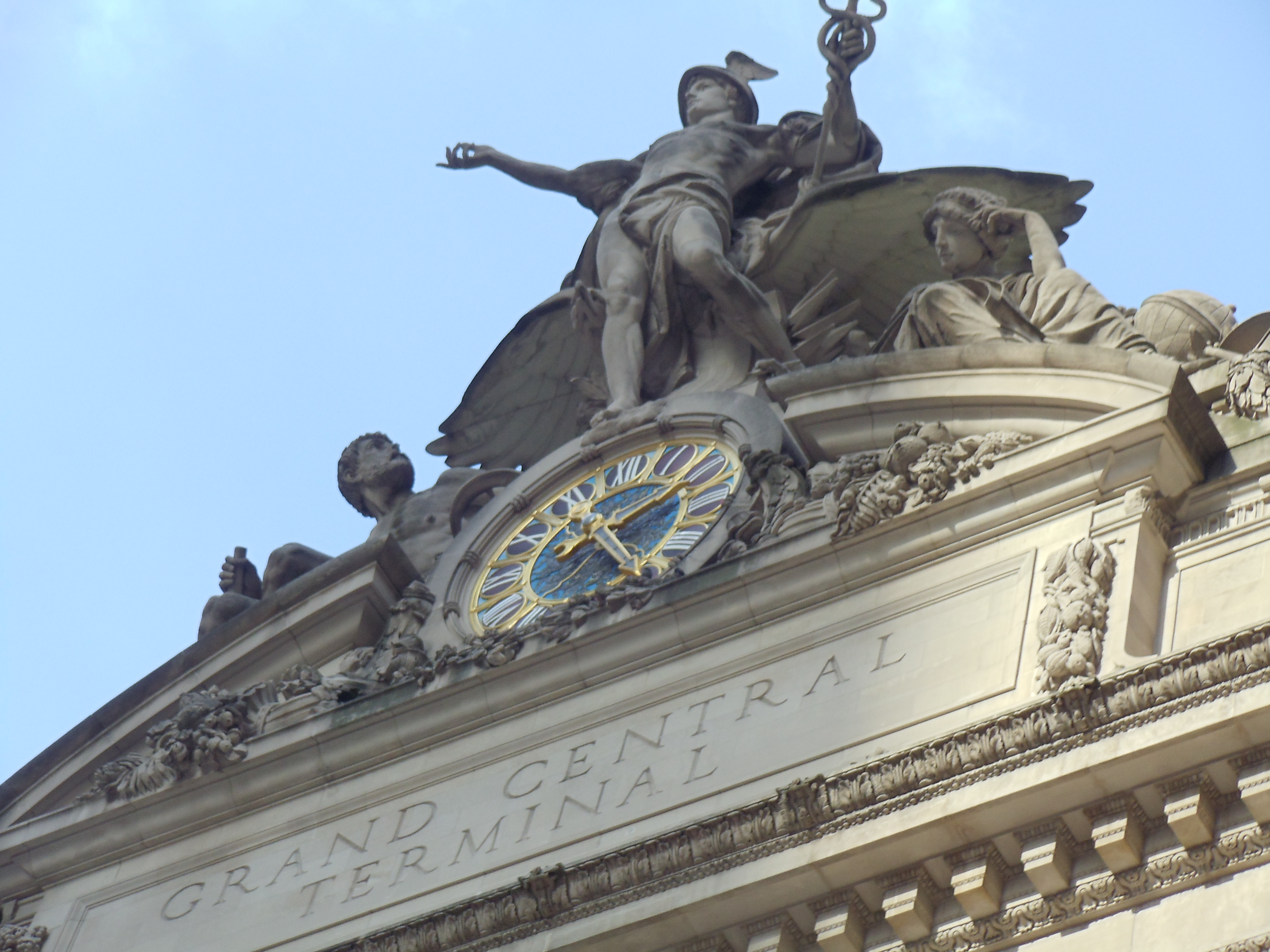
Photo by Vicky Lorencen Grand Central Station, Manhattan

Photo by Vicky Lorencen
Grand Central Station, Manhattan

So, while it may not be magic, shifting my perspective upward . . .

1. Infuses me with hope.
2. Energizes me when my reserves are on E.
3. Takes my eyes off the immediate and helps me see the bigger picture.
4. Gives me buoyancy.
5. Makes me slightly more tolerable to be around. (And that right there is the price of admission, I’d say.)

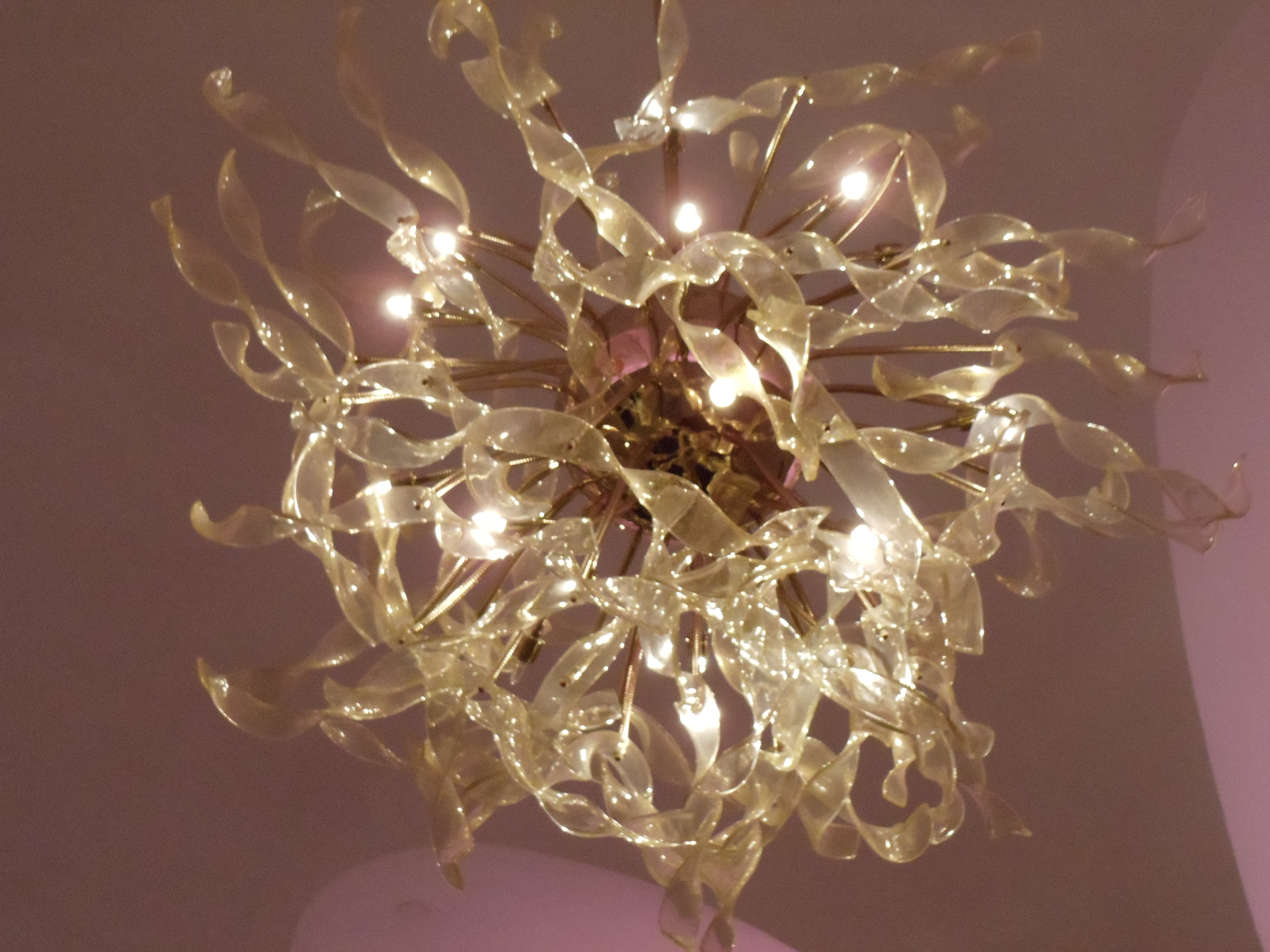
Photo by Vicky Lorencen Chandelier, Grand Hyatt, Manhattan

Photo by Vicky Lorencen
Chandelier, Grand Hyatt, Manhattan

I’d be a pimple-faced liar if I told you I manage to keep my head up every single day. As I’ve shared in early posts, some days I full body hug the berber. It is not pretty. I get overwhelmed with pessimism, break out in envy pox and become enveloped in self-doubt (which by the way, I am convinced is the leading cause of cellulite). When I’m looking down I become paralyzed, unproductive, and kinda pitiful. And I’m stuck with my own company. Bleh.

Thankfully, a lot of my days, with the help of encouraging friends and some stern self-talk, I can rise above that compost heap of negative glop.

Let me encourage you to remember you have a choice. I hope you choose to look up. You might like what you see when you become “uppity” too.

Photo by Vicky Lorencen Shedd Aquarium, Chicago

Photo by Vicky Lorencen
Shedd Aquarium, Chicago

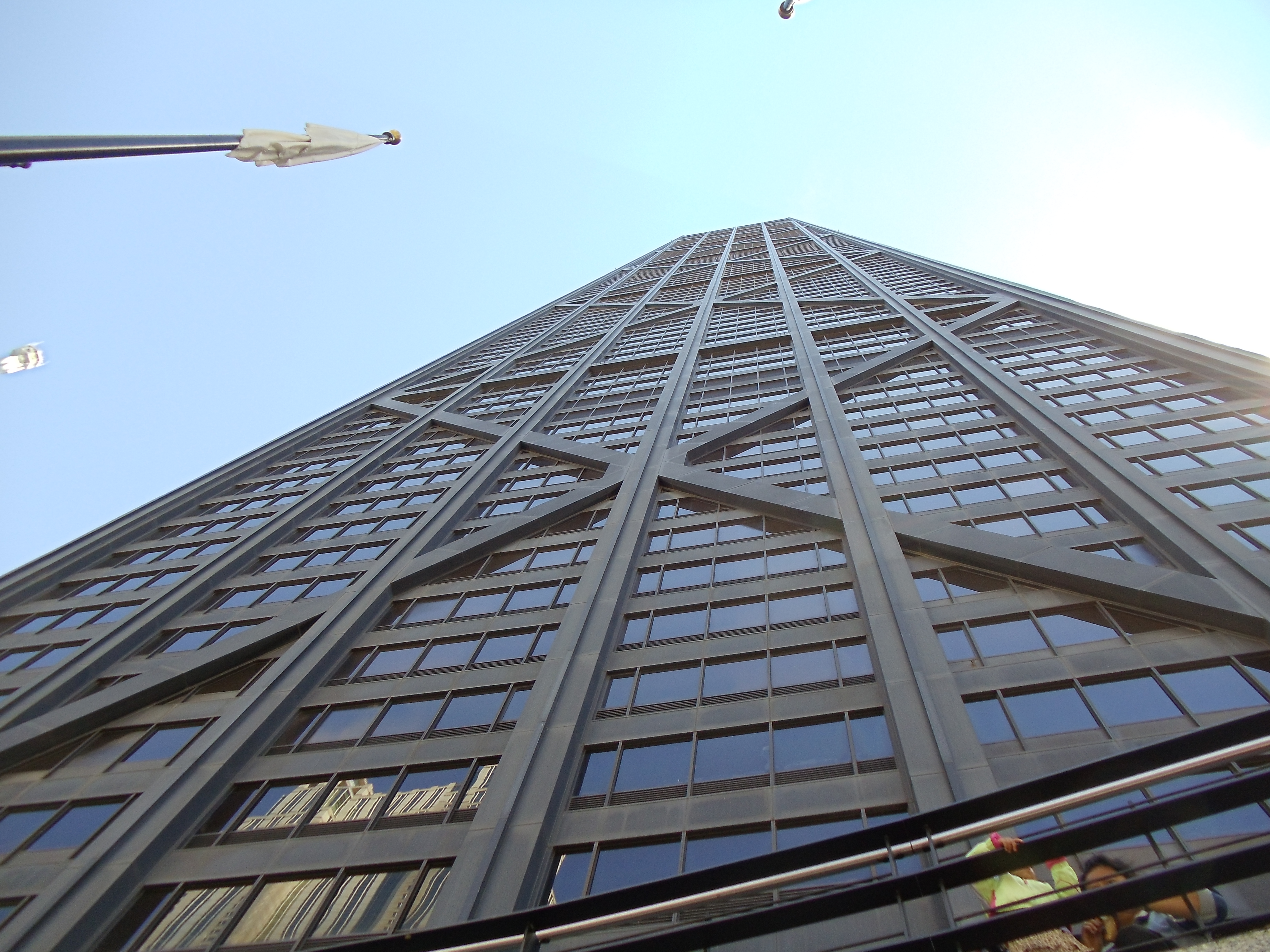
Photo by Vicky Lorencen John Hancock Building, Chicago

Photo by Vicky Lorencen
John Hancock Building, Chicago

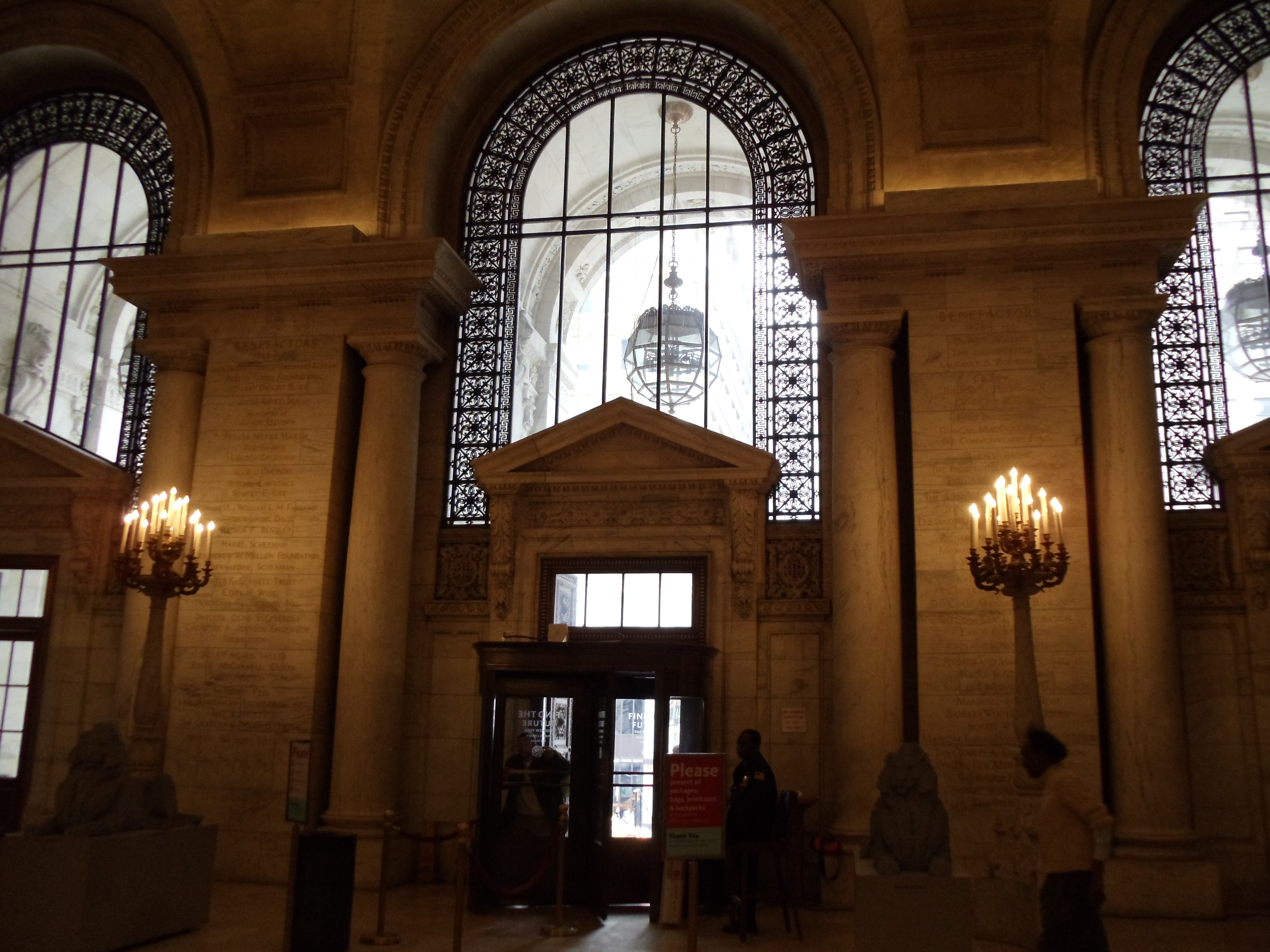
Photo by Vicky Lorencen New York Public Library

Photo by Vicky Lorencen
New York Public Library

Photo by Vicky Lorencen Giordano's Pizza, Chicago

Photo by Vicky Lorencen
Giordano’s Pizza, Chicago

Photo by Vicky Lorencen Hidden Lake Gardens  Tipton, Michigan

Photo by Vicky Lorencen
Hidden Lake Gardens
Tipton, Michigan

looking for front stabbers

Standard

Photo by Vicky Lorencen

Photo by Vicky Lorencen

You trust someone, and then you’re stabbed in the back. Hurts, doesn’t it? Ever thought of inviting someone to stab you in the front? Sure, that’d hurt too. But it’d be a constructive versus destructive brand of pain. Okay okay, I know that sounds strange, maybe even a little creepy, but please stick with me for a few more sentences, and I’ll explain as best I can.

See, even though writing by its nature is a solo sport, that doesn’t mean you can’t invite others to join your team. By others, I mean other writers who can give constructive criticism–aka stab you in the front, to hit you where it hurts most–right in your writing.

Losing weight, staying on track with an exercise regime, even cleaning out the garage, are all easier if you have at least one person to come alongside you support, encourage–maybe even push–you. Why should writing be any different? If you’re frustrated with your lack of progress, either in term of pages or improvement, consider opening yourself up to a good, ol’ fashioned front stab.

[At least] three things are certain:

1. Someone pushing you without your permission will only make you want to push back.

2. You need to ask someone to hold you accountable. Nobody volunteers for that job, but most people will say yes if you invite them, especially if you’re willing to reciprocate.

3. You will make better and faster progress with accountability and input, than you will without it.

This is why I am so grateful for my critique group. They’re a friendly bunch of front stabbers who want me to become a better writer and I’m happy to help them do the same.

If you feel stuck with your writing, let me encourage you seek out your own critique group (ask around on Facebook, via your SCBWI chapter list serve or your local library). If a group isn’t already in place, start one. And remember, you don’t have to let geography limit you. Online critique groups can work very well and can include writers from all over the planet, if you like. (I suggest keeping your group Earth-bound. Anything beyond that can get too complicated.) If joining/starting a group sounds like too long of a leap, consider partnering with another writer and setting up a regular schedule for exchanging pages.

Connecting with other writers for criticism and accountability will make a positive difference for you. I promise.

G’head. Take a stab at it.

Photo by Vicky Lorencen

Photo by Vicky Lorencen

As iron sharpens iron, so one person sharpens another. ~ Psalm 27:17

My thanks to Ben Redmond, Director of Student Ministries at the Hub, for inspiring this post. He’s a wise man.

what to do with a “too” idea

Standard

Photo by Vicky Lorencen

Photo by Vicky Lorencen


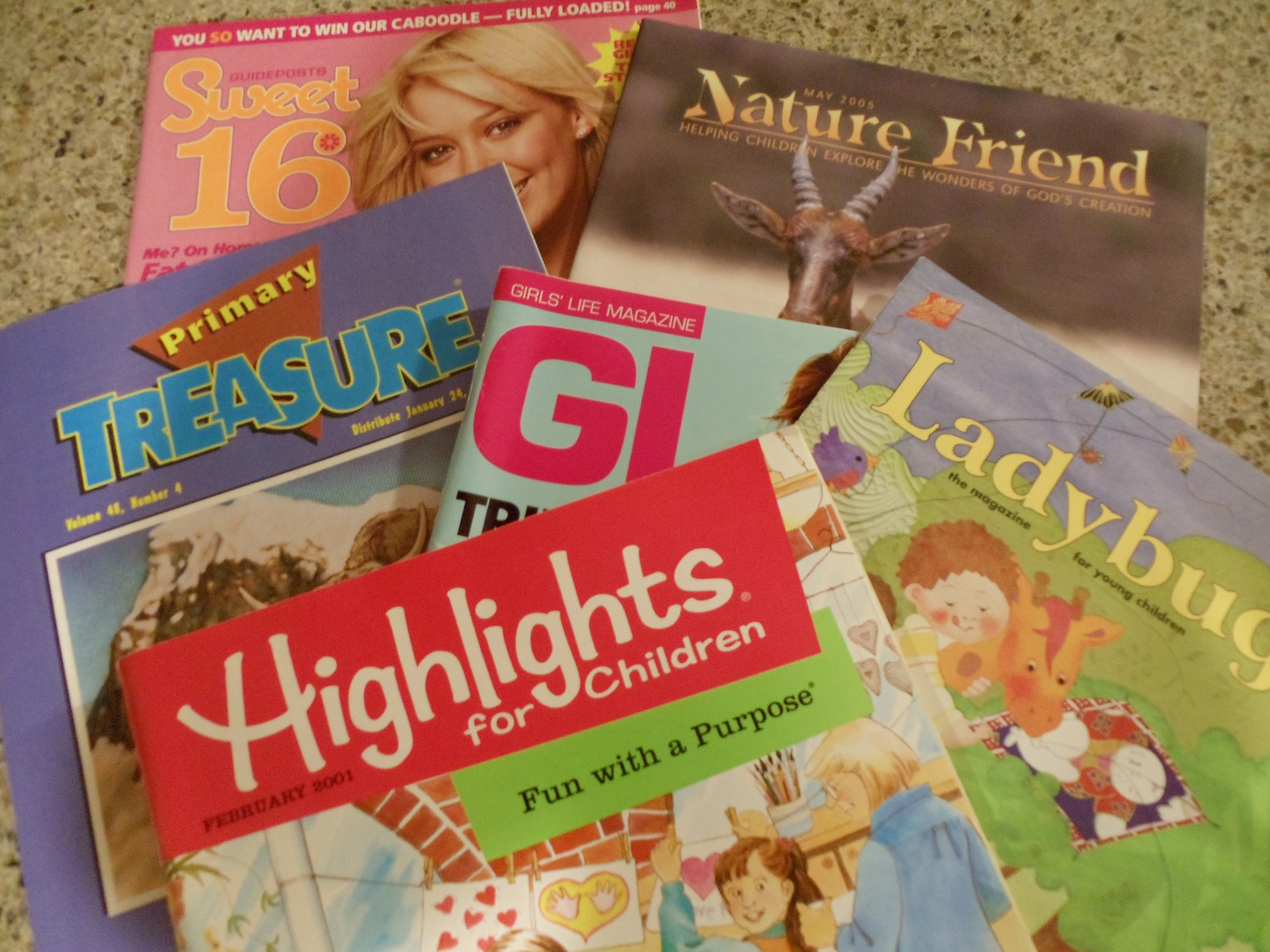
Sometimes I get a niggling, squirmy idea that’s “too” something–too much for a picture book, too little for a novel, but it’s perfect for a children’s magazine article. Magazines–remember those? With so much focus on writing book-length manuscripts, it’s easy to gloss over magazines as a great option for your “too” topics (e.g., giant centipedes, yaks in Tibet, Burmese pythons, sculpting, pillow-making, door-decorating–yes, I’ve sold articles about all of those and more).

For the uninitiated, let me take a swing at answering some common questions . . .

What are the benefits of writing for children’s magazines?
Gaining publishing credits. Wouldn’t you love a title or two (or six) to tack onto your next query letter?
Learning to work with an editor. Without exception, all of the magazine editors I’ve encountered are warm, hardworking professionals who care about craft and not simply compiling enough “stuff” to stuff the next issue. There’s real value in building that relationship.
Seeing your name in print. Now, that’s sexy.
And here’s one you might not expect–you can incorporate tidbits from your research for a non-fiction article to bring authenticity and depth to a novel or picture book. When a character in my first novel needed to do a report for school, I had him do it on the giant centipede. I already had lots of info and it suited his character beautifully (even though centipedes are so creepy!) In my second novel, my main character meets an artist who teaches him how to sculpt–much of what I know about sculpting came from a non-fiction article I wrote for Highlights, which involved interviewing a sculptor.

How do you know what magazines want and how to submit to them?
The research process is very similar to determining which publishing house you’d like to approach with your book. Magazines include submission guidelines on their web sites and by perusing the magazine itself (either online, on the newsstand, in the library or by asking for a sample), you’ll get a good idea of the types of content the magazine would welcome. As with book publishers, be sure to follow submission guidelines exactly.

Is it easier to break into the magazine market compared to books?
Well, yes, relatively speaking. Just think about it number-wise. A small imprint may publish two or three books a year. Larger houses can do far more, but they also get an exponentially higher volume of submissions. This results in stiffer competition for every available spot. Now, consider a monthly children’s magazine. Imagine the metric ton of content the editor needs–articles, stories, puzzles, crafts, recipes, jokes and games–for a single issue. I’ve been a magazine editor in the past, for two different publications, and I remember how much pressure it was to create each issue, given the amount of excellent content needed. The greater the need, the better your chances of being able to sell your work.

What if I have professional quality photos to go with my article, can I send those?
Photos can be a selling point with a non-fiction article. Let the editor know photos are available upon request. For that Highlights article I mentioned earlier, I had photos of the artist and his work, which not only enhanced the article, but my payment as well.

Can I actually make money writing for magazines?
You’d have to be extraordinarily motivated to make a steady income via magazine submission sales. The real prize, from my perspective anyway, is in the publishing credit and the experience. Payments vary widely depending on the magazine’s circulation, the type of article and its word count, and any “extras” you’re able to provide, such as photographs. Once your submission has been accepted, you’ll receive a contract which will spell out your rights and the rate you can expect. One hint–if you have a choice, opt for a magazine that pays upon acceptance versus payment upon publication.

Isn’t writing for magazines going to take away from my “real” writing?
Never, ever, ever make the mistake of thinking, it’s “just” a magazine article. It is real writing. Always send your most sparkling work. If needed, do thorough research and document your sources carefully. Your professionalism is a reflection of your ability, true, but your best writing also honors your reader who deserves your finest. Also, keep in mind, it’s not uncommon for magazine articles to be re-printed at some point. So, avoid viewing articles as “throw away” pieces that are only around a month or two. And thanks to the Internet, they can live indefinitely.

If you have other magazine-writing related questions, send me a message via my Contact Page. I’ll be glad to help if I can.

So, that’s what I do with my “too” ideas. I enjoy doing it, and I bet you will too.

In a magazine, one can get – from cover to cover – 15 to 20 different ideas about life and how to live it. ~ Maya Angelou


the importance of living dangerously

Standard

Photo by Vicky Lorencen

Photo by Vicky Lorencen

I am not a risk-taker, generally speaking. I wear my seat belt, hand sanitizer and sunscreen. Brush twice a day. Eat my burgers fully cooked and avoid stepping on sidewalk cracks.

Yes, I’ve been on the back of a motorcycle (once). I floated in the gondola of a hot air balloon, sat in the front seat of a whirling helicopter, cuddled with a Burmese python, sang an original song to hundreds while wearing a helmet with horns and even walked the streets of Chicago’s north side, but those were exceptions to my usual play-it-safe life. Oh, and once, I even used a public restroom without putting one of those paper doilies on the seat first. So, yep, I guess you could say I’ve sauntered on the wild side a time or two. (I saw you roll your eyes, by the way!)

But here’s what I know: you get what you risk for (or at the very least, you up your chances exponentially).

This spring, comedian Jim Carrey addressed the graduating class of Maharishi School of Management in Iowa. In a rare moment of transparency, Carrey shared how his father had the potential to be professional comedian, but opted to become an accountant because he thought it was the safer choice. It was not. He lost his job.

“So many of us choose our path out of fear disguised as practicality,” Carrey said. “I learned many great lessons from my father, not the least of which, was that you can fail at what you don’t want, so you might as well take a chance on doing what you love.”

Is there a polished manuscript that’s “circling the airport” because you’re afraid of rejection? Submit it.
Is there an agent you want to query? Do it.

Feel the fear, but do what you want to do anyway. You can do this. (And I will join you.)

A ship is always safe at the shore, but that is not what it is built for. ~ Albert Einstein